
Last updated October 30, 2026
 Wrought iron
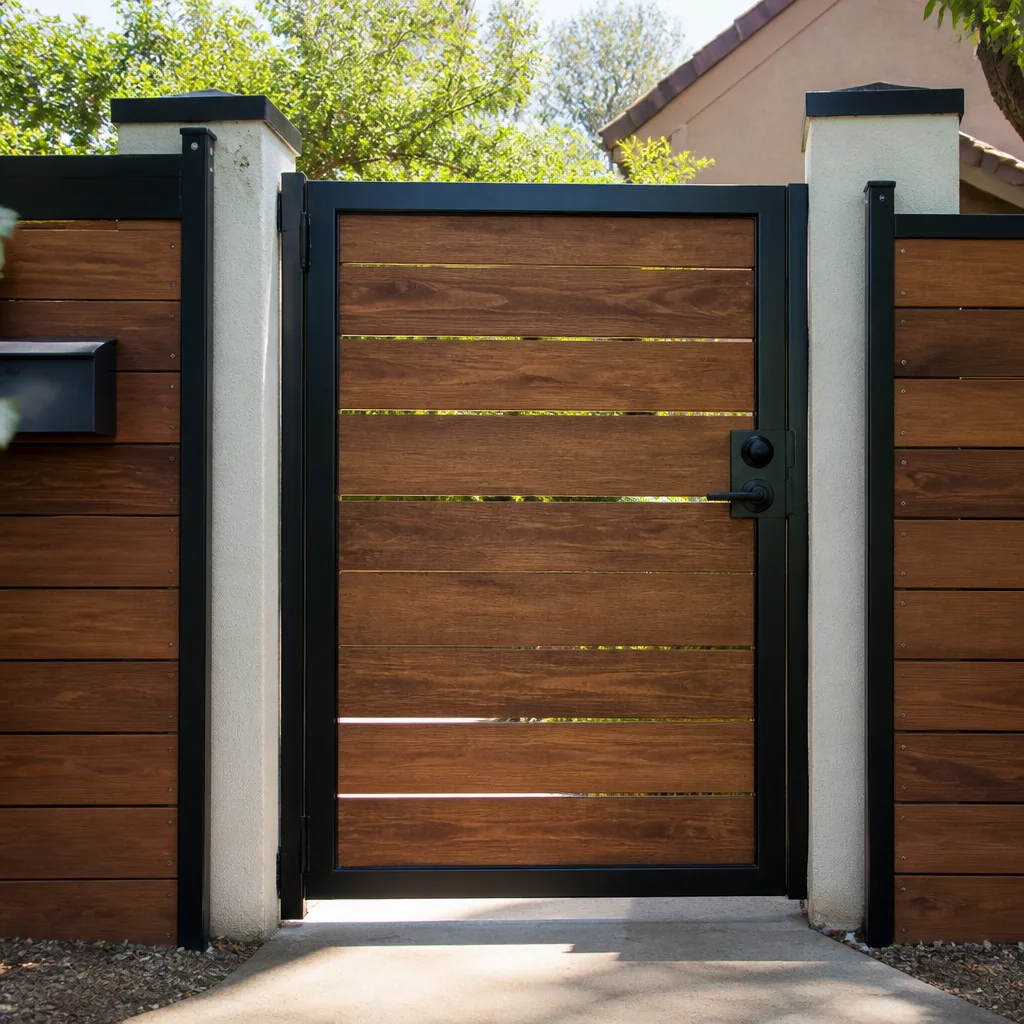 Wood & steel frame
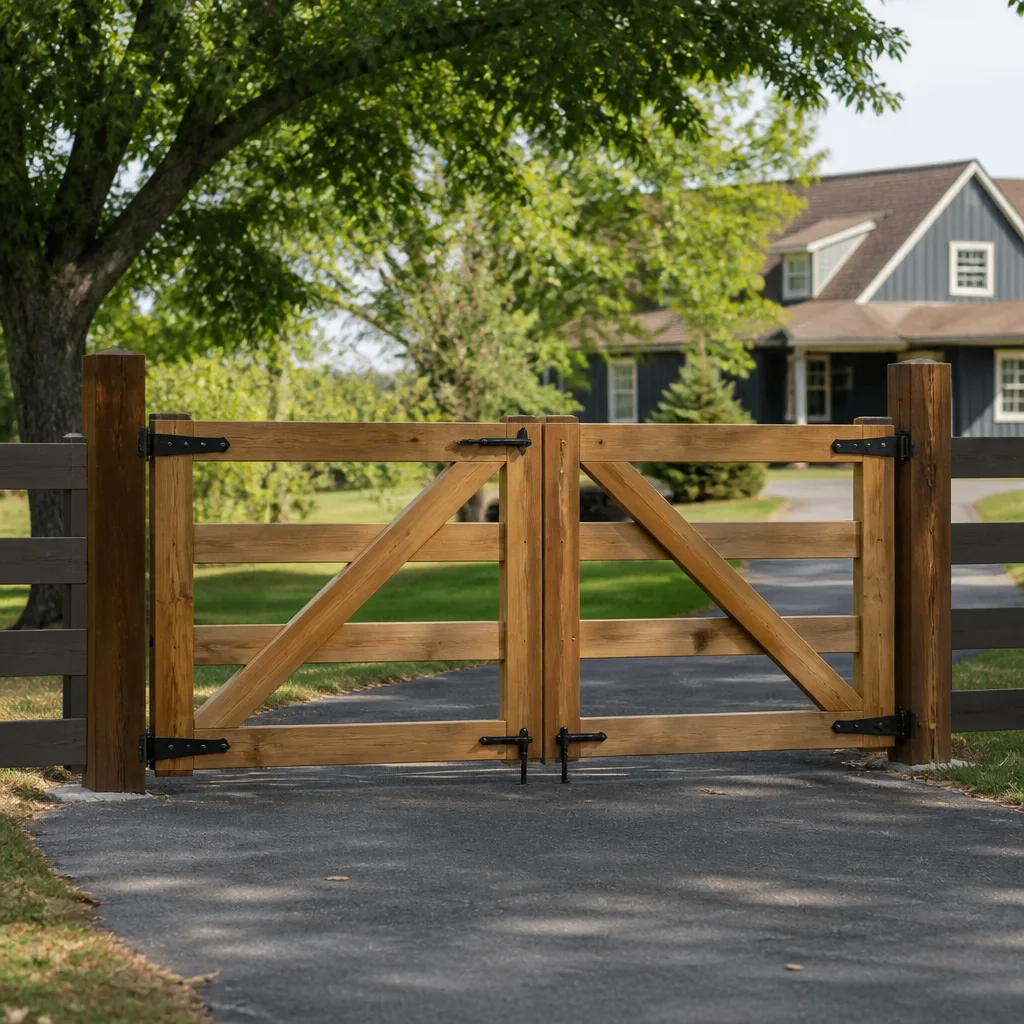 Farm & ranch
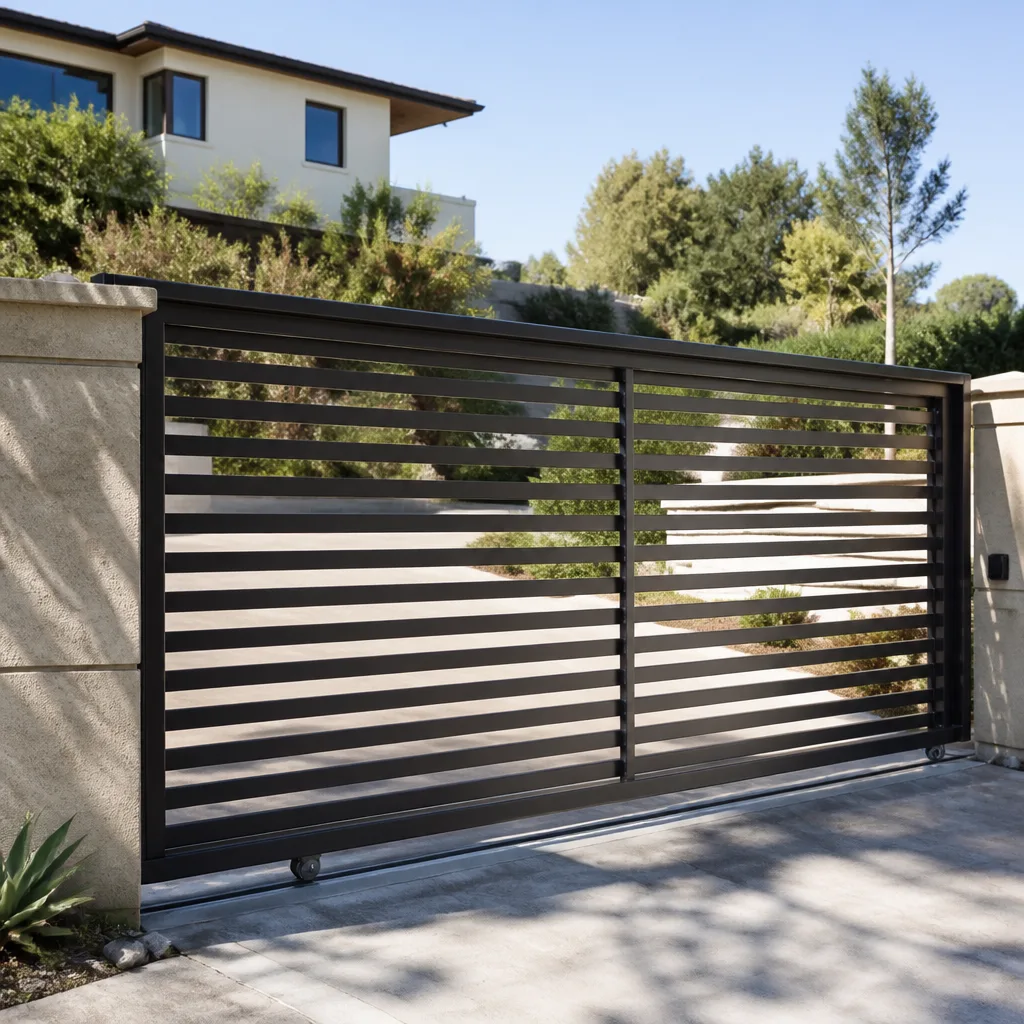 Sliding driveway gates
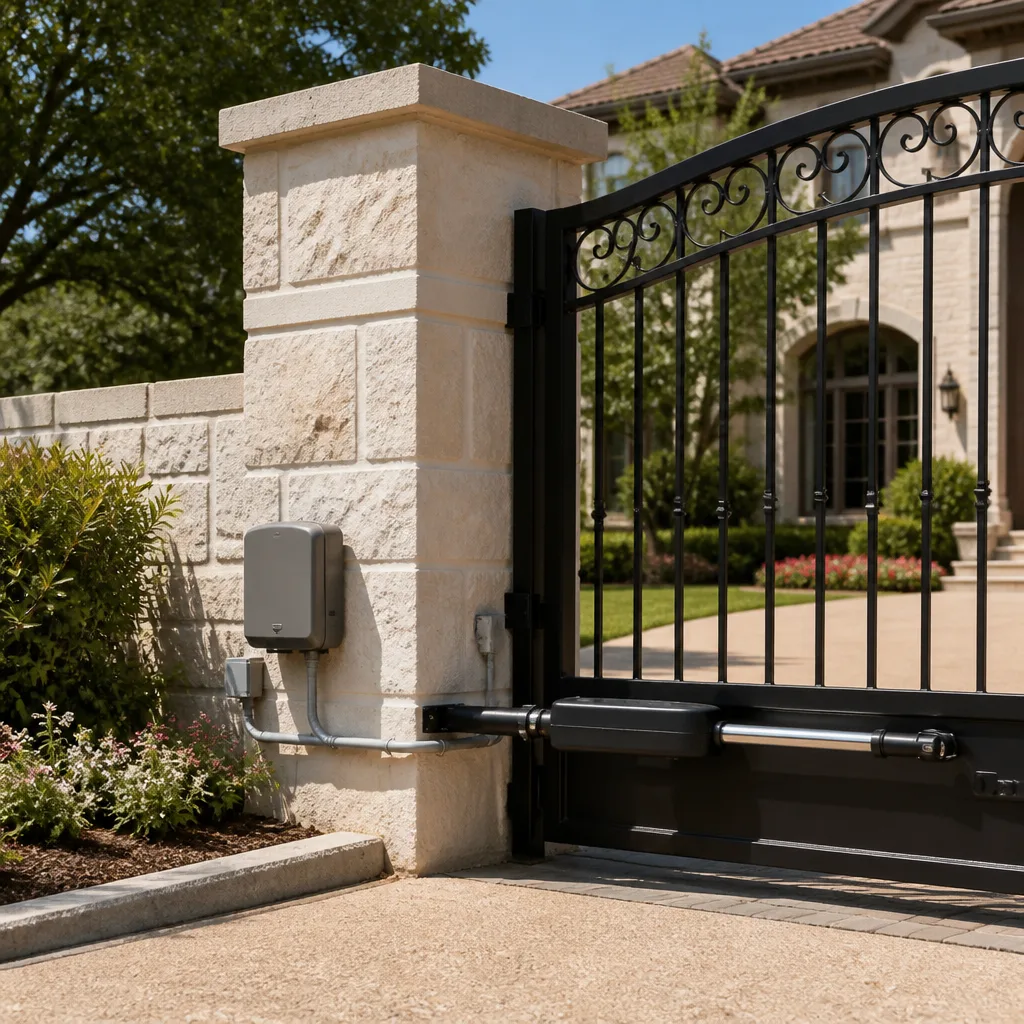 LiftMaster operators
Free on-site gate assessment - hinges, posts, and your LiftMaster or Nice gate operator checked before anything is quoted
The assessment is free and the quote is the invoice.
Get your free estimateGate Repair Warning Signs: A Corona Homeowner’s Reference Guide
A gate that hesitates for half a second before moving is not “working fine.” It’s an operator motor working twice as hard as it should be, and that pause is the motor telling you something. Most gate failures in Corona don’t happen without warning. They announce themselves weeks in advance through sounds, movements, and visual cues that get ignored because nobody taught homeowners how to read them. This guide exists to fix that. By the time you finish reading, you’ll be able to triage what your gate is telling you, separate the $150 fixes from the two-weeks-from-inoperable problems, and know exactly when to shut the gate down and call our Gate Repair services team who works on gates every day in Corona.
Styles & brands we work with
Quick Answer
The most common gate repair warning signs in Corona are grinding or clicking noises during operation, a gate that starts and stops mid-cycle, visible sagging at the hinge line, slow auto-close response, and rust streaking at weld points or the operator arm. Any of these means the gate is working harder than it was designed to, and ignoring them turns a $150 hinge adjustment into an $1,800 operator replacement. If your gate hesitates, groans, or doesn’t reverse when it hits resistance, call a gate specialist before it stops moving entirely.
Table of Contents
- Sound Diagnostics: What Your Gate Is Saying
- Visual Cues by Gate Zone
- Scheduled Appointment vs. Shut It Down Now
- How to Test Safety Reversal in 60 Seconds
- Warning Signs Commonly Misread as Cosmetic
- Brand-Specific Failure Patterns We See in Corona
- How Corona’s Climate Accelerates Gate Wear
- Common Mistakes to Avoid
- When to Call a Professional
- Frequently Asked Questions
- The Bottom Line
Sound Diagnostics: What Your Gate Is Saying
Every gate makes some noise. The question is whether the noise is normal or diagnostic. In our experience working on gates across Corona, from Eagle Glen to Sierra del Oro, most homeowners wait until a sound becomes impossible to ignore before calling. By then, the underlying problem has usually spread from one component to two or three. Here’s what each sound pattern tells you, broken down by the component it points to.
Grinding during travel is almost always a mechanical friction issue. The two most common culprits are worn rollers running on a debris-filled track and a hinge line that has lost lubrication or begun to seize. On sliding gates in Corona, fine dust from the Santa Ana winds works its way into roller bearings and acts like sandpaper. A grind that’s consistent through the full travel range points to rollers or track. A grind that pulses, getting louder and softer in rhythm with the gate’s movement, often indicates a bent track section or a hinge with a flat spot.
Clicking at the operator is different from clicking at the gate itself. A rapid clicking from the control board when you press the remote usually means the receiver is working but the start capacitor or motor relay is failing. On LiftMaster and Linear operators specifically, a single click followed by nothing is the classic signature of a failing start capacitor. A slower, metallic click from the gate structure, especially on swing gates, typically means a hinge pin is shifting under load or a weld has begun to crack.
Squealing that comes and goes is usually belt or chain tension on the operator drive. Belt-drive operators like many BFT systems use a tensioned belt that develops a glaze when it’s been slipping. The squeal appears when the gate starts moving under load and fades once momentum builds. Chain-drive systems on older FAAC and Viking operators squeal when the chain has stretched beyond the tensioner’s adjustment range.
A low hum with no movement is the most serious sound on this list. It means the motor is receiving power and trying to run, but something is mechanically locked. On swing gate operators, this is often a seized gearbox. On slide gate operators, it can be a jammed drive sprocket or a gate that has physically bound against a misaligned track. A humming motor that can’t move the gate is drawing locked-rotor current, which generates heat fast. Left running, it burns out the motor windings within minutes. If you hear this, cut power to the operator at the breaker and call a gate technician.
Visual Cues by Gate Zone
A gate’s health shows up in four distinct zones. Walking each one once a month takes less than five minutes and catches most failures before they become emergencies.
Zone 1: The foundation and posts. Look for hairline cracks in the concrete around post bases. In Corona’s expansive clay soil, the wet-dry cycle from winter rains to summer drought creates enough ground movement to shift posts slightly. A crack smaller than a quarter-inch wide that isn’t growing is usually cosmetic. A crack that’s widening, or any crack that lets a post wobble when you push on it, means the post has lost bearing. Small cracks near posts are one of the warning signs most often dismissed as cosmetic in Corona, but they’re frequently the first visible indicator of a post that’s lost its footing.
Zone 2: The hinge and roller line. On a swing gate, sight down the hinge line from the latch side. If the top hinge gap and bottom hinge gap are visibly different, the gate is sagging. On a sliding gate, crouch at track level and look for shiny wear marks on one side of the track, which indicate the gate is riding off-center. Also check the rollers themselves: if any roller doesn’t spin when the gate moves, it’s seized and is now a wear point, not a bearing.
Zone 3: The operator arm and drive assembly. Look for grease leaking from the operator housing, which indicates a failing seal. Look at the arm connection point for elongation of the bolt hole, a sign the connection has been loose long enough to wallow out the metal. Check the chain or belt for rust, especially after Santa Ana season, and look for fine black dust around the drive sprocket, which is what a wearing chain or sprocket leaves behind.
Zone 4: The control board and wiring. Open the operator cover and look for discoloration on the circuit board, swollen capacitors, or any sign of corrosion at wire terminals. Corona’s heat accelerates electrolytic capacitor aging, and a swollen capacitor is a failure that hasn’t happened yet. On the wiring side, look for cracked insulation on low-voltage wires, especially where they enter conduit at ground level.
Scheduled Appointment vs. Shut It Down Now
Not every warning sign demands immediate action. Here’s the triage we use when a Corona homeowner describes a symptom over the phone.
Schedule a service call within the next week or two:
- Slow but complete operator response. The gate opens and closes, just slower than it used to. This is typically a capacitor or belt tension issue. It’s not urgent, but it doesn’t get better on its own.
- Light grinding when the gate first starts moving that fades as it travels. Usually debris in the track or dry rollers.
- Auto-close taking longer than it used to. Common on systems where someone has adjusted the close timer to compensate for a gate that’s gotten slower. The fix is usually simple.
- Gate that intermittently doesn’t respond to the remote. Often a receiver range issue or corroded antenna connection, especially in Corona’s older neighborhoods like Corona Hills where some systems date back two decades.
Shut the gate down immediately and don’t operate it until a technician arrives:
- A humming motor with no gate movement. Locked-rotor current will destroy the motor windings fast.
- A gate that reverses direction on its own mid-cycle repeatedly. This indicates a failing safety edge, a binding track, or a control board fault. It’s also a sign the gate might not stop when it should.
- Visible cracks in welds or the gate frame itself. A gate that’s lost structural integrity can fall, and an iron gate falling on a person is a life-threatening event.
- Any sparking, burning smell, or smoke from the operator. Cut power at the breaker and call immediately.
- A safety reversal test that fails. If the gate doesn’t reverse when it meets resistance, it’s dangerous. That’s not a warning sign; it’s a hazard.
How to Test Safety Reversal in 60 Seconds
Every automated gate manufactured in the last two decades is required to have an obstruction detection system, either in the operator (current-sensing) or as a physical safety edge. Testing it takes a minute and tells you whether the most important safety feature on your property still works. Here’s the test, step by step.
- Open the gate fully, then start the close cycle.
- Stand clear of the gate’s path and place a firm object in the closing path. A 2×4 laid flat works well, or a sturdy trash can filled with water. Do not use your body, your hand, or anything breakable.
- Watch what happens when the gate contacts the object. A properly functioning gate should reverse direction within one to two seconds of contact and return to at least a partially open position.
- If the gate continues pushing against the object, applies sustained pressure, or only reverses after several seconds of force, the safety system has failed. Cut power to the operator at the breaker and leave the gate manually secured. Do not operate it again until a technician has inspected and repaired the safety system.
- Test both the primary safety edge and any secondary photo-eye sensors, if your gate has them. Many Corona homes with FAAC and Viking operators have photo-eye sensors mounted on the gate posts. These should be tested by breaking the beam with your hand and confirming the gate stops or reverses.
This test is not a substitute for professional inspection. But it’s the single most important check a Corona homeowner can perform between service visits; for Seasonal Gate Repair Care for Corona: Year-Round Homeowner’s Guide and other maintenance tips, see our resources. A gate that fails this test is a safety liability for anyone on the property, including delivery drivers, kids, and pets.
Warning Signs Commonly Misread as Cosmetic
Some of the most serious gate problems in Corona get ignored because they look like the kind of thing you’ll “get to eventually.” In our experience, these are the three most frequently misdiagnosed-by-homeowner warning signs.
Rust streaking at weld joints. Most people think rust on a gate is cosmetic until it isn’t. The problem is that rust streaking at a weld joint isn’t surface rust. It’s water that has penetrated the weld and is corroding from the inside out. By the time you see the streak, the weld’s internal integrity is already compromised. On cantilever slide gates, which are common in Corona’s newer developments like Terramor and Sycamore Creek, rust at the bottom rail welds is particularly dangerous because that rail carries the entire gate’s weight. A rust streak there means the structure is weakening where it matters most.
Small concrete cracks near posts. Covered in the foundation zone above, but worth repeating here because it’s the most consistently dismissed warning sign we see. A hairline crack in the concrete around a gate post is often the first and only visible indication that the post is moving. In Corona’s soil, which expands and contracts significantly with moisture changes, this is more common than in coastal areas. The crack itself isn’t the problem. The problem is whatever is causing the post to move enough to crack the concrete in the first place.
Slow auto-close cycles. Homeowners tend to think a slow auto-close is normal, or that someone “set it that way.” Sometimes that’s true. More often, the auto-close timer was adjusted to be longer at some point to compensate for a gate that was getting slower to close. The timer masks the underlying problem. If your gate used to close in 15 seconds and now takes 25 or 30, someone probably compensated for a mechanical issue rather than fixing it. The gate is still wearing itself out. It’s just doing it more slowly, which means the repair bill is growing more slowly too. It’s still growing.
Brand-Specific Failure Patterns We See in Corona
Different gate brands fail in different ways, and knowing your brand means knowing what to watch for. We work on LiftMaster, FAAC, BFT, and Linear systems regularly in Corona, and each has its own signature failure modes.
LiftMaster operators, especially the LA400 and LA500 series used on residential swing gates in Corona, tend to fail at the limit switch first. The symptom is a gate that doesn’t stop where it should, or stops short, or reverses slightly after stopping. Limit switches wear mechanically, and in Corona’s heat, the plastic switch bodies can crack. The operator may still function fine otherwise, which is why this gets ignored. The fix is usually straightforward, but if ignored long enough, the gate starts over-running its limits and stressing the operator arm connection.
FAAC operators are hydraulic on many models, and hydraulic systems have a different warning signature than mechanical ones. A FAAC swing gate that moves slower than it used to, especially in the morning when temperatures are cool, often has a low or degraded hydraulic fluid condition. Leaking around the cylinder seals is the visual cue. FAAC systems are robust, but they need fluid service on a schedule, and Corona’s temperature swings make that schedule more important than the manual suggests.
BFT operators use belt-driven articulating arms on many residential models, and the belt is the consumable item. A BFT gate that shudders slightly at the start of travel, or makes a brief flapping sound, is showing belt wear. Belt replacement is normal maintenance, not a failure, but if the belt snaps mid-cycle, the gate can free-swing, which is a real safety hazard. The shudder or flap is your warning.
Linear operators are common on sliding gates throughout Corona’s industrial and commercial properties, and the failure pattern we see most is control board corrosion. Linear boards are generally reliable, but the connections at the board are susceptible to corrosion in environments with temperature swings and moisture. Symptoms include intermittent operation, a gate that works from one remote but not another, or a gate that opens but won’t close. These are board-level symptoms, and they don’t self-resolve.
This is why brand-specific knowledge matters. A gate technician who works on all of these systems weekly in Corona sees the patterns. A technician who works on gates occasionally sees the symptoms and starts replacing parts until something works. The difference is time and money, and usually both go in the same direction.
How Corona’s Climate Accelerates Gate Wear
Gate systems wear differently in Corona than they do in Orange County or the Inland Empire’s cooler zones. Three climate factors drive most of the accelerated wear we see.
Santa Ana winds and dust. The same winds that make Corona’s air feel dry and clear are constantly depositing fine particulate matter into every moving part on your gate. Track rollers, hinge pins, chain links, and operator drive components all collect dust. That dust mixes with whatever lubrication exists and forms an abrasive paste. A gate that gets serviced on a coastal schedule, which might be every two years, needs more frequent mechanical attention in Corona because the abrasive load is higher.
Summer heat and electronics. Operator control boards mounted in metal housings bake in Corona summers. Internal temperatures in a dark metal box can exceed 140 degrees on a 100-degree day, which accelerates electrolytic capacitor aging and degrades solder joints over time. This is why we see board failures on 10-year-old systems in Corona that would run for 15 years in a cooler climate. The heat also thins whatever grease is in gearboxes, which means lubrication that’s adequate in winter becomes inadequate by August.
Expansive soil and post movement. Corona sits on soil with significant clay content in many areas, particularly in the older neighborhoods south of the 91 and east of Lincoln Avenue. Clay soil expands when wet and contracts when dry, and a year’s worth of wet-dry cycling in Corona is enough to shift a gate post a fraction of an inch. That fraction of an inch at the post translates to a visible sag at the latch end of a 14-foot gate. The gate didn’t sag because it’s old. It sagged because the ground moved under it. Fixing the sag without addressing the post movement means doing the same repair again in another year or two.
Common Mistakes to Avoid
- Lubricating a problem instead of fixing it. Spraying WD-40 on a grinding roller quiets the sound for a few days and convinces you the problem is solved. It isn’t. The roller is still seized or worn; you’ve just masked the diagnostic signal. By the time the grinding returns, the roller has usually damaged the track.
- Adjusting the auto-close timer to compensate for a slower gate. This is the most common self-defeating fix we see in Corona. A gate that closes slowly has a mechanical or electrical issue. Giving it more time to close slower doesn’t address the issue and often makes it worse by allowing more dust and debris to settle in the track during the longer cycle.
- Ignoring a failed safety reversal test. This is the one we hear about too often: the owner knew the gate wasn’t reversing properly for months before something happened. The safety system is the only thing standing between your gate and a serious injury. It’s not optional.
- Power-cycling the breaker to clear a fault instead of diagnosing it. If your gate trips its breaker or shows a fault light, resetting it without finding the cause is borrowing time against a bigger failure. The fault light is the gate’s way of telling you something specific. Ignoring the message doesn’t make the sender stop trying; it just makes the eventual conversation more expensive.
- Replacing the remote when the receiver or board is the problem. We’ve seen Corona homeowners buy three new remotes before calling us, convinced each one was defective. If a new remote doesn’t fix an intermittent operation issue, the problem is almost never the remote. It’s the receiver, the board, or the wiring.
- Tightening a sagging gate’s hinge bolts instead of addressing the post. When a gate sags, the first instinct is to crank down on the hinge bolts. But a sagging gate is usually a symptom of post movement or hinge wear, not loose bolts. Over-tightening strips threads and makes the eventual proper repair harder.
- Waiting until the gate stops completely before calling. Every symptom in this guide is easier and cheaper to fix before the gate fails completely. Once it’s down, you’re not just paying for the original problem. You’re paying for the damage the original problem caused while it was ignored.
When to Call a Professional
You’ve now got more gate diagnostic knowledge than most Corona homeowners will ever have, and most of the warning signs in this guide are things you can identify yourself. But identifying and repairing are different jobs. If your gate is showing any of the shutdown-now signs from above, or if you’ve spotted multiple scheduled-service signs stacking up, call a gate specialist. Windsor Gate Repair works on gate systems exclusively. That means every job on the schedule is a gate job, and the technician who shows up has already seen your brand of operator dozens of times this month. We work on LiftMaster, FAAC, BFT, and Linear systems, along with every other major brand, and we don’t push replacements when a repair makes sense. If you’re in Corona, call (855) 382-0601 for a free estimate. We’ll tell you what’s wrong, what it costs to fix, and whether it’s urgent. No pressure, no upsell.
Frequently Asked Questions
Most gate repairs in Corona fall between $150 and $600 depending on the component. A hinge adjustment or roller replacement typically runs $150 to $300. Limit switch replacement runs $250 to $450. A control board replacement on a LiftMaster or FAAC operator can run $400 to $900 including the part. Full operator replacement, when necessary, ranges from $1,200 to $2,500 for residential systems. These are ballpark figures, not quotes. Call (855) 382-0601 for an exact estimate. Our estimates are free, and the price is agreed before any work starts.
For emergency gate failures where the gate is stuck open or unsafe to operate, we prioritize same-day response wherever possible in Corona. For non-emergency issues like slow operation or intermittent remote function, we schedule within a few days. The fastest way to find out is to call (855) 382-0601 and describe the symptom. We can usually triage it over the phone and tell you whether it’s a same-day situation or a scheduled appointment.
We work on LiftMaster, FAAC, BFT, Linear, Viking, Ghost Controls, DoorKing, Elite, and Mighty Mule systems. That covers the brands on the vast majority of residential and light commercial gates in Corona. We’re brand-agnostic, which means we diagnose and repair the system already on your property rather than pushing a replacement just because we don’t stock parts for your brand. We stock parts for all nine.
A sagging gate is usually worth repairing if the gate itself is structurally sound and the sag is coming from the hinges, rollers, or post movement. Replacement makes sense when the gate frame has rusted through at the welds, when the post has shifted enough that re-setting it would cost more than a new post, or when you’re planning to upgrade the operator system anyway. We’ll give you an honest assessment. We repair gates every day that other companies would recommend replacing, because repair is what we do. If replacement is genuinely the better long-term choice, we’ll tell you that too. The decision is yours, and we do both Gate Repair in Corona and Gate Installation in Corona under one roof.
In Corona’s climate, we recommend servicing an automatic gate every 12 months. The Santa Ana dust load alone means track rollers, hinge pins, and drive components need more frequent cleaning and lubrication than they would in coastal areas. A yearly service catches most of the warning signs in this guide before they become failures. For Electric Gate Repair in Corona, the annual service typically includes safety reversal testing, limit switch adjustment, gearbox inspection, and control board check. It’s about an hour of work and costs a fraction of what a major repair costs.
Temperature-dependent operation is a specific diagnostic clue. If your gate works in the afternoon but not in the cool of the morning, you’re likely looking at a gearbox with thickened or degraded grease, a hydraulic system with fluid that’s too viscous when cold, or a control board component that only functions above a certain temperature. All three are repairable. None of them will fix themselves, and all of them will get worse as Corona moves through the seasons. Call (855) 382-0601 for a diagnosis, and we’ll get your gate back on track.
The Bottom Line
A gate that’s making noise, moving slower, sagging at the latch, or failing its safety test is telling you something specific. The message is not “you should panic.” It’s “you should pay attention.” Most gate failures in Corona are predictable weeks in advance, and most predictable failures are preventable for hundreds of dollars instead of thousands. Walk your gate’s four zones once a month. Test the safety reversal every few months. Take the warning signs seriously. When something’s off, call a gate specialist rather than a generalist. Our team at Windsor Gate Repair home works on gates every day, in every Corona neighborhood, and we’re happy to help you figure out what you’re seeing. Call (855) 382-0601 for a free estimate, and we’ll tell you exactly what’s wrong and what it takes to fix it.
Written by the team at Windsor Gate Repair, serving Corona since 2012. For more guides & resources, visit our blog.
See the difference
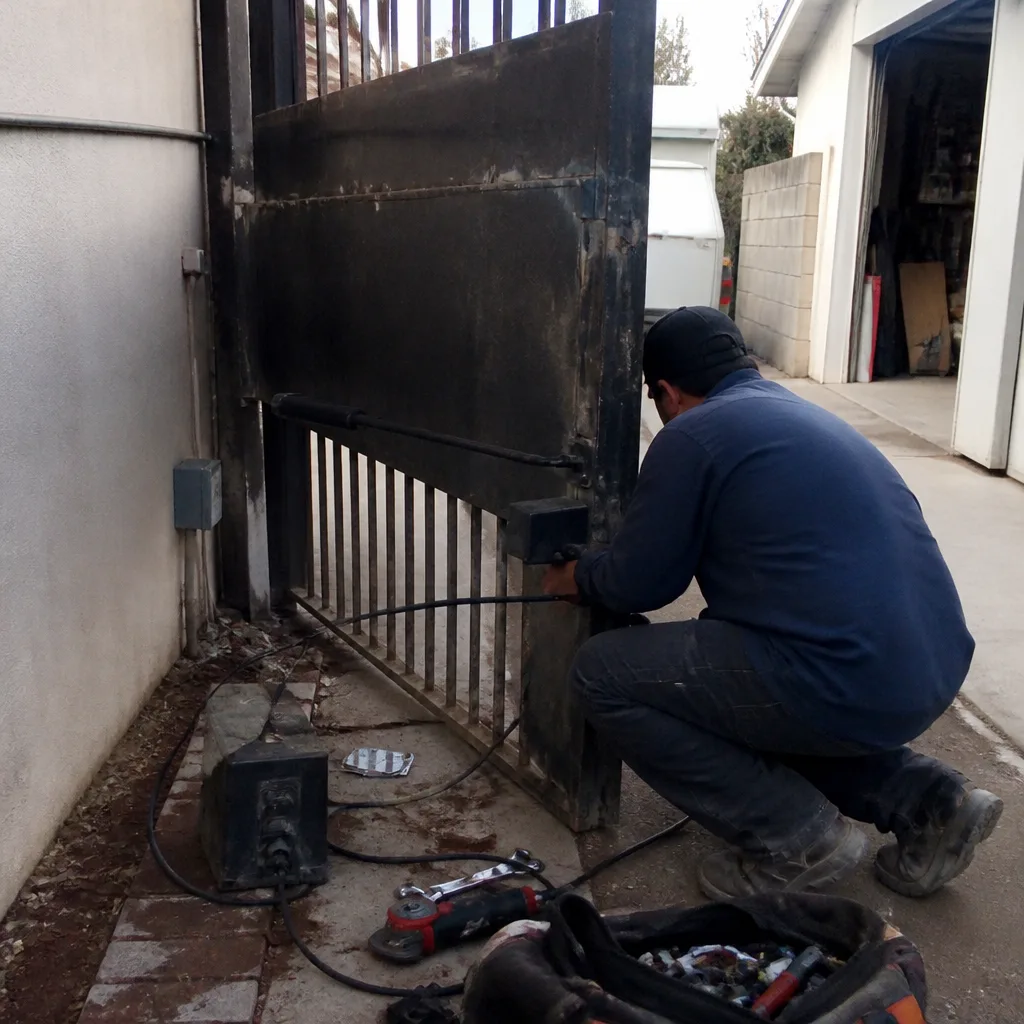 Before
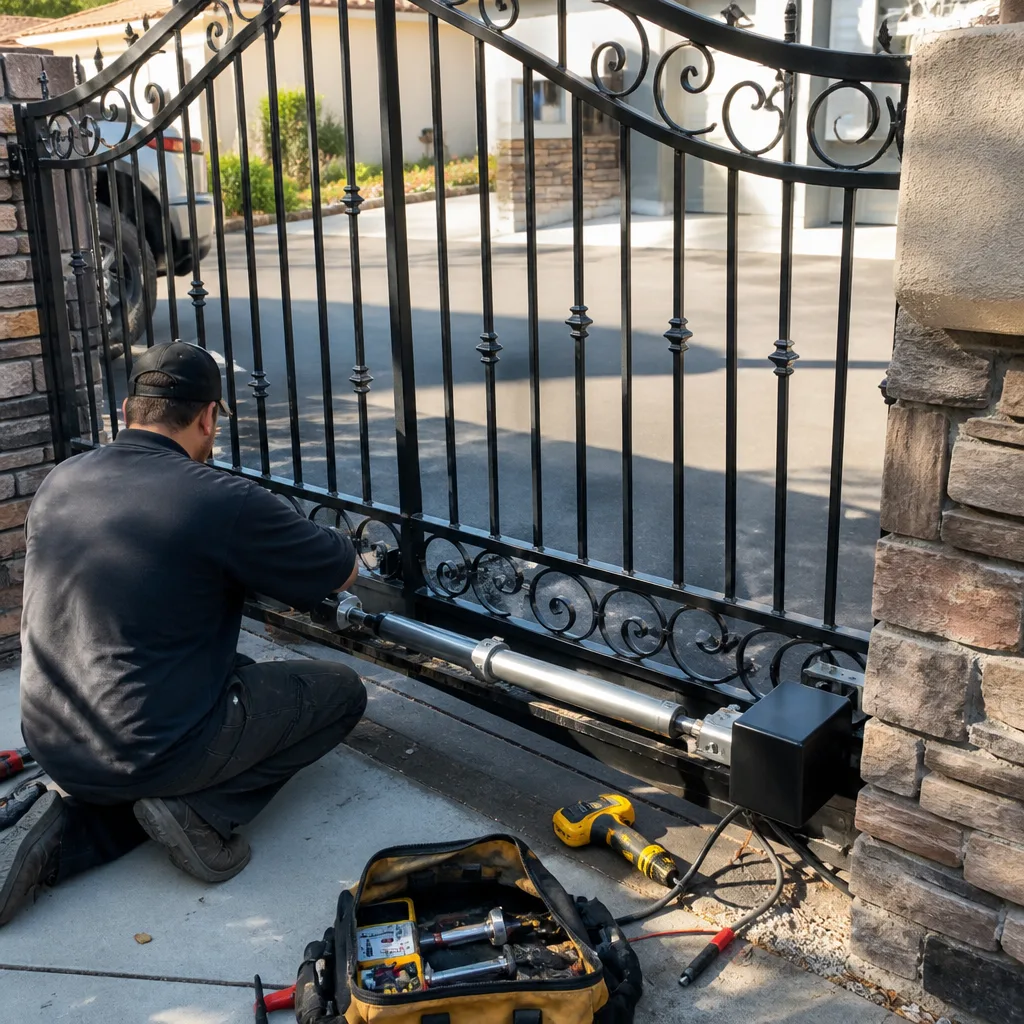 After
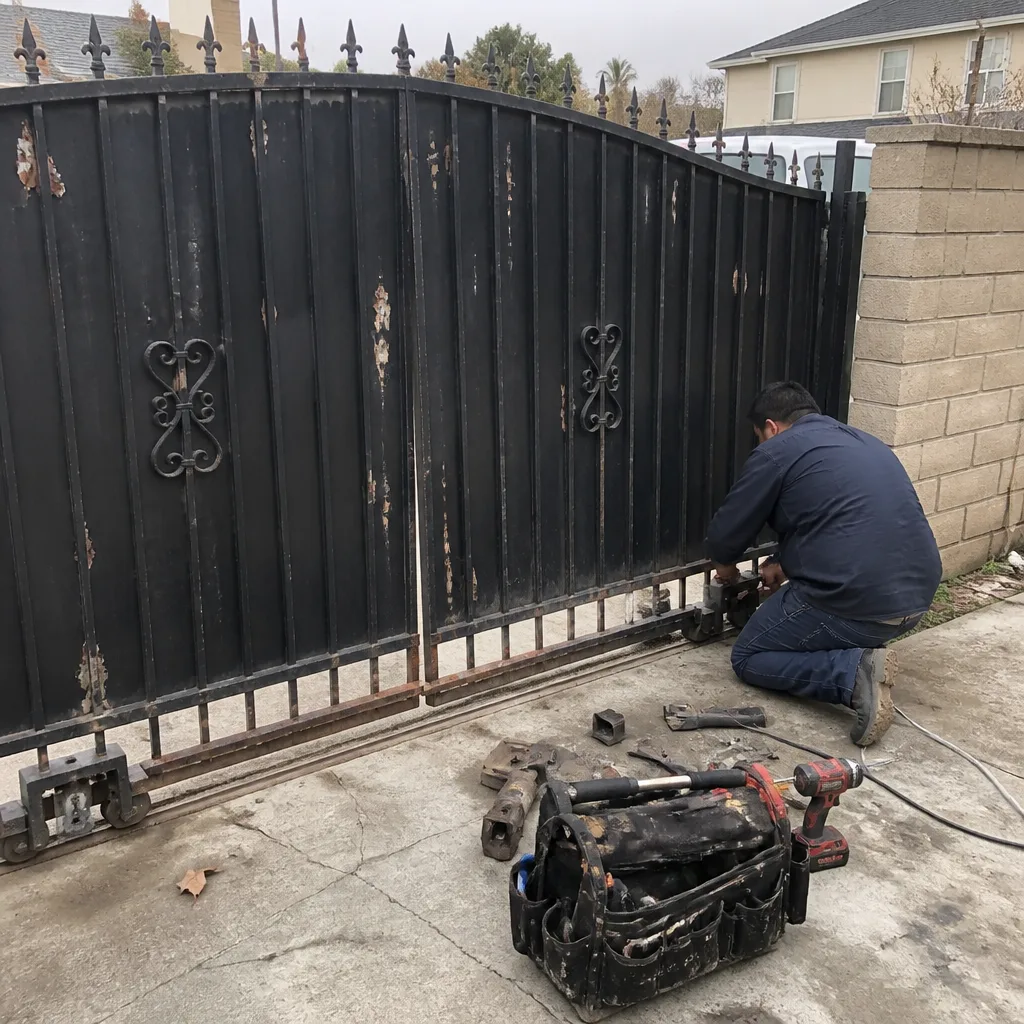 Before
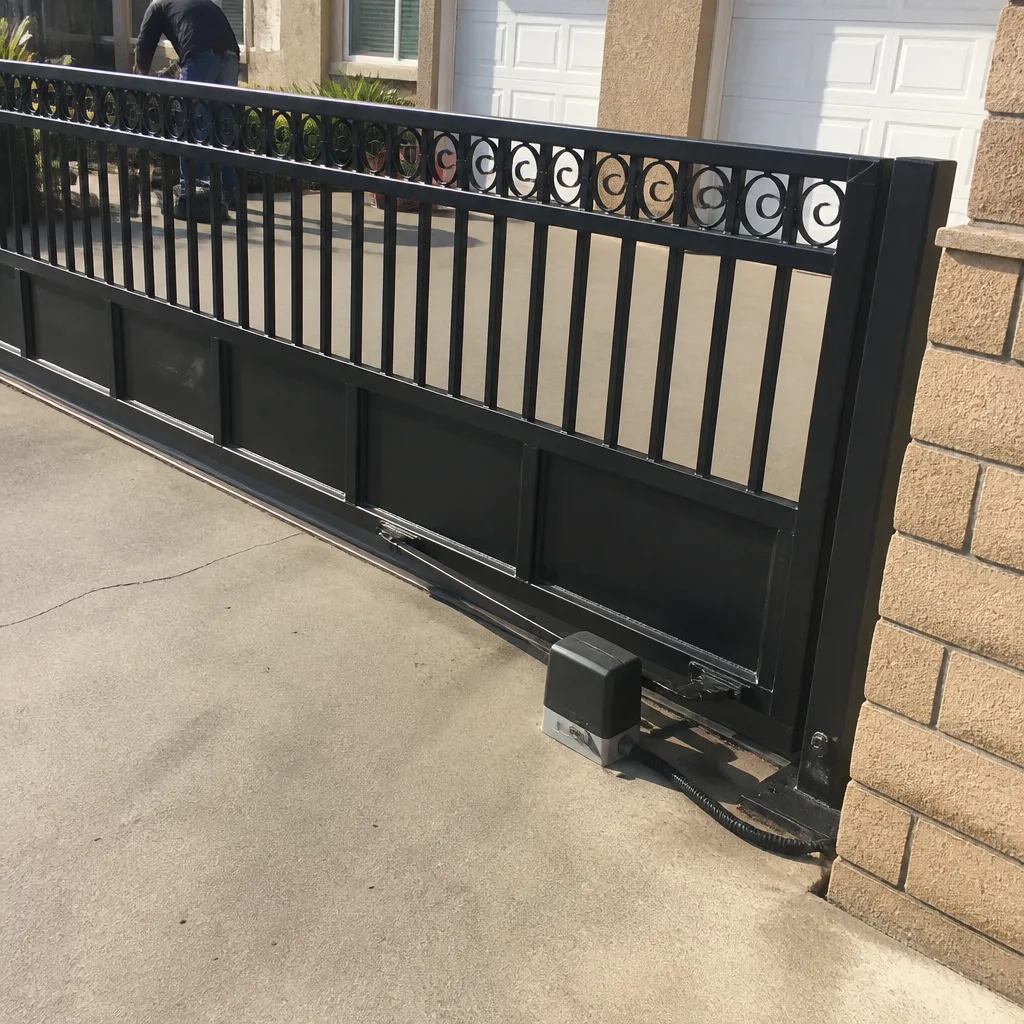 After
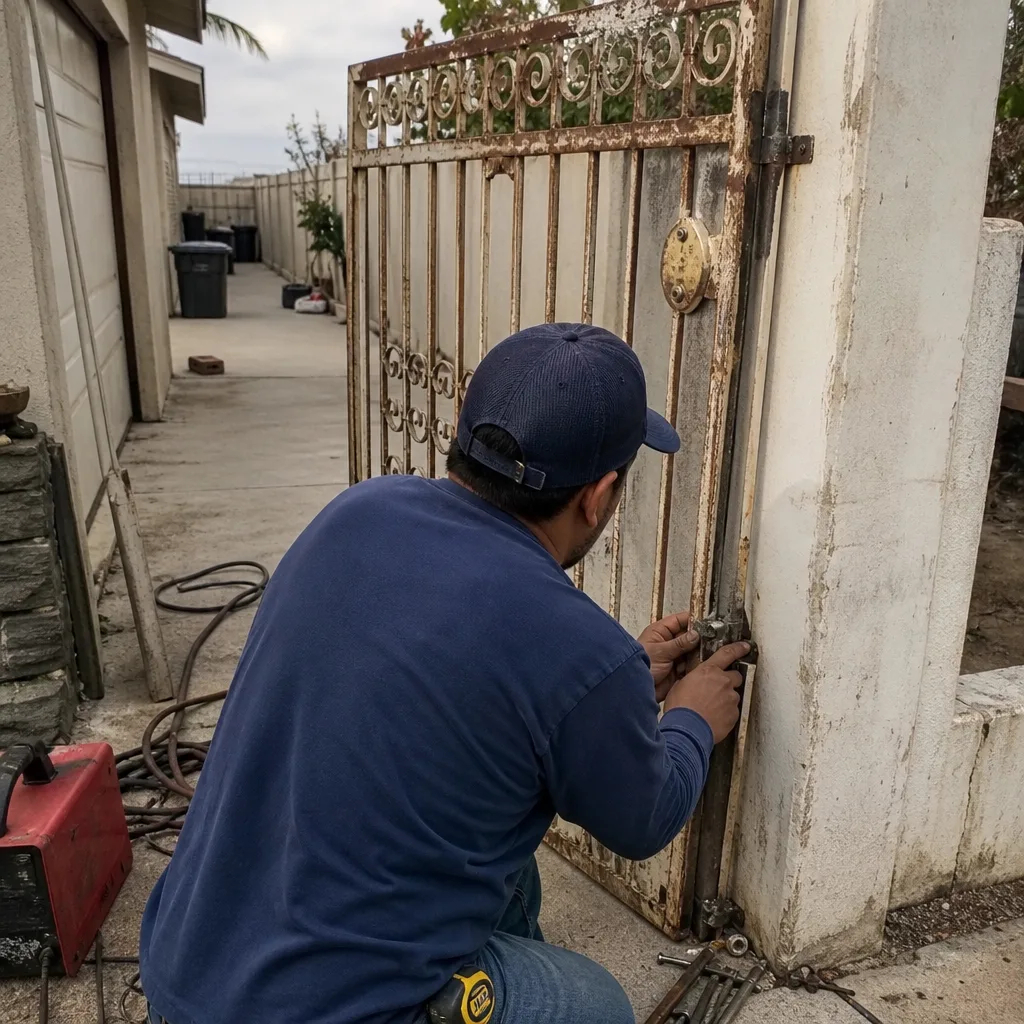 Before
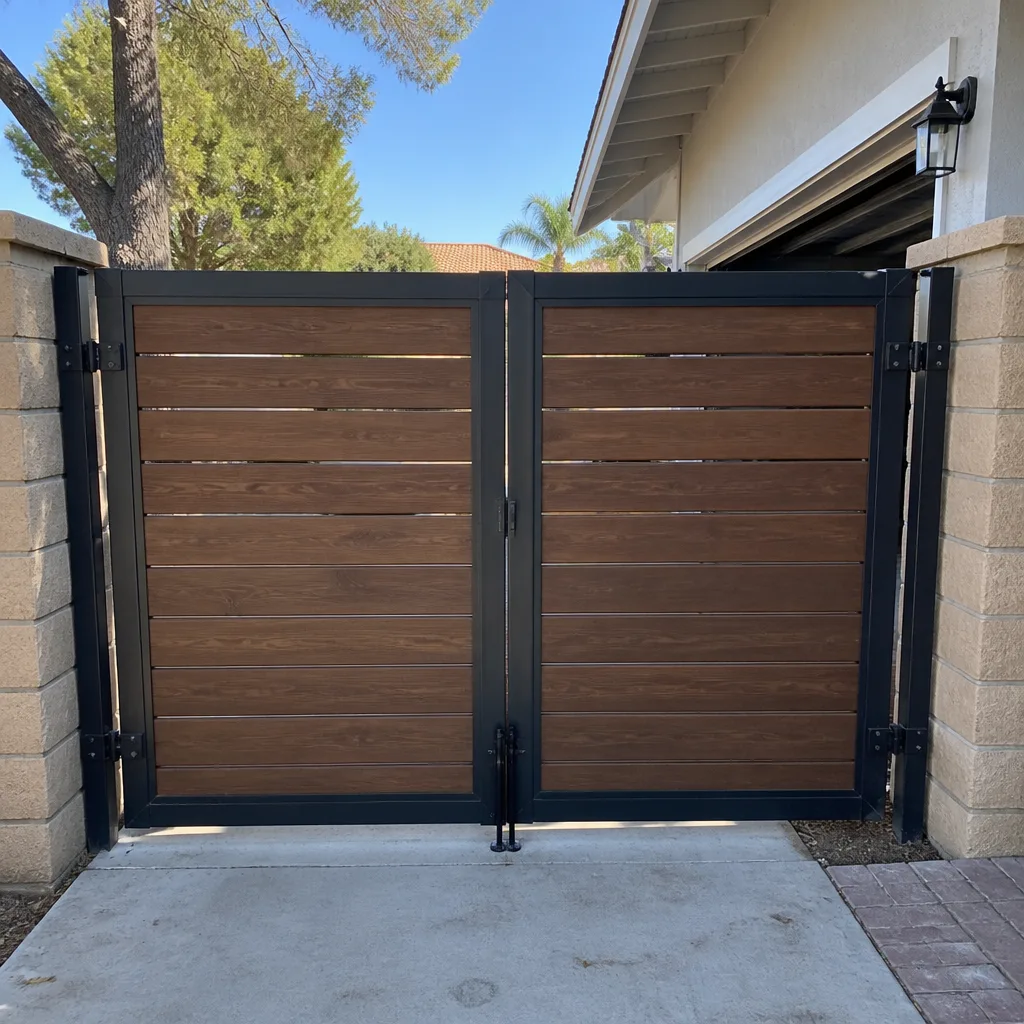 After