Last updated October 30, 2026
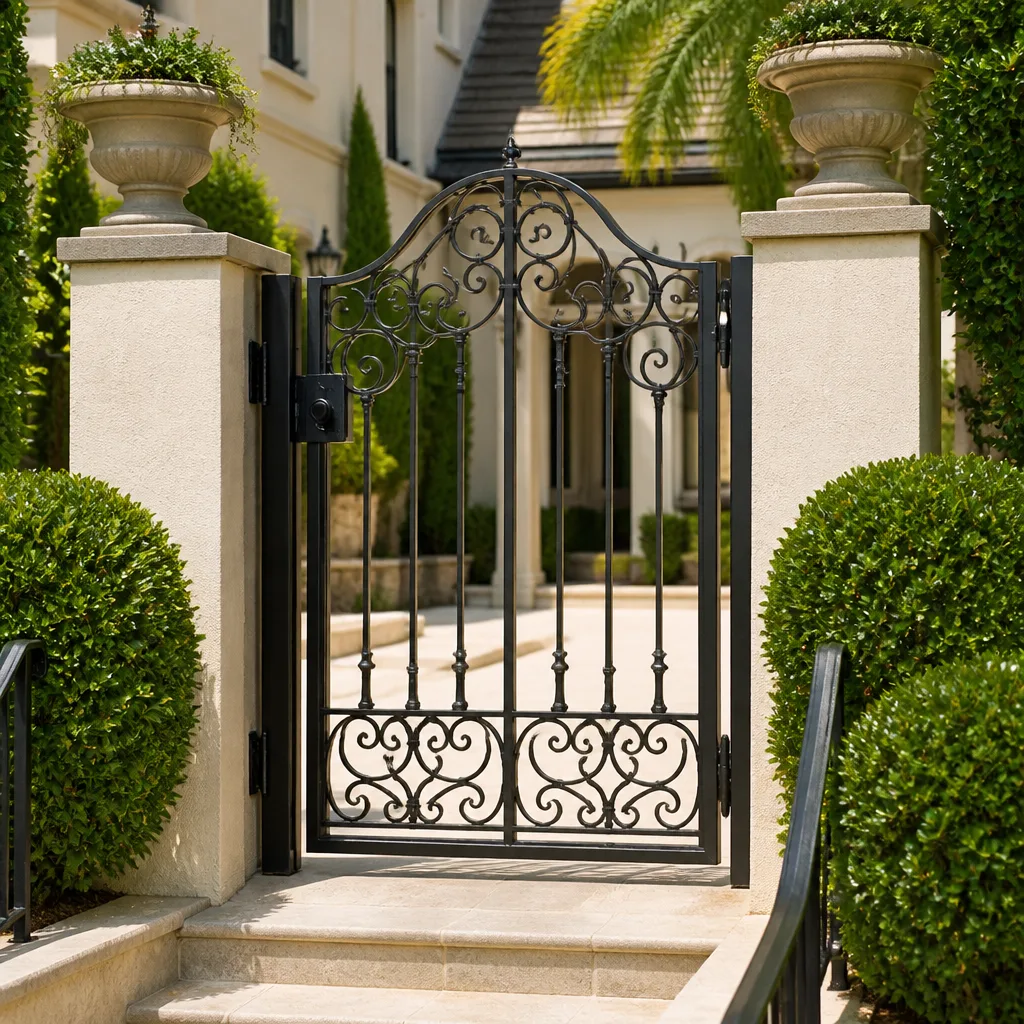 Wrought iron
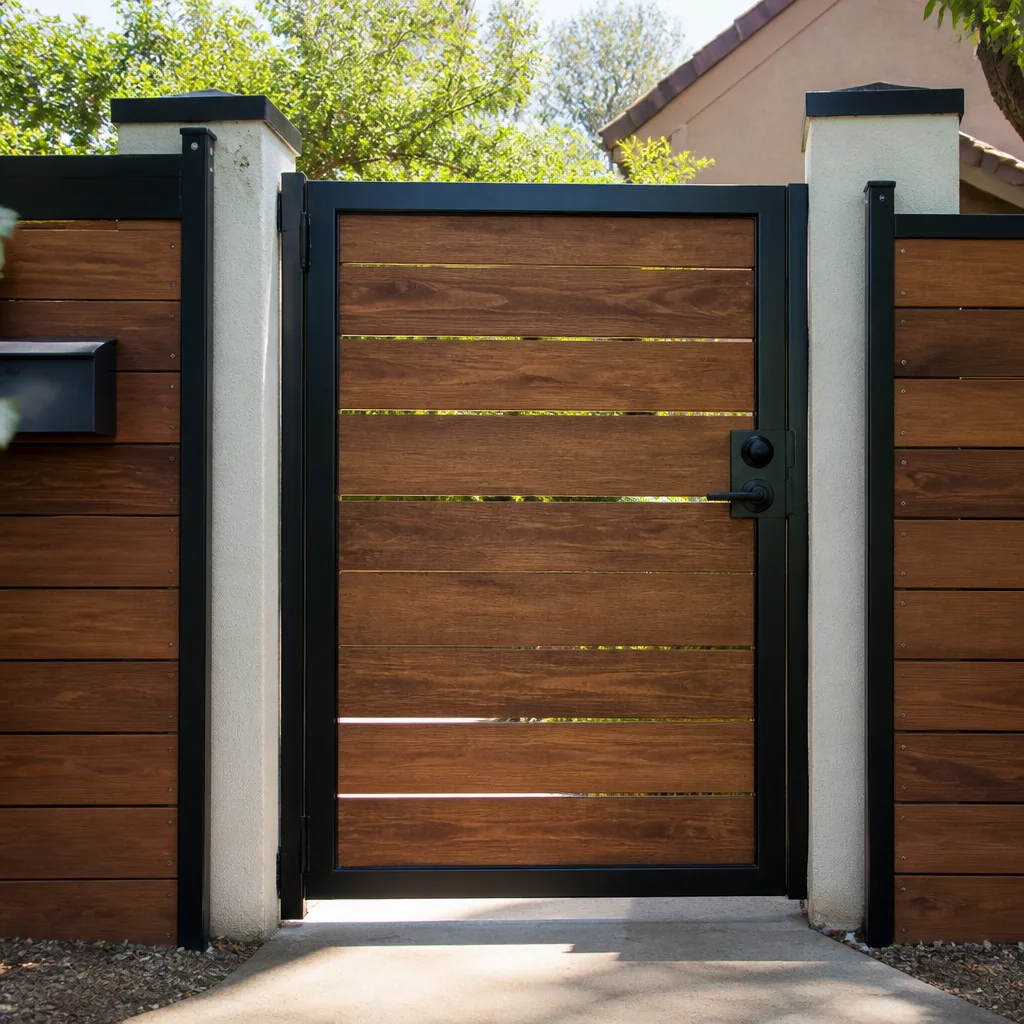 Wood & steel frame
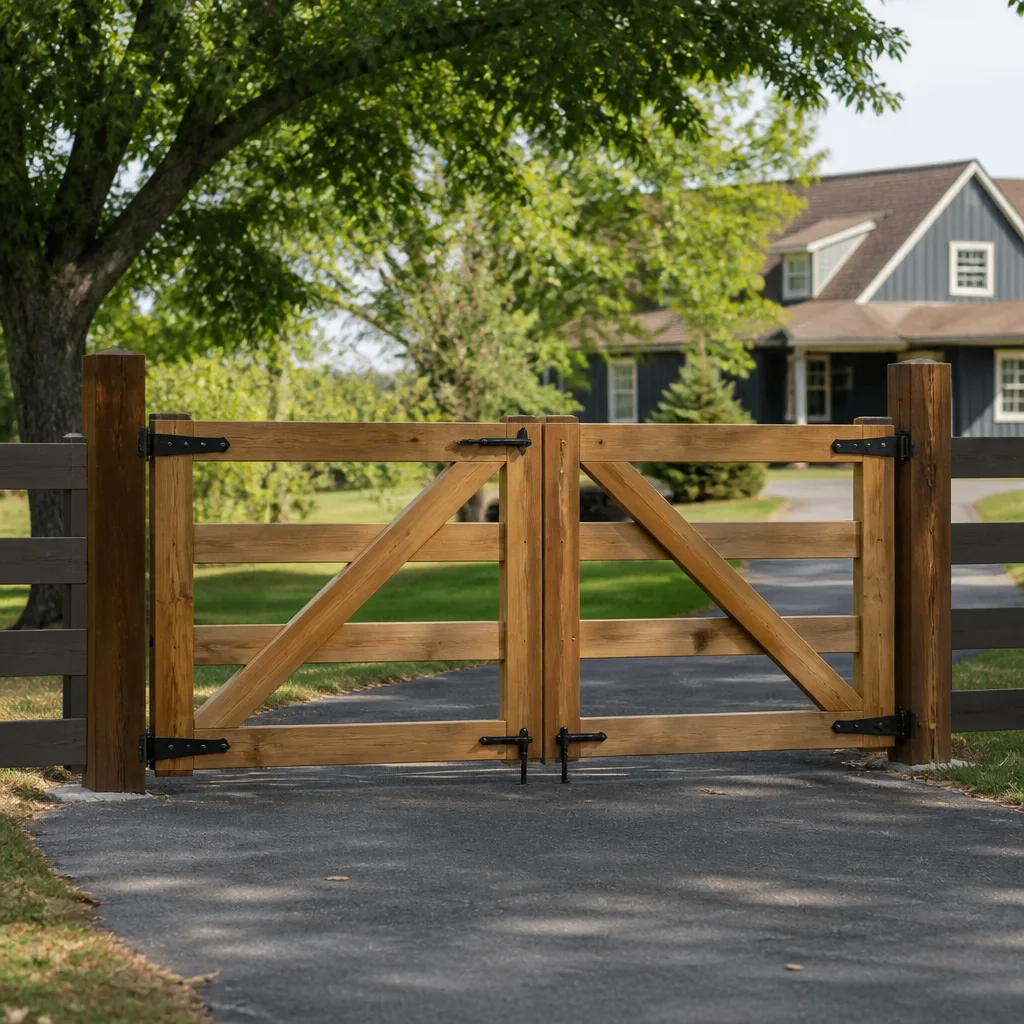 Farm & ranch
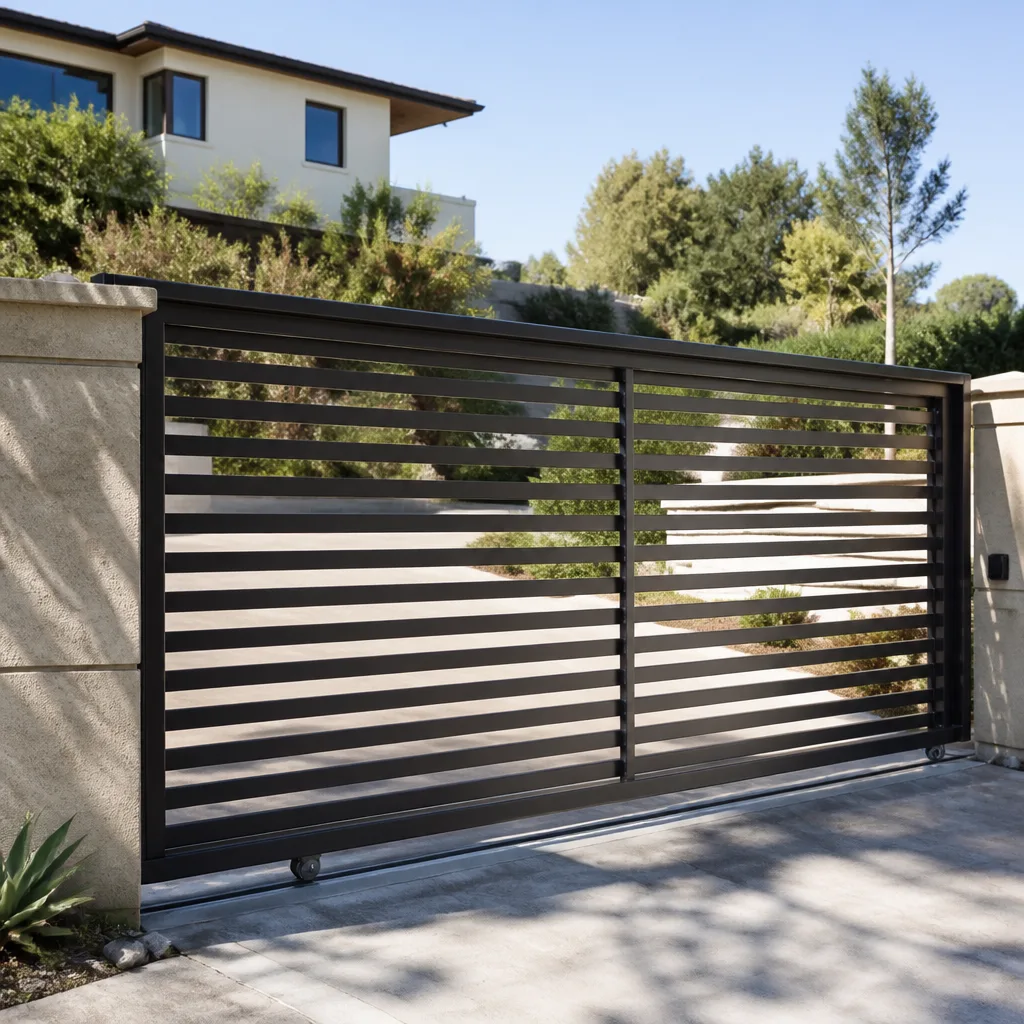 Sliding driveway gates
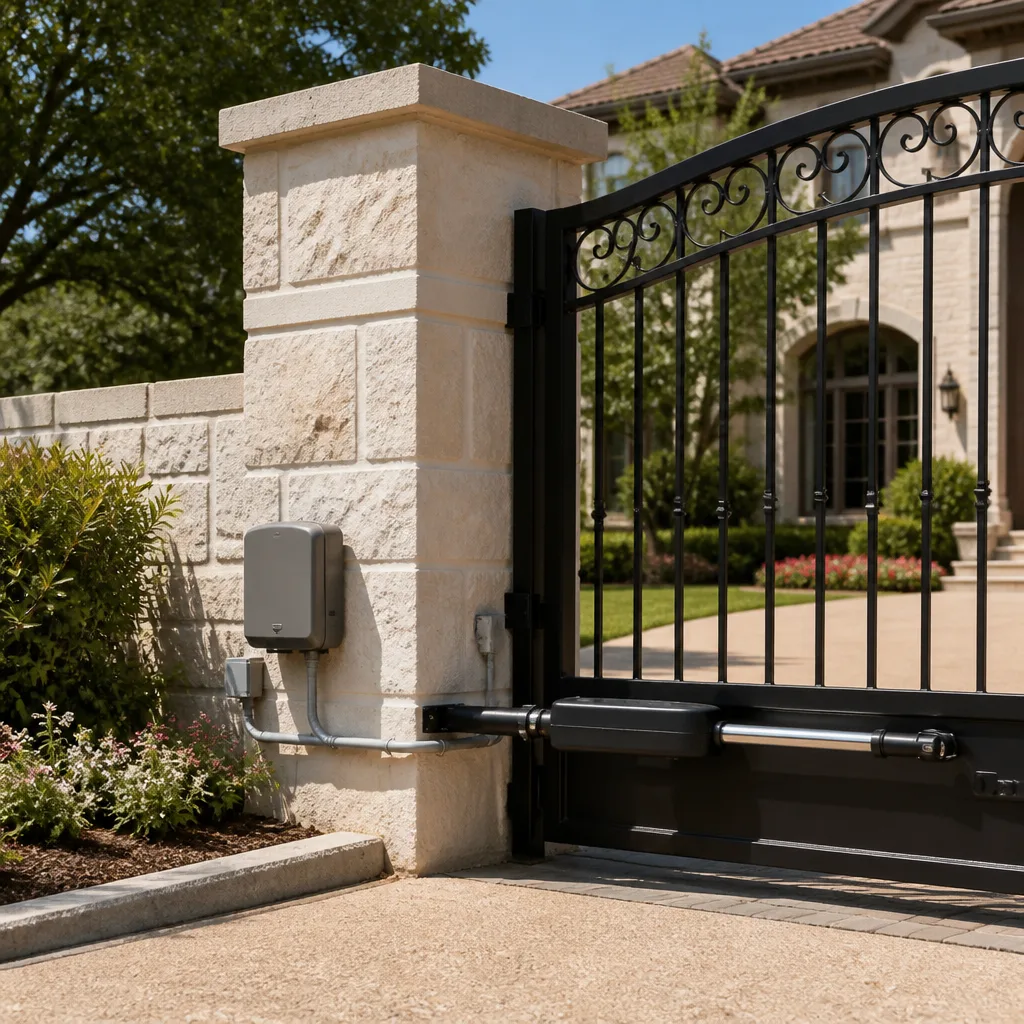 LiftMaster operators
Free on-site gate assessment - hinges, posts, and your LiftMaster or Nice gate operator checked before anything is quoted
The assessment is free and the quote is the invoice.
Get your free estimateChoosing the Right Gate Repair Brand: A Buyer’s Guide for Corona
A gate operator with a great spec sheet that relies on parts shipping from a single East Coast distributor is a liability in a market like Corona. When it fails in August, “two-week lead time” is not an acceptable answer. This guide evaluates the major gate operator brands against three criteria that actually matter in Corona: heat tolerance, dust ingress protection, and how quickly a technician can get the right part when something breaks. For a deeper dive, see The Complete Gate Repair Guide for Corona Homeowners. You’ll learn which brands match the sliding gates on long Corona driveways, which hold up on dual swing estate gates, and why repair network depth matters more than the feature list on a brochure.
Styles & brands we work with
Quick Answer
The best gate operator brand for most Corona properties is LiftMaster for residential sliding and swing gates, Viking Access for heavy commercial or high-cycle applications, and FAAC for estates with demanding automation requirements. The most important factor isn’t the brand name itself, it’s whether you have a local company that offers our Gate Repair services and carries or can quickly source parts for that specific brand, and whether the operator’s control board plays well with third-party components when a proprietary part gets discontinued.
Table of Contents
- How We Evaluate Gate Brands for Corona Properties
- The Big Five: Side-by-Side Brand Comparison
- Heat and Dust: The Inland Empire’s Real Gate Killers
- Parts Availability: Why Local Supply Beats Feature Lists
- Proprietary vs. Open Control Boards: The Long-Term Cost Question
- Corona Gate Configurations and the Right Brand Match
- Red Flags: Discontinued Lines, Missing UL 325, and Wrong Duty Cycles
- Common Mistakes to Avoid
- When to Call a Professional
- Frequently Asked Questions
- The Bottom Line
How We Evaluate Gate Brands for Corona Properties
We work on gate systems in Corona every day, and over the years we’ve developed a simple evaluation framework that goes beyond what a manufacturer’s brochure tells you. When we recommend a brand or advise a customer on whether to repair or replace an existing operator, we weigh five factors.
- Heat tolerance at the component level. Corona regularly sees summer temperatures above 100 degrees. Control boards, transformers, and motor capacitors that aren’t rated for sustained heat fail earlier than their specs suggest. We look at how a board handles thermal cycling, not just what the marketing department claims.
- Dust ingress protection. The Santa Ana winds kick up fine particulate that finds its way into every enclosure. A control box with poor gasketing or an unsealed limit switch will develop contact corrosion and intermittent faults within a few seasons.
- Parts availability in Southern California. Some brands maintain West Coast distribution centers. Others ship from a single warehouse in the Midwest or East Coast. That difference determines whether a repair takes one day or two weeks.
- Control board architecture. Is the board proprietary-only, or does it accept universal receivers, third-party loop detectors, and generic photo eyes? This single factor has more impact on ten-year cost of ownership than almost anything else.
- Duty cycle rating. A residential operator with a 10% duty cycle installed on a gate that cycles 200 times a day at an HOA community in Corona will burn through motors and boards. Matching the duty cycle to actual usage matters.
We apply this framework to every Gate Repair in Corona job we take, and it shapes what follows in this guide.
The Big Five: Side-by-Side Brand Comparison
Corona homeowners and property managers tend to encounter five brands more than any others: LiftMaster, Viking Access, Mighty Mule, FAAC, and Linear. Here’s how they stack up on the factors that matter in Southern California.
LiftMaster: The Residential Workhorse
LiftMaster is the most common operator we see on residential driveways in Corona, and for good reason. The company’s residential operators, particularly the LA400 and LA500 series for swing gates and the SL3000 for sliding gates, are built with solid heat dissipation and reasonably sealed control enclosures. Parts flow through multiple distribution channels, which means a LiftMaster control board or limit switch is usually reachable within one business day in the Inland Empire. The brand’s MyQ connectivity is a bonus, but we’re more interested in the fact that LiftMaster’s wiring is straightforward and well-documented, which speeds up diagnostics.
Viking Access: Commercial-Grade for Heavy Cycles
Viking Access builds operators that lean commercial, and they’re the right choice for some Corona applications: gated communities, business parks, and properties where the gate cycles hundreds of times per day. The Viking T-21 and F-1 series are rugged, with robust duty cycles and well-protected electronics. The tradeoff is cost and complexity. Viking operators are more expensive up front, and not every residential gate company carries Viking parts. We’re factory-familiar with Viking and handle their systems regularly, but homeowners should know that Viking is often overkill for a single-family driveway gate that cycles 20 times a day. For a 40-unit condo community gate at the entrance off the 91 corridor, Viking is exactly the right call.
Mighty Mule: The Entry-Level Option with Real Limits
Mighty Mule has carved out a niche with homeowners who want a functional gate opener without spending a lot. The MM series is affordable and widely available at home improvement stores, which is part of the problem. Mighty Mule operators are designed for light-duty residential use, and we’ve replaced enough of them on Corona properties to know their failure profile well. The solar-compatible MM571W can work on rural properties without grid power, but in a residential setting with frequent cycling, the plastic gear train and smaller motors wear out faster than mid-tier alternatives. If budget is the primary concern, we’d rather see a homeowner buy a used LiftMaster than a new Mighty Mule. But if the gate cycles less than 10 times a day and the budget is fixed, Mighty Mule will function.
FAAC: Estate-Grade Engineering with a Catch
FAAC is Italian-engineered, and the build quality on their hydraulic operators is genuinely impressive. The 400 and 415 series handle long, heavy swing gates beautifully, which makes FAAC a natural fit for the estate properties we see in the Eagle Glen and Sierra Del Oro areas of Corona. The catch is parts. FAAC maintains a narrower US distribution footprint than LiftMaster or Linear, and certain FAAC-specific components can take longer to source. We don’t dissuade customers from FAAC; we just make sure they understand that maintenance and repair pricing reflects the import supply chain. If you have a FAAC and you want to keep it running for another decade, that’s very doable. Go into it with eyes open.
Linear: The Quiet Performer for Sliders
Linear operators are a strong choice for sliding gates, which are extremely common in Corona where driveways run long and property lines are narrow. The Linear SLR and LRA series are dependable, with solid gasketing and good thermal performance. Linear occupies a middle ground between residential and light commercial, and their parts network is reliable in Southern California. We see fewer Linear failures related to heat stress than almost any other brand, which matters when an operator sits in direct sun on a south-facing exposure for ten hours a day. The brand doesn’t get the same marketing attention as LiftMaster, but we’d put a Linear on a Corona sliding gate without hesitation.
| Brand | Best For | Heat Rating | Dust Protection | Parts Availability in SoCal |
|---|---|---|---|---|
| LiftMaster | Residential swing & slide | Good | Good | Excellent (same-day to 1-business-day) |
| Viking Access | Commercial, high-cycle | Excellent | Excellent | Good (specialty distributor network) |
| Mighty Mule | Light residential, low-cycle | Fair | Fair | Good (retail availability, lower-grade parts) |
| FAAC | Estate swing, heavy gates | Excellent | Good | Fair (import supply chain, longer lead times) |
| Linear | Residential & light commercial slide | Excellent | Excellent | Good (solid West Coast presence) |
Heat and Dust: The Inland Empire’s Real Gate Killers
When we get called out for an Electric Gate Repair in Corona during the summer, the root cause is almost always one of two things: thermal stress on the control board or fine dust contamination in the limit switches and contacts. The heat and dust in Corona aren’t abstract concerns, they’re the dominant environmental factors that determine how long a gate operator lives.
Control boards generate their own heat during operation, and when the ambient temperature pushes past 100 degrees, a board in an unventilated steel enclosure can exceed its rated operating range. Cheap boards with undersized heat sinks or capacitors rated for 85°C will drift out of spec, causing intermittent failures that are maddening to diagnose. A good operator is built around a board that can handle sustained high temperatures. Better yet, the best installers in Corona will position the control enclosure on the shaded side of a pillar or add a sun shield when the gate faces south or west.
Dust is quieter but just as destructive. Corona’s dry, windy conditions mean that micro-fine particulate gets pushed into every gap. Limit switches, those small mechanical sensors that tell the gate when to stop, are especially vulnerable. When dust gets between the contacts, the gate may stop short, overtravel, or reverse unpredictably. Brands that specify sealed limit switches or magnetic non-contact switches hold up better in Corona conditions than brands that use exposed mechanical switches.
Our advice for any Corona property: whatever brand you choose, verify that the installer mounts the electronics with thermal and dust protection in mind. A Viking or Linear operator installed with a ventilated, shaded enclosure will outlast a cheaper brand installed in direct sun with no protection.
Parts Availability: Why Local Supply Beats Feature Lists
Here’s a scenario we’ve seen play out in Corona more times than we can count. A homeowner buys a gate operator with an impressive list of smart home integrations. Two years later, the control board fails. The local gate company doesn’t stock that brand’s boards, and the distributor is in New Jersey. The homeowner waits ten days for a part while their driveway gate sits open. That’s the hidden cost of choosing a brand based on features instead of serviceability.
When you’re evaluating gate brands in Corona, ask this question before anything else: who in my area can fix this, and where do the parts come from? LiftMaster parts are genuinely easy to get in the Inland Empire. Linear parts flow through established Southern California distribution. Viking parts are available, but through a specialty channel that not every generalist gate company maintains relationships with.
FAAC is the outlier. The quality is there, but when a FAAC-specific component fails, you’re often looking at a longer lead time because the US parts network is thinner. That’s not a reason to avoid FAAC if you’re in a position to plan maintenance carefully, but it is a reason to keep your operator healthy rather than running it to failure.
In our experience serving Corona, the brand that’s easiest to repair locally is worth more than a brand with more features at purchase. A gate that doesn’t open is a daily problem. The smart features you never use are not.
Proprietary vs. Open Control Boards: The Long-Term Cost Question
Every gate operator has a control board, and that board is the single most expensive component to replace when it fails. The architecture of that board determines your long-term cost in ways that aren’t obvious at purchase.
Some brands build proprietary-only boards. Every component in the system, the receiver, the loop detector, the photo eyes, is designed to work only with that brand’s board. If a proprietary part goes out of production, you’re forced to replace the entire board (and sometimes the entire operator) when a single peripheral fails. This is a real problem with older DoorKing and Elite models that have been discontinued. The operator itself may still be mechanically sound, but the board architecture locks you into expensive workarounds.
Other brands use open architecture boards. These accept universal receivers, third-party loop detectors, generic photo eyes, and standard edge sensors. LiftMaster’s newer residential boards and most Linear boards fall into this category. When a photo eye fails, you replace the $40 eye, not the $400 board. When you want to add a keypad or upgrade the receiver, you aren’t locked into one manufacturer’s ecosystem.
The next time you’re choosing a gate operator for a Corona property, ask this question: what happens in five years when a single component fails and the manufacturer has moved on to a new line? If the answer is “replace the whole board,” factor that into the purchase price. Brands like Ghost Controls and Viking have moved toward more open designs in recent years, but older inventory still reflects the proprietary approach.
Corona Gate Configurations and the Right Brand Match
Corona’s housing stock shapes the gate market in specific ways. Two configurations dominate: long driveway sliding gates on older ranch-style lots and dual swing gates on the estate properties in neighborhoods like Eagle Glen, Sierra Del Oro, and the newer developments along the 15 corridor. Matching the operator brand to the configuration matters more than most homeowners realize.
Sliding Gates on Long Driveways
Corona has a high concentration of sliding gates, especially on properties with long, narrow driveways where a swing gate would arc into the street or a neighbor’s yard. Sliding gates are mechanically efficient, but they demand an operator with strong starting torque and reliable limit sensing. Linear is our first recommendation for most Corona sliding gates because of the brand’s strong slide-motor design and excellent heat tolerance. LiftMaster’s SL series is also solid, especially for gates under 1,200 pounds. For heavy commercial sliders, Viking is the move.
Dual Swing Gates on Estate Lots
Dual swing gates, those paired gates that meet in the middle, are common on Corona’s larger properties. These gates require operators that can synchronize their open and close cycles. If one side lags or overtravels, the gates bind or fail to close properly. FAAC hydraulic operators are excellent for heavy dual swing applications because they move smoothly and handle significant gate mass. LiftMaster’s LA500 series is the solid residential choice for dual swing gates under 800 pounds per leaf. We specifically recommend against Mighty Mule for dual swing configurations, the synchronization demands exceed what those operators are designed to handle reliably.
Single Swing Gates on Standard Lots
For a standard single swing gate on a typical Corona residential lot, the field is wide open. LiftMaster remains our default recommendation for reliability and parts availability. Linear swing options are equally competent, especially if the gate is on a south-facing exposure without shade.
Red Flags: Discontinued Lines, Missing UL 325, and Wrong Duty Cycles
When we evaluate an existing gate operator at a Corona property, we look for three red flags that most homeowners never think to check.
- Discontinued product lines. Brands discontinue models constantly, and when they do, parts for those models dry up within a few years. We’ve seen homeowners with DoorKing operators from the 1990s that still run mechanically but need a discontinued board, forcing a full operator replacement instead of a simple board swap. Before you buy any operator, check whether the model is current production or recently discontinued. If it’s discontinued, negotiate accordingly or choose a different model.
- Missing UL 325 listing. UL 325 is the safety standard for automatic gate operators in the United States. Any operator installed on a residential or commercial property should carry a UL 325 listing. Operators without it may be imported units that don’t meet federal safety requirements for entrapment protection. In Corona, whereGate Installation in Corona must meet local code, a non-UL 325 operator is a liability. Don’t buy one.
- Undersized duty cycle in a high-cycle application. Duty cycle ratings tell you how much a motor can run before it needs to cool down. A 10% duty cycle operator can run about 1 minute out of every 10. That’s fine for a residential gate that cycles 15 times a day. It’s a fast path to motor failure on an HOA gate or commercial entrance that cycles 300 times a day. We see this mistake at small commercial properties in Corona regularly: someone installed a residential-grade operator to save money, and the motor burns out within 18 months.
Common Mistakes to Avoid
- Buying the cheapest operator available. A Mighty Mule or no-name operator may be under $400, but if it fails in 18 months and needs a board replacement at $300, the savings evaporate. Buy based on duty cycle, build quality, and parts availability, not the sticker price.
- Ignoring heat and dust ratings. Corona’s summer heat and Santa Ana dust are not optional considerations. An operator with unsealed limit switches and a heat-sensitive board will underperform here even if it’s built by a reputable brand.
- Choosing a brand with no local repair support. If no gate company in the Inland Empire stocks or can quickly source parts for your chosen brand, every repair becomes a two-week project. Ask about parts lead time before you commit.
- Overpaying for commercial operators on residential properties. Viking and commercial-grade FAAC units are excellent, but they’re overkill for a single-family driveway gate cycling 20 times a day. You’re paying for durability you’ll never use.
- Installing a residential operator on a high-cycle gate. The reverse mistake is more expensive. An HOA gate cycling hundreds of times daily will destroy a residential-grade motor quickly. Match the duty cycle to the actual usage.
- Ignoring the control board architecture. If you buy a brand with a proprietary-only board, every peripheral failure becomes a board-level expense. Open architecture saves money over the life of the operator.
- Assuming the installer knows gate automation. Fence companies and general handyman services often install gate operators as a side offering. Gate automation is a specific skill set. Hiring a Windsor Gate Repair home specialist from the start prevents miswired boards, misaligned limits, and voided warranties.
When to Call a Professional
Gate operators involve high-voltage wiring, heavy moving components, and safety systems that prevent entrapment injuries. This is not DIY territory. Call a professional when: your gate opens but won’t close, or closes but won’t open; the motor runs but the gate doesn’t move; the gate reverses unexpectedly; you hear grinding or screeching during operation; the control board shows error codes you don’t understand; you need a new operator installed and want it done to code; or you’re considering an upgrade from a manual gate to an automated system. Windsor Gate Repair offers free estimates in Corona – call (855) 382-0601 and we’ll diagnose the problem and quote the fix before any work begins. For additional help, explore more guides & resources on our site.
Frequently Asked Questions
LiftMaster is the best overall choice for most Corona residential properties because of its strong heat tolerance, good parts availability in Southern California, and open control board architecture. Linear is a close second, especially for sliding gates. Call (855) 382-0601 to discuss which brand fits your specific gate configuration and usage pattern.
A full gate operator replacement in Corona typically ranges from $1,200 to $4,500 installed, depending on brand, gate type, and whether the operator is residential or commercial grade. The price is always quoted and agreed before any work starts. Call (855) 382-0601 for a free estimate on your specific gate.
For a standard single-family residence cycling 15 to 20 times per day, Viking Access is generally overkill. The brand’s durability and duty cycle are built for commercial and high-cycle applications. If your Corona property has a low-cycle residential gate, LiftMaster or Linear will deliver better value. If you have a gated multi-unit community, Viking is the right choice.
Summer heat pushes control boards beyond their thermal limits and causes components to drift out of spec. Fine dust from Santa Ana winds contaminates limit switches and contacts, creating intermittent faults. Together, these conditions account for most summer gate failures we see in Corona. Operators with sealed electronics and shaded enclosures hold up far better.
Only if the original board uses open architecture. Brands like LiftMaster and Linear accept many universal components, but proprietary boards from brands like older DoorKing and Elite models often require exact replacements. The answer depends on your specific brand and model. Call (855) 382-0601 and we’ll identify what you have and what your options are.
Check that the model is current production, not discontinued; confirm UL 325 listing; inspect the board for signs of heat damage or corrosion; verify the duty cycle matches your usage; and confirm that parts for that brand are locally available. If you’re unsure about any of these, have a gate professional inspect the unit before you commit.
The Bottom Line
Choosing a gate operator brand in Corona comes down to three things: heat tolerance, dust protection, and parts availability. LiftMaster leads for most residential properties, Linear excels on sliding gates, Viking dominates commercial and high-cycle applications, and FAAC serves estate-grade swing gates when you’re willing to accept longer parts lead times. Mighty Mule has a place at the entry level, but its limits show quickly in Corona conditions. Whatever you choose, ensure the operator is UL 325 listed, matched to your duty cycle, and supported by a local gate company that can get parts fast. For full details, read The Complete Guide to Gate Repair in Corona. Windsor Gate Repair is brand-agnostic and factory-familiar with all nine major brands, from Mighty Mule to FAAC. Call (855) 382-0601 for a free estimate, and we’ll help you choose the right operator for your Corona property.
Written by the team at Windsor Gate Repair, serving Corona since 2012.
See the difference
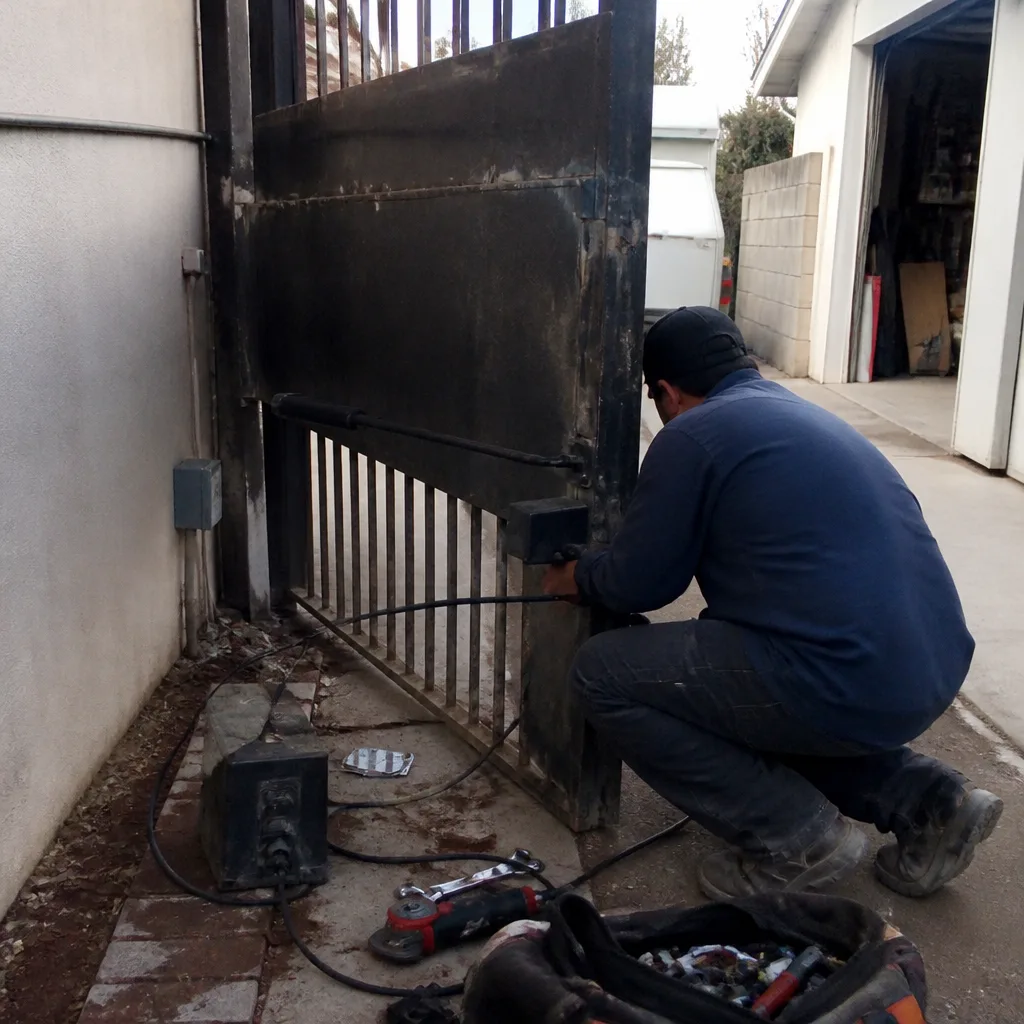 Before
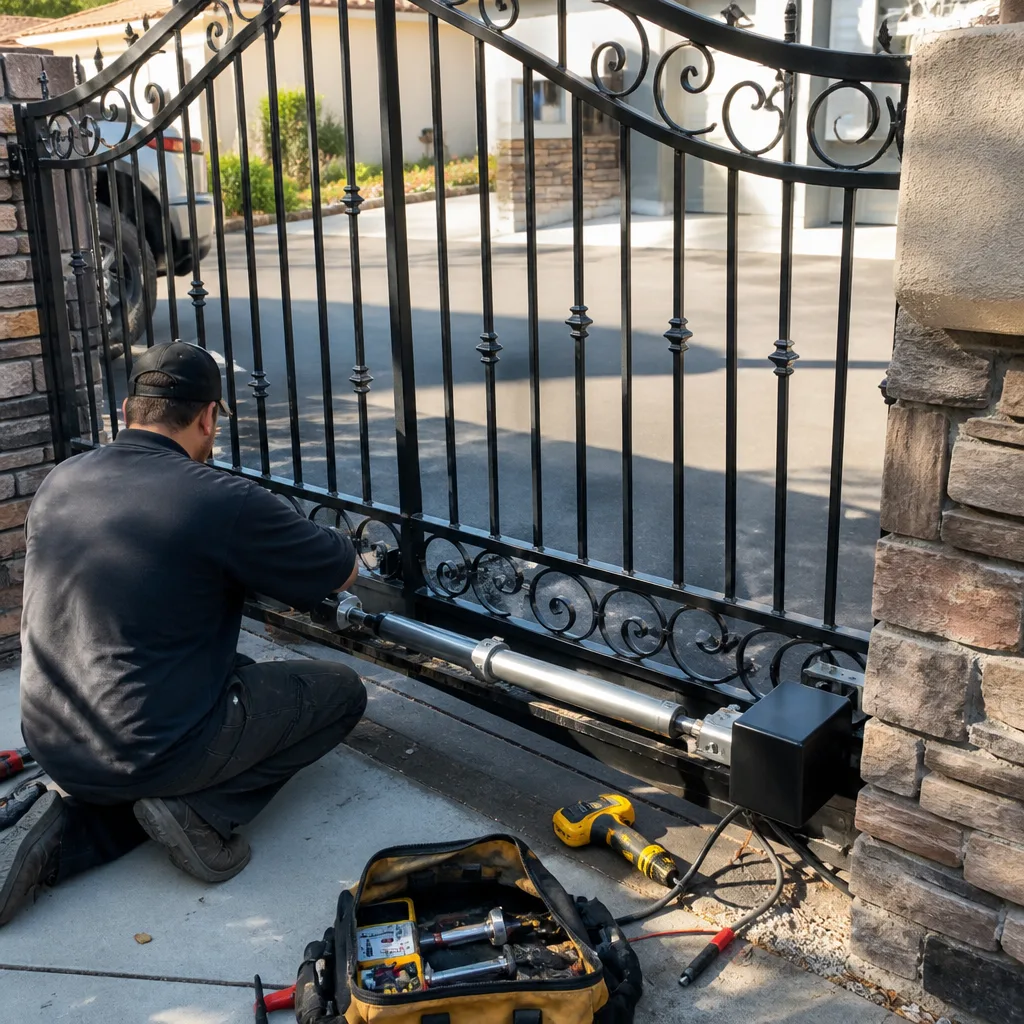 After
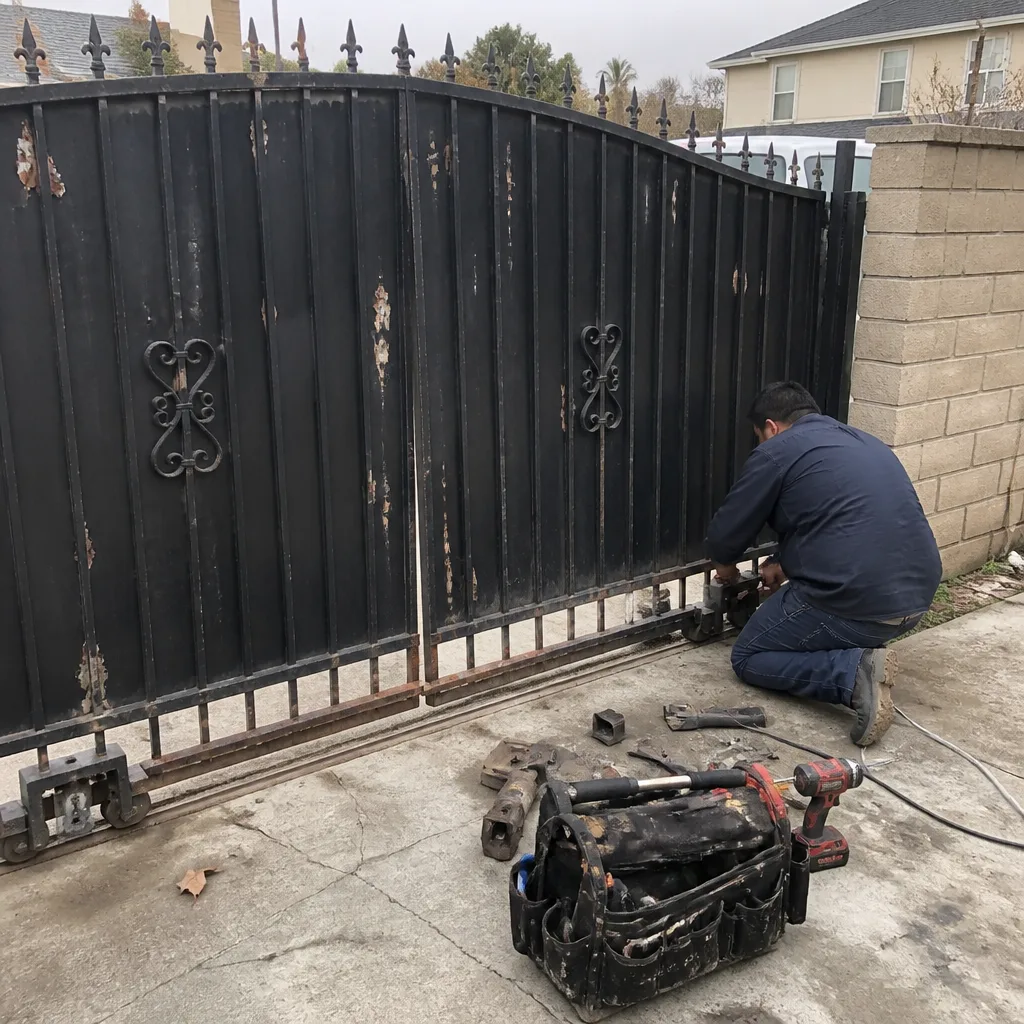 Before
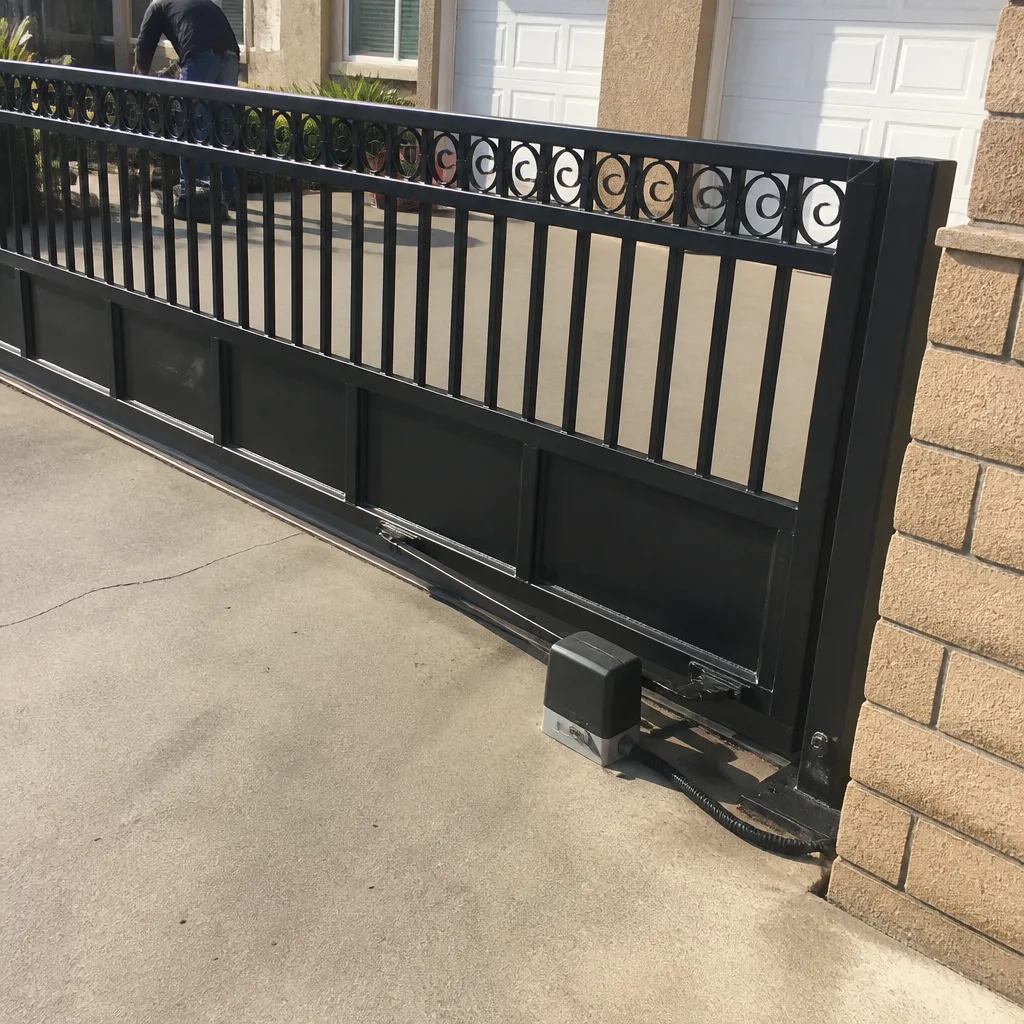 After
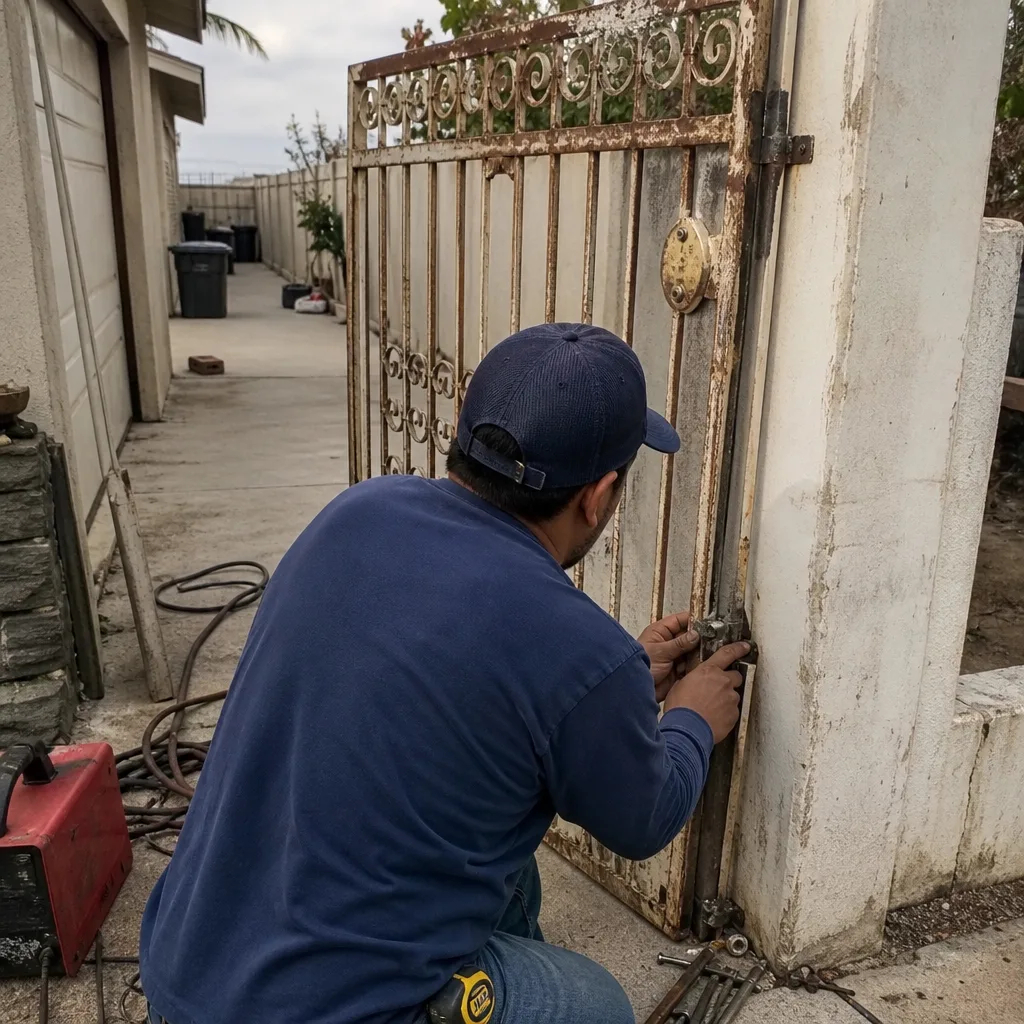 Before
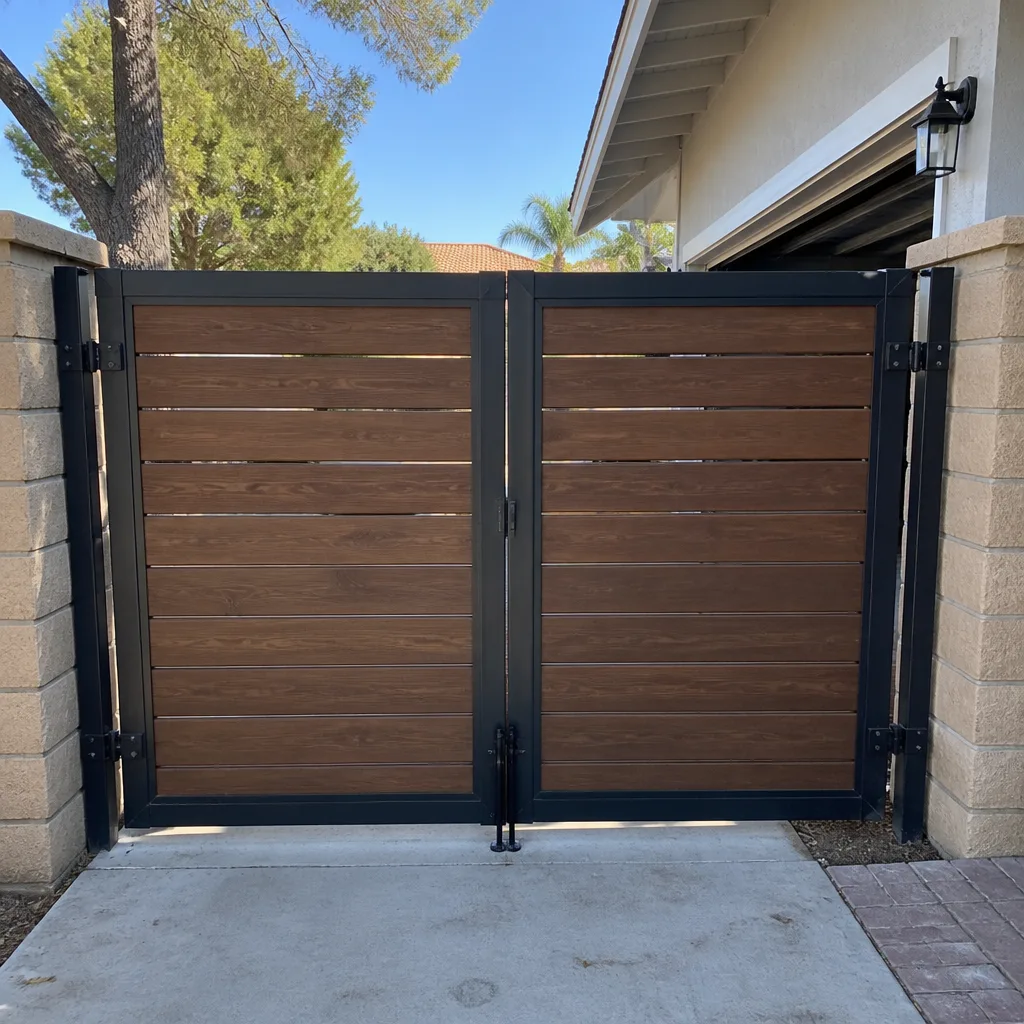 After