
Last updated October 30, 2026
 Wrought iron
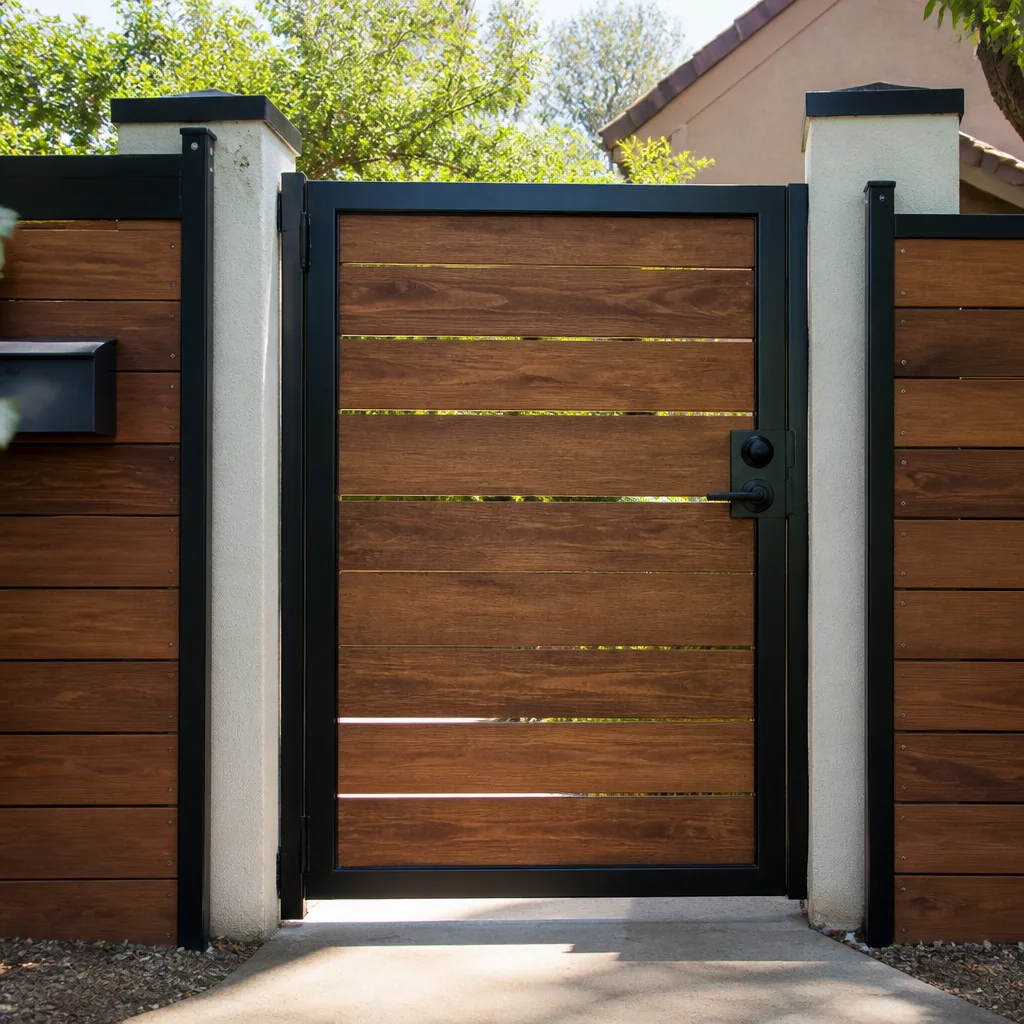 Wood & steel frame
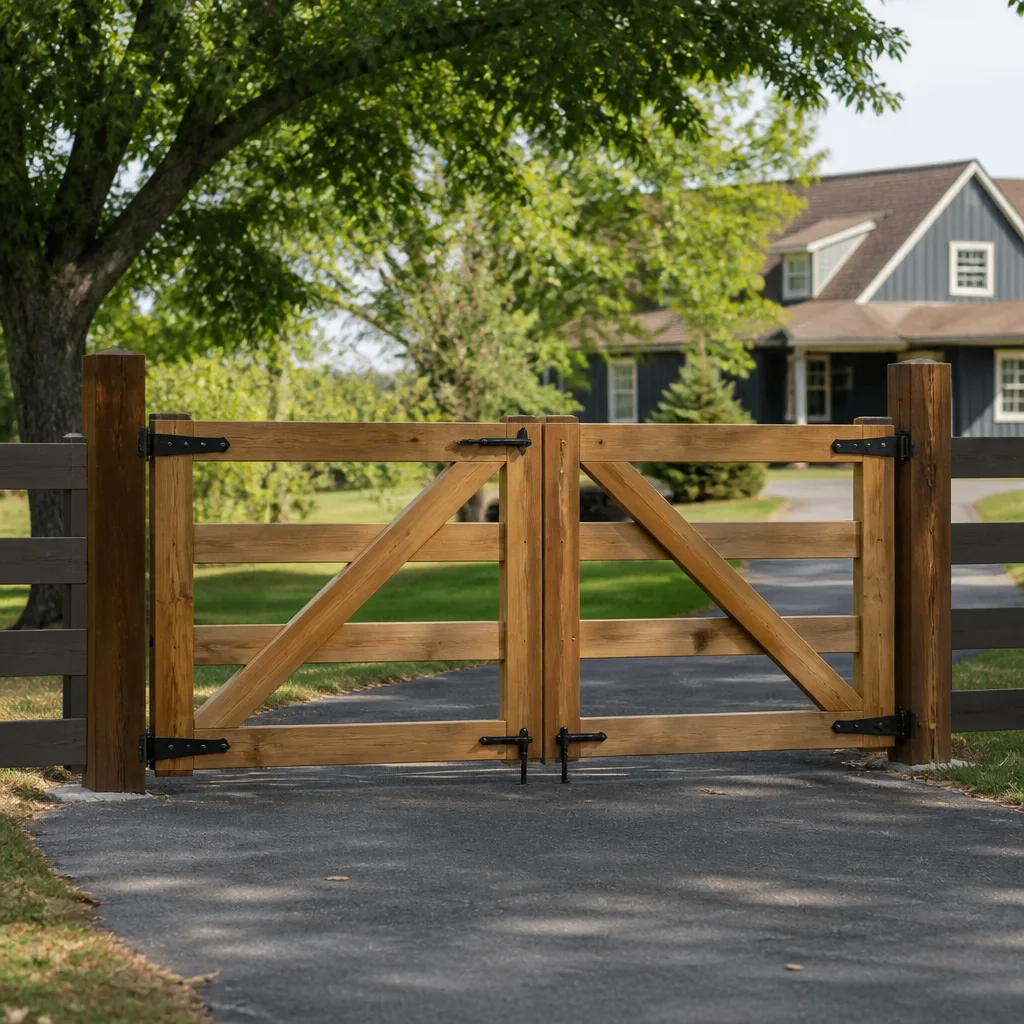 Farm & ranch
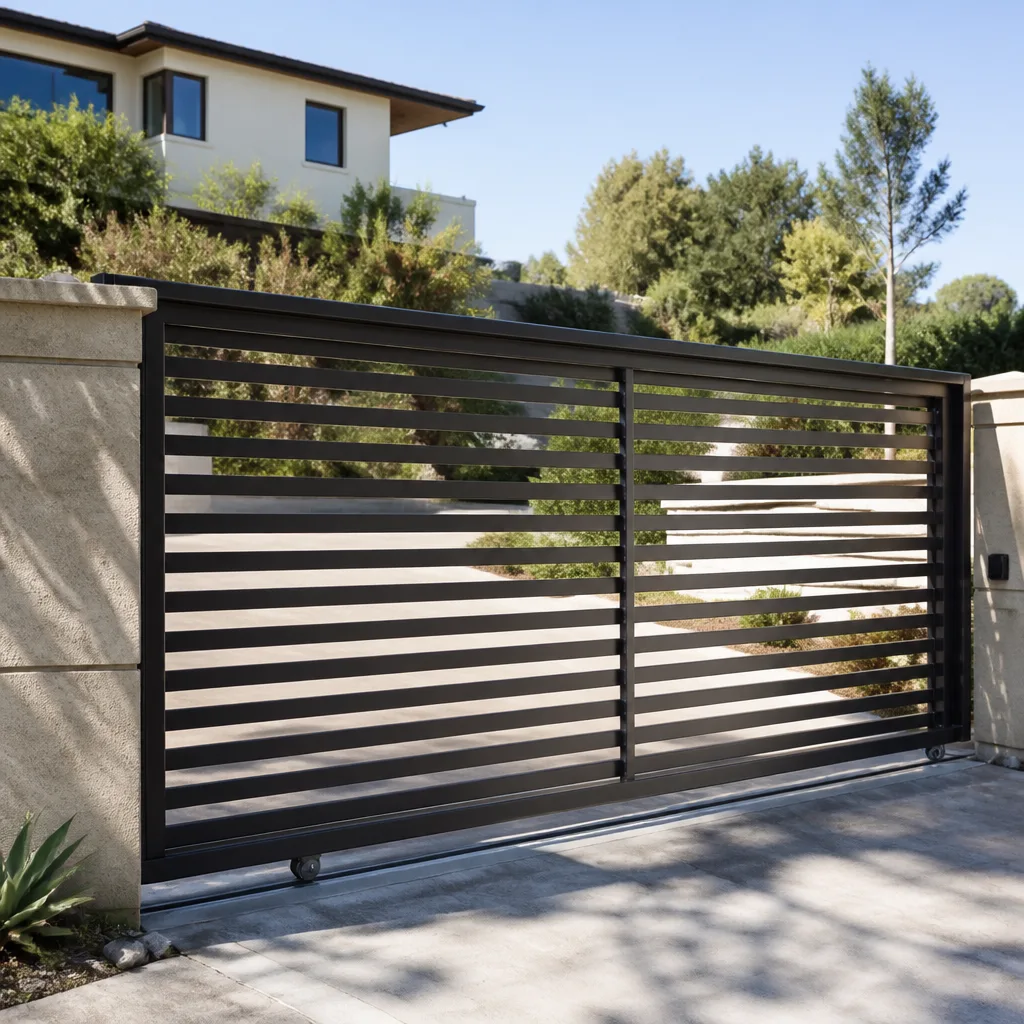 Sliding driveway gates
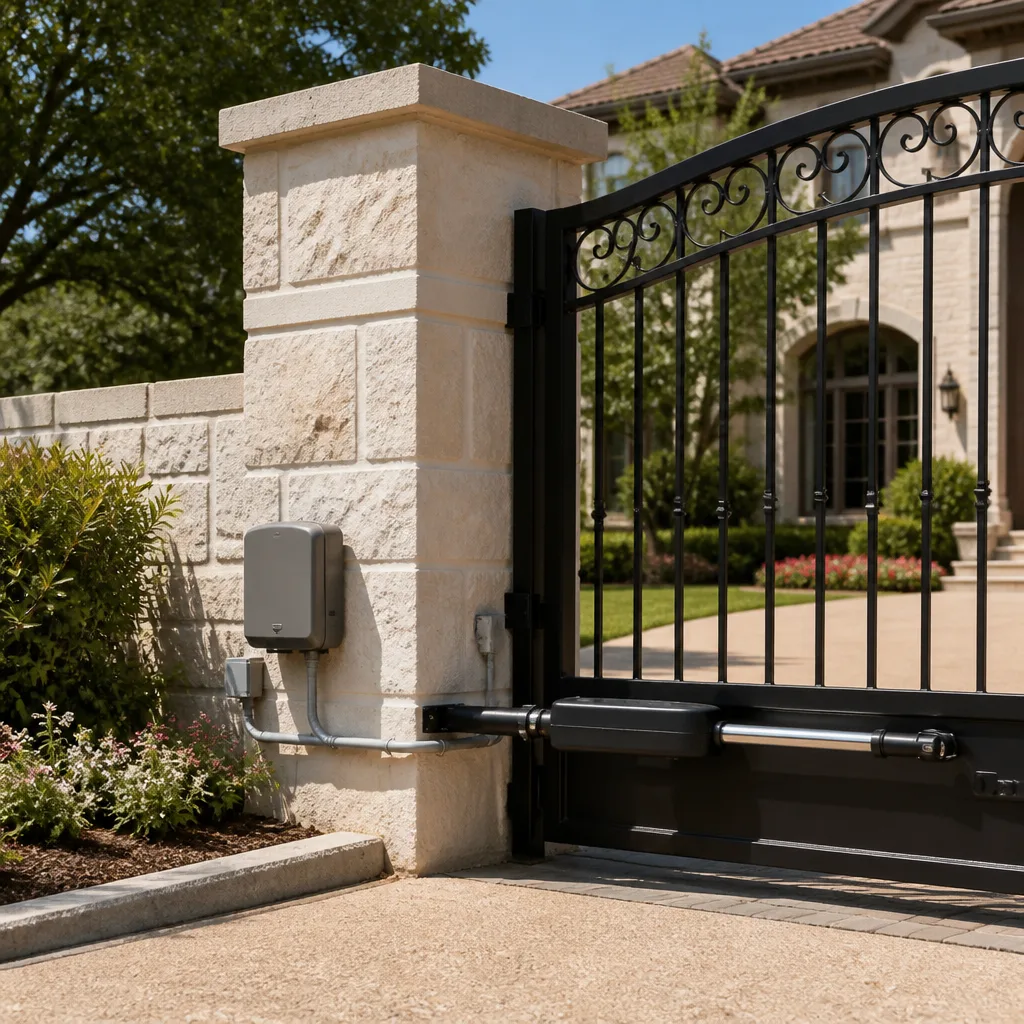 LiftMaster operators
Free on-site gate assessment - hinges, posts, and your LiftMaster or Nice gate operator checked before anything is quoted
The assessment is free and the quote is the invoice.
Get your free estimateThe Complete Guide to Gate Repair in Corona
Most gates that “just stopped working” in Corona gave their owners at least one visible warning sign 60 to 90 days earlier. A slight scrape when the gate opened. A three-second delay before the motor engaged. A spot of rust blooming at a hinge weld. The problem isn’t the failure itself. It’s knowing what to look at before the gate goes from a minor annoyance to a dead motor, a bent track, or a snapped weld. This guide maps every common failure mode by gate type and system component, so when something does go wrong with your gate in Corona, you’ll know exactly what you’re dealing with before anyone shows up. For Gate Repair services, knowing these warning signs can save you from costlier problems.
Quick Answer
Gate repair in Corona, CA typically costs between $150 and $2,500 depending on the failure point: a limit switch or sensor fix runs on the low end, while a full operator replacement or major track rebuild lands on the high end. Most mechanical issues (hinges, rollers, sagging) can be diagnosed and repaired in a single visit by a gate specialist, while electrical and automation problems require someone comfortable with both low-voltage controls and 110V/240V power. The fastest way to avoid a four-figure repair is to address the first sign of drag, noise, or delayed response immediately. See our Gate Repair Cost Breakdown: The Corona Homeowner’s Reference for 2026 to understand how these costs add up.
Styles & brands we work with
Table of Contents
- Failure Modes by Gate Type: Sliding, Swing, Bi-Fold, and Cantilever
- How Corona’s Climate Accelerates Gate Wear
- Operator Problem, Structural Problem, or Sensor Problem: Why the Difference Matters
- What to Document About Your Gate System Before Calling Anyone
- Which Gate Repairs Are DIY-Safe and Which Are Not
- What Gate Repair Costs in Corona
- What to Look for in a Gate Repair Specialist
- Preventive Maintenance: The 15-Minute Monthly Check
Failure Modes by Gate Type: Sliding, Swing, Bi-Fold, and Cantilever
Every gate type fails differently. A sliding gate’s weak points are entirely different from a swing gate’s, and treating them as the same problem wastes time and money. Here’s what we see most often on each design in the Corona area.
Sliding Gates
Sliding gates ride on a track, a V-wheel, or a cantilevered rail system, and the most common failure is drag. A gate that scrapes or shudders as it moves is telling you something is out of alignment. The usual culprits:
- Worn rollers or V-wheels: These bearings live outside in Corona’s dust and heat. When the bearing seizes, the wheel stops rolling and starts grinding. The gate gets loud, then the motor starts straining, then the motor burns out.
- Bent or obstructed track: A single rock wedged in the track, a tree root lifting a section, or a car tire clipping the track edge can cause a bent section. The gate binds at the same spot every cycle.
- Iceplant and debris in the rail: Corona properties with landscaping near the gate line deal with plant matter packing into the track channel. It compacts over time and acts like a speed bump.
- Chain or belt stretch: Chain-drive sliding gates eventually stretch enough to slap or skip teeth. Belt drives crack and lose tension. Both show up as jerky starts and stops.
Swing Gates
Swing gates pivot on hinges and carry their entire weight on two posts. The hinge post is everything. When hinges sag, the gate’s outer edge drops, and the latch or operator arm no longer lines up. We see this constantly on double swing gates in older Corona neighborhoods where steel posts were set directly into concrete without adequate reinforcement.
- Hinge wear and post lean: Over years of thermal cycling, the hinge post can lean outward just enough to change the gate’s arc. The gate starts dragging on the ground at the far end.
- Weld fatigue at the hinge plate: The weld connecting the hinge bracket to the gate frame cracks under repeated loading. It’s a small crack, then a bigger one, then a falling gate panel.
- Operator arm binding: Linear actuators and articulated arm operators have pivot points that need lubrication. When they bind, the operator fights itself, draws more current, and trips the overload.
- Sagging latch or misaligned lock: A gate that closes but won’t latch is usually a combination of hinge wear and ground settlement under the posts.
Bi-Fold Gates
Bi-fold gates have a hinge line running vertically down the center of the panel. They fold in half as they open, which means they’re popular on shorter driveways in Corona homes where a full swing arc won’t fit. The failure profile is hinge-heavy.
- Center hinge pin wear: The folding hinge carries the entire panel weight every time the gate cycles. The pin and bushing wear oval, and the gate starts to wobble mid-cycle.
- Guide wheel and track alignment: Bi-fold gates typically run a guide wheel in an overhead or ground track. Misalignment here causes the gate to bind halfway through its fold.
- Limit switch adjustment: Because the geometry is more complex, bi-fold gates are more sensitive to limit switch drift. The gate over-travels and slams into the stop.
Cantilever Gates
Cantilever gates don’t have a ground track. They ride entirely on rollers mounted to posts, with the gate suspended above the driveway. That’s the appeal: no track to clog with debris. The tradeoff is precision alignment.
- Roller bracket alignment: Cantilever gates only work when all four rollers are in perfect plane. If one bracket shifts, the gate crabs sideways and scrapes.
- Frame flex and cracking: The cantilevered section of the gate takes all the load. Welds at the back frame are especially vulnerable to fatigue cracking over years of cycles.
- Wind loading damage: Corona’s Santa Ana wind events push hard against a cantilever gate’s full face. Gates that aren’t properly anchored at the rollers get bent or knocked out of alignment.
If you’re dealing with any of these symptoms, the Gate Repair in Corona page covers what a typical service visit includes.
How Corona’s Climate Accelerates Gate Wear
Corona’s inland valley location creates a specific wear pattern on gates that coastal homeowners never see. Summer daytime highs routinely push into the mid-90s while overnight lows settle 30 degrees cooler. That daily thermal swing, repeated across months, makes steel expand and contract constantly.
What that means in practical terms:
- Weld fatigue at hinges and brackets: Every weld on a gate is a stress concentration point. Thermal cycling works those welds like bending a paperclip back and forth. The weld eventually cracks, usually at the hinge post or the operator mounting plate.
- Lubricant breakdown: High heat thins and evaporates the grease in bearings, hinges, and operator gearboxes faster than in milder climates. A hinge that was quiet in March can be dry and groaning by August.
- Paint and powder coat failure: Corona’s UV exposure is relentless. Once the finish fails, bare steel rusts quickly. Rust on a hinge pin or roller shaft accelerates wear dramatically.
- Dust intrusion into operator electronics: The dry inland air means fine dust gets everywhere. Circuit boards, limit switch contacts, and gear mechanisms all suffer from dust accumulation that coastal properties rarely experience.
- Santa Ana wind loads: The dry offshore wind events can gust hard enough to shove gates against their limits, bending brackets and knocking sensors out of alignment.
In our experience servicing gates across Corona, the combination of heat, dust, and wind means that a gate ignored for three summers is usually the gate that needs a motor replacement by the fourth. Maintenance that would be optional in a milder climate is genuinely necessary here.
Operator Problem, Structural Problem, or Sensor Problem: Why the Difference Matters
The single most expensive mistake in gate repair is misdiagnosing which layer of the system has failed. A gate system has three functional layers: the operator (the motor and its controls), the structure (the gate panel, hinges, posts, and track), and the safety system (photo eyes, edge sensors, loops, and limit switches).
Here’s why the distinction matters: replacing an operator motor because the gate was dragging on a bent track doesn’t fix the problem. The new motor will burn out within a year too. The bent track was the root cause. The motor was the victim.
Operator Problems
- The gate makes no noise when asked to open
- The motor hums but the gate doesn’t move
- The operator opens but won’t close (or vice versa)
- Erratic behavior: opens partway, reverses, beeps
- Reset button trips or fuse blows repeatedly
Structural Problems
- The gate is visibly sagging or leaning
- Scraping or grinding sounds that match gate movement
- A visible crack at a weld or hinge point
- The gate binds at the same physical spot every cycle
- The gate is hard to move manually
Limit and Sensor Problems
- The gate stops short of the closed or open position
- The gate reverses immediately after closing
- The gate won’t respond to a remote but works on the keypad
- The gate stays open continuously or closes too fast
- Safety sensor LED indicators are off or blinking
When an operator is replaced without addressing a structural problem, you will replace that operator again. We see it fairly often: a homeowner told they need a new motor, when the real fix was a $180 hinge rebuild and a track adjustment. That’s the difference between a parts-changing company and a gate specialist. For an overview of how we approach repairs on a range of systems, see our Windsor Gate Repair home page.
What to Document About Your Gate System Before Calling Anyone
When a gate fails, the homeowner’s impulse is to call the first company that picks up the phone. But the speed and quality of the repair depends heavily on how much the technician knows before they arrive. Here’s what to record now, while your gate is still working or at least still fully visible:
- Motor brand and model: Look at the operator housing. Find the brand name (FAAC, BFT, Linear, and Viking are common in Corona) and the model number. Write it down. Keep it in a notes app. The model determines what parts any technician needs to carry.
- Installer and install date: If the gate came with the house or the builder installed it, check your closing documents for the gate installer name. If you had it installed, keep that contract. Knowing who installed it and when gives the repair technician critical context about wire runs, conduit routing, and original settings.
- Last service date and what was done: If you’ve had the gate serviced before, write down the date and the work performed. A gate that’s had three limit switch adjustments in two years has a different problem than one that’s never been touched.
- Photos of the operator, control board, and gate hardware: Take photos on a sunny day, from multiple angles. Include the control board with its wiring visible. These photos help a technician identify the exact model and board revision before the visit, which means carrying the right parts on the first trip.
- Remote and keypad details: Count your remotes. Note whether you have a keypad, an intercom, or a phone-based control system. That detail changes the repair approach significantly.
We ask every Corona customer who calls us to check the operator housing for a brand sticker before we arrive. It takes two minutes and it means our first visit is a repair visit, not a discovery visit. If you have a garage door and automatic driveway gate on the same property, note which remote controls which system – that ambiguity causes more confusion than you’d expect.
Which Gate Repairs Are DIY-Safe and Which Are Not
There’s a line between well-intentioned maintenance and genuinely dangerous work. We appreciate that some homeowners in Corona want to handle small fixes themselves. Here’s the line we draw based on what we’ve seen in the field:
Reasonably DIY-Safe
- Track cleaning: Removing debris, rocks, and plant material from a slide gate track. No tools beyond gloves and a brush required.
- Hinge lubrication: Applying a light synthetic grease or wet lubricant to hinge pins, roller bearings, and operator arm pivots. This is routine maintenance, not repair.
- Sensor cleaning and alignment check: Wiping the photo eye lenses with a soft cloth and gently realigning them until the indicator LED turns solid. No disassembly required.
- Visual inspection: Looking for cracks, rust blooms, loose bolts, and frayed wires. This is the single highest-value thing a homeowner can do.
Not DIY-Safe – Call a Professional
- Any spring or spring-assisted gate mechanisms: Some gate designs use torsion springs to counterbalance weight. These springs store significant energy. Releasing that tension incorrectly can cause serious injury. We don’t recommend touching them.
- Any wiring at the operator or control board: Gate operators run on 110V or 240V in most Corona installations, with additional low-voltage wiring for sensors and controls. Opening the operator housing and probing around the board without proper training is not worth the risk.
- Hinge or post replacement on a heavy gate: A 400-pound swing gate that comes off its hinges doesn’t just damage the driveway. It can crush whatever is underneath it. Removing or replacing structural components on a heavy gate requires proper lifting equipment and technique.
- Chain or belt replacement on an automated slide gate: Re-tensioning a chain against a powered operator involves releasing the operator’s manual override and working around moving parts. Get it wrong and the gate can run uncommanded.
- Weld repairs on gate frames: Welding on a gate that’s still wired to a powered operator poses both electrical and fire risk. The gate should be disconnected, properly supported, and welded by someone who understands the load path of that specific design.
If it involves stored energy – a spring, a chain under tension, or line voltage – the answer is no. For everything else, the 15-minute monthly check below will prevent most problems before they start.
What Gate Repair Costs in Corona
Gate repair pricing in Corona depends almost entirely on which failure mode you’re dealing with. Here’s a breakdown of typical line items we see in this market, organized from cheapest to most involved:
- Sensor or photo eye realignment or replacement: $60 – $180. Usually a quick fix, sometimes requires a new sensor unit.
- Limit switch adjustment or replacement: $75 – $200. Common on all gate types, especially after power outages reset settings.
- Track cleaning, straightening, or section repair: $80 – $400 depending on the track type and damage severity.
- Roller or V-wheel replacement: $90 – $300 per wheel including the hardware and bearing replacement.
- Hinge rebuild or replacement: $150 – $600 depending on gate weight, post condition, and how many hinges.
- Remote and receiver programming: $40 – $150. Replacing remotes is day-one work. Reprogramming an existing receiver is cheaper than replacing it.
- Control board replacement: $150 – $450 depending on brand and board revision. FAAC and BFT boards tend to run higher than generic replacements.
- Operator arm or actuator replacement: $250 – $800. Common on swing gates using Linear or Viking operators.
- Full operator replacement: $600 – $1,800 installed. Price depends on gate type, brand, and whether the existing mounts can be reused.
- Major structural rebuild (post reset, track rebuild, or weld repair): $350 – $2,500. The upper end involves post excavation and re-setting in concrete, which takes a day or more.
Every quote from a reputable shop is locked in before work begins. We tell every Corona customer that the price they approve is the price they pay – if we find something else during the repair, we stop and call before touching it. No surprise invoices.
For electric and automated systems specifically, the Electric Gate Repair in Corona page breaks down what’s included in a typical service call.
What to Look for in a Gate Repair Specialist
Corona has plenty of companies that will add “gate repair” to their service list. Few actually specialize in it. The difference shows up quickly when the technician arrives. Here’s what separates a gate specialist from a general contractor who happens to own a socket set:
- They ask for the motor model before they arrive: A gate specialist knows that the fix for a BFT board isn’t the same as the fix for a Viking operator. They’ll ask what brand you have, and their first visit will be stocked accordingly.
- They diagnose before they quote: The right technician checks the limit switches and the post alignment before naming a price for a motor. A company that quotes a motor replacement over the phone without seeing the gate is guessing.
- They work on your brand, not against it: A specialist doesn’t tell you to replace your FAAC system because they only sell LiftMaster. They’ll repair the system already on the property if the repair is the right call. Brand-agnostic diagnosis is the whole point.
- They can handle both mechanical and electrical work: Many gate failures are both. A snapped hinge caused the chain to misalign, which burned out the motor. A specialist handles the whole chain of failure in one visit, not two visits from two different companies.
- They don’t disappear after the repair: A gate specialist will point out the underlying issue that caused the failure in the first place. That’s not an upsell. It’s the difference between fixing the symptom and fixing the gate.
If you’re weighing repair versus replacement, our Gate Installation in Corona guide covers what a full new system involves and when it makes more sense than another repair.
Preventive Maintenance: The 15-Minute Monthly Check
Nearly every catastrophic gate failure we see in Corona had a warning period where a simple fix would have stopped the cascade. This monthly check catches the warning signs. It takes 15 minutes and requires no specialty tools.
- Watch a full open-close cycle: Stand where you can see the gate and the operator. Does the gate hesitate, jerk, or shudder at any point? Does it slow down in the same spot every time? Does it stop slightly off where it used to? Any change in rhythm is a data point.
- Listen for new sounds: A gate that develops a squeal, scrape, thunk, or rattle is a gate talking to you. A squeal at a hinge means lubrication is gone. A scrape means metal on metal where it shouldn’t be. A thunk at the end of travel means the limit switch or stop is off.
- Look at the track and rollers: For sliding and cantilever gates, check for debris, rocks, and plant growth. Clear it out. Check the wheels for flat spots or wobble.
- Inspect the hinge welds and brackets: Look at every weld point on the gate frame and hinge brackets. Fresh rust, cracks, or paint flaking at a weld line is an early warning of fatigue. If you see a crack forming, call a specialist that week.
- Test the safety sensors: Wave your hand in front of each photo eye while the gate is opening or closing. The gate should stop and reverse. A sensor that doesn’t respond is usually dirty or misaligned. If cleaning and realigning doesn’t fix it, call it in.
- Check the operator housing: Look for signs of water intrusion, insect nests, or corrosion on the outside of the motor box. Listen for excessive gear noise or a change in the motor’s pitch. If it sounds like it’s working harder than it used to, it is.
Do this monthly and most problems reveal themselves before they require a motor replacement, a hinge rebuild, or a post reset.
Common Mistakes to Avoid
- Ignoring a scrape for months because “it still opens”: The scrape means metal is wearing. Every cycle with that scrape is removing material from a roller, hinge, or track. The repair cost goes up with every week of ignoring it.
- Replacing the operator without checking the gate’s structure: If the gate drags or binds, a new motor inherits the same load problem. The motor burns out faster the second time, and the real problem was never fixed.
- Using the wrong lubricant: Heavy grease on a sliding gate track collects Corona’s dust and turns into grinding paste. Light synthetic grease or a dry lubricant on the right surfaces beats whatever’s in the garage cabinet.
- Power-washing the operator: High-pressure water around the motor housing and control board forces water into electronics. It causes corrosion and board failure. Wash the gate panel, not the motor.
- Adjusting limit switches without understanding the cycle: Limit switches set where the gate stops. Adjusting them without checking the full open and closed positions can cause the gate to over-travel into a post or under-travel and fail to latch.
- Calling a company that also does roofing, fencing, and garage doors: General contractors are fine for many things. Gate systems aren’t one of them. A specialist sees the same failure modes weekly, not annually, and that pace of work shows in the diagnosis and the repair.
See the difference
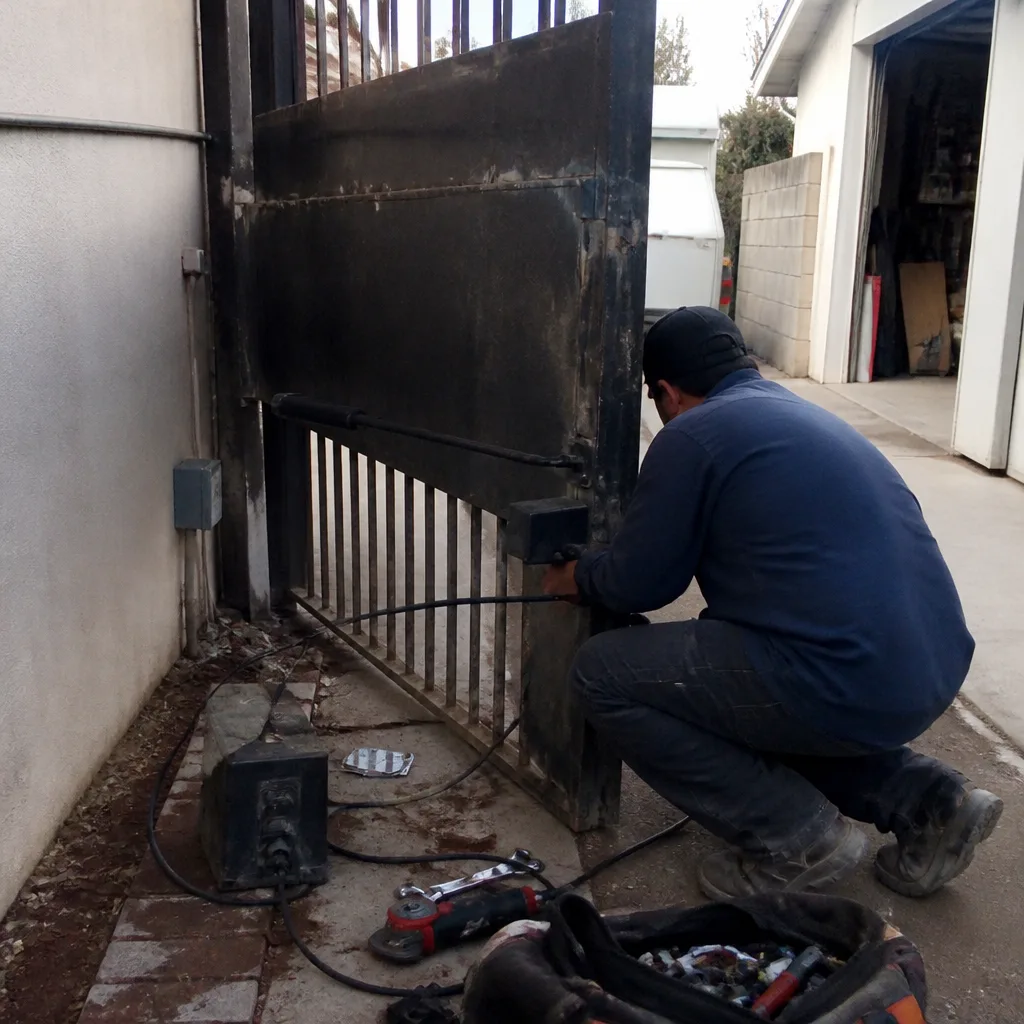 Before
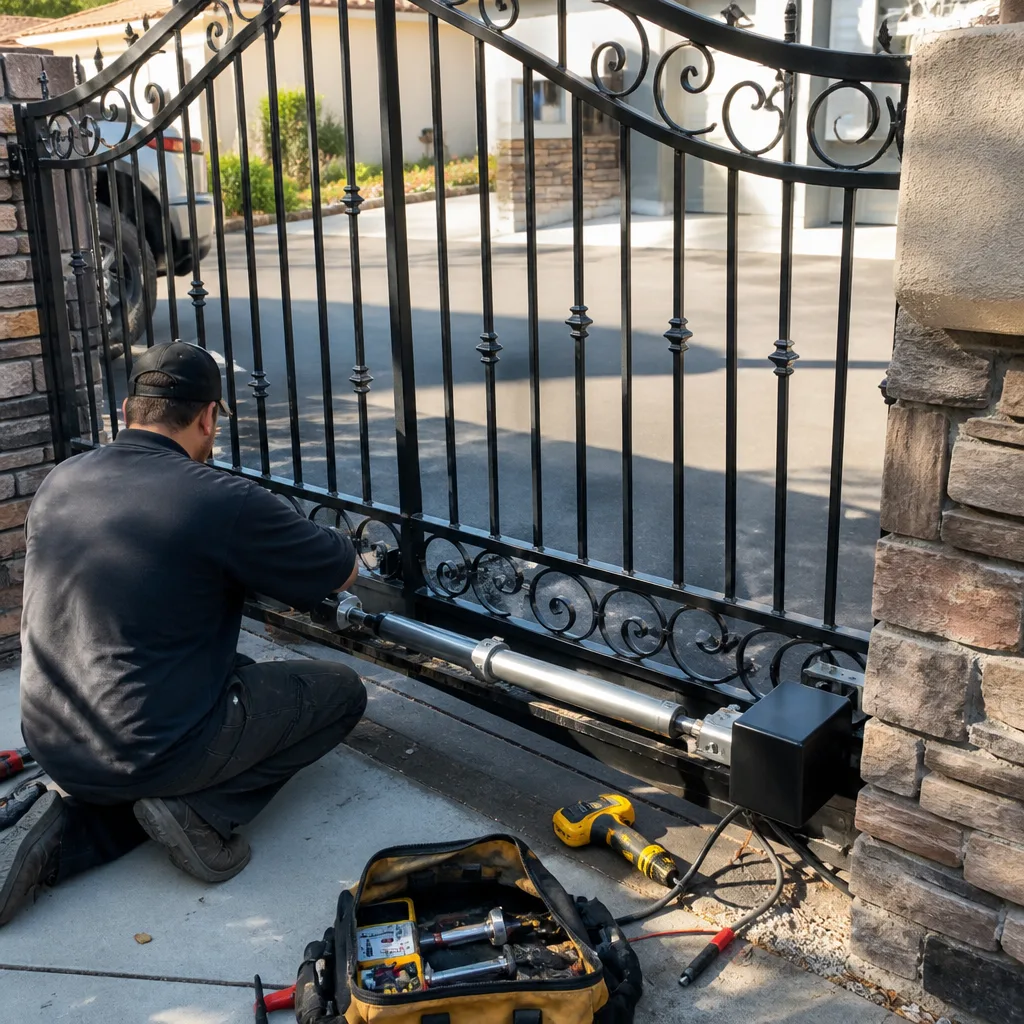 After
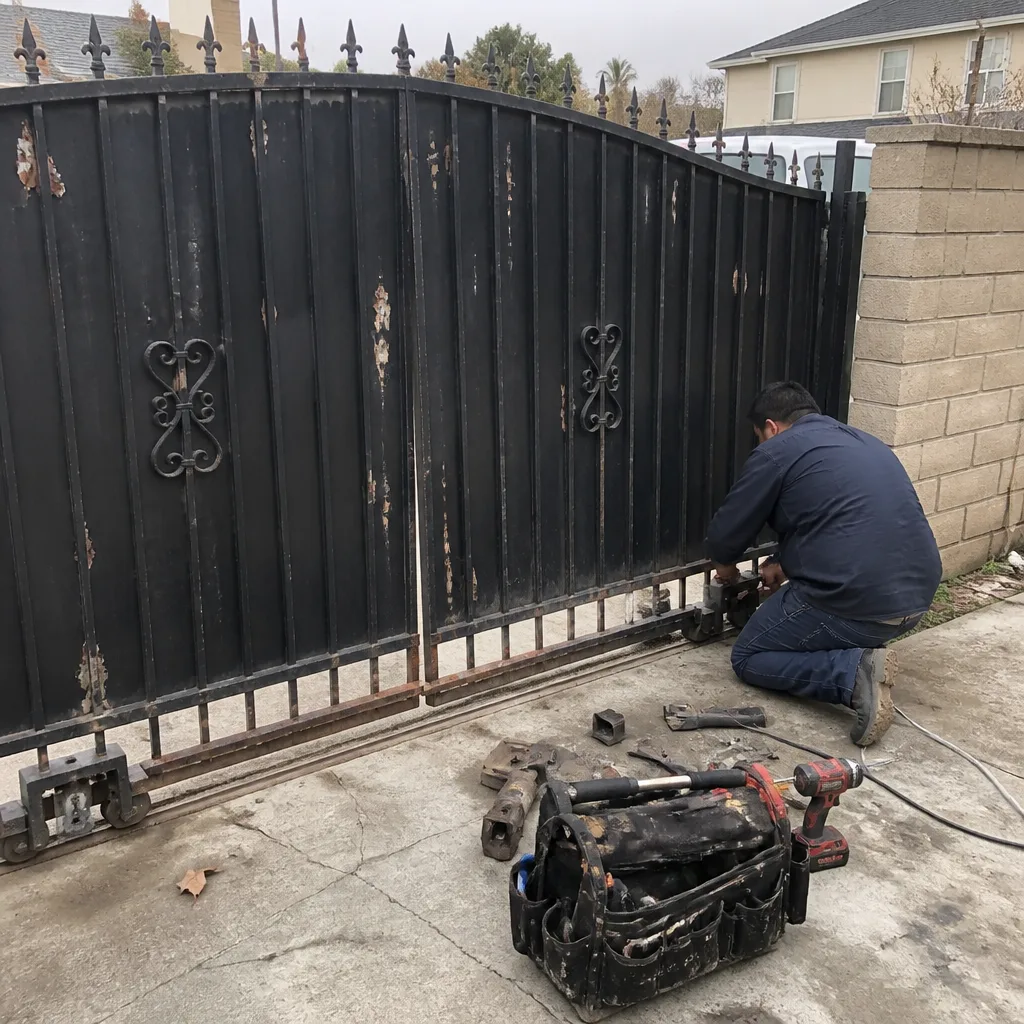 Before
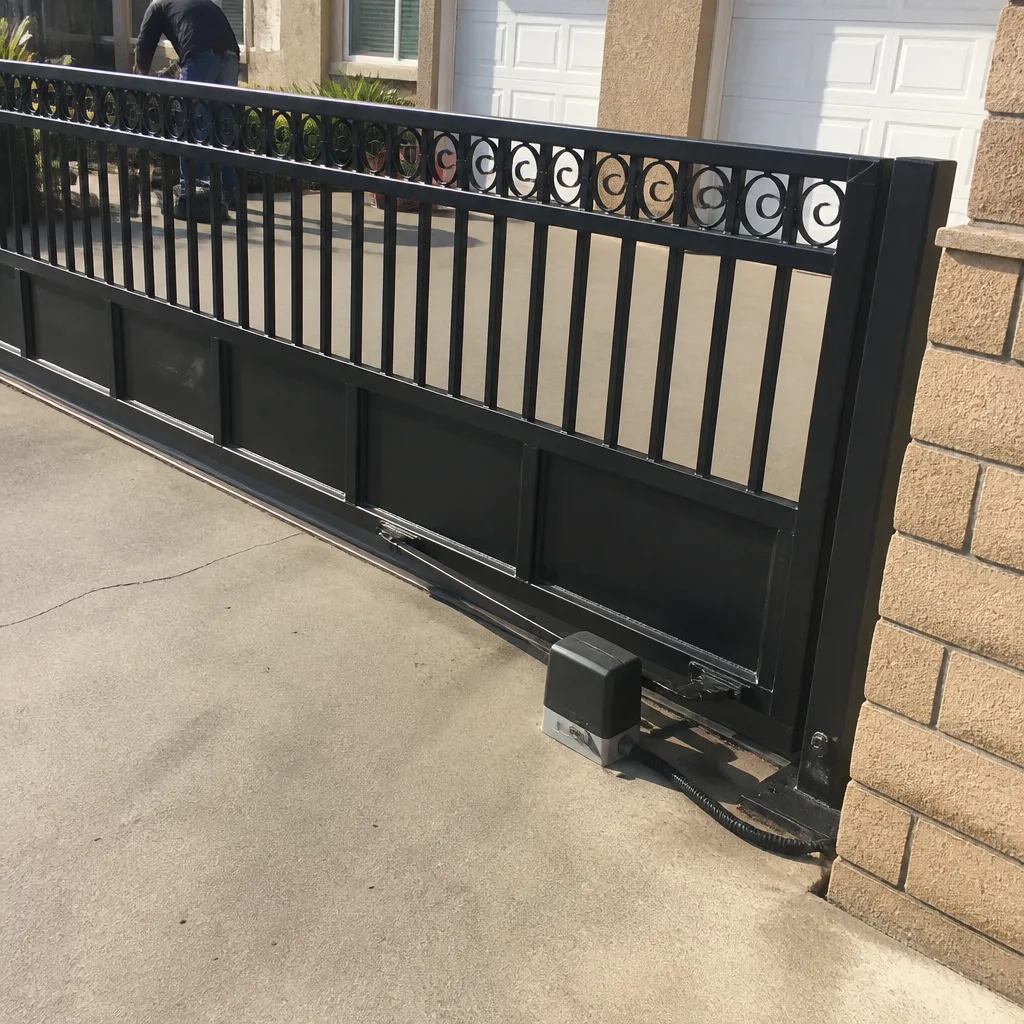 After
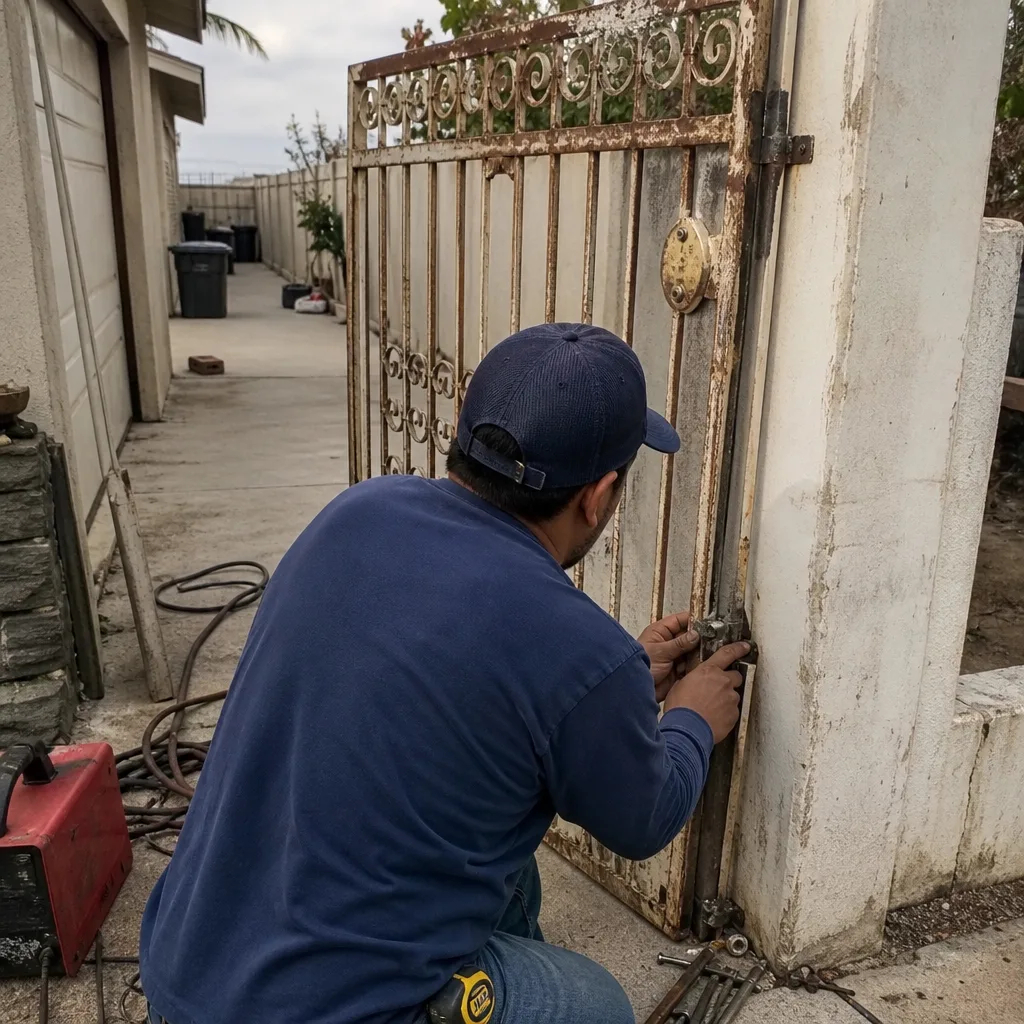 Before
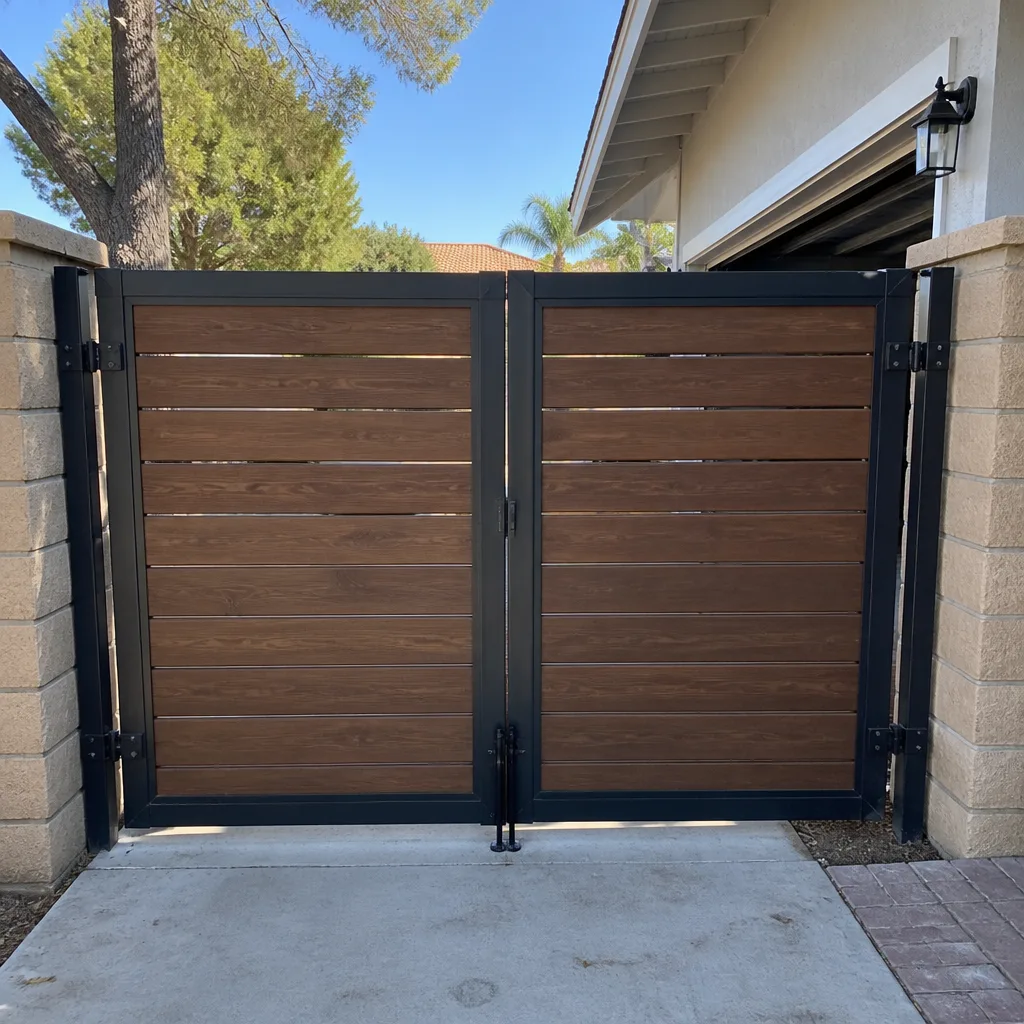 After
When to Call a Professional
Call a specialist when the gate makes a new sound, moves differently than it did the week before, or stops responding to any control method (remote, keypad, intercom, manual release). A single visit to diagnose and fix a warning-sign problem is dramatically cheaper than a repair that follows a full failure. If the gate has dropped out of alignment, if a weld is cracked, if the operator is running hot, or if any safety device stops responding, that’s a call today, not next month. Structural issues and electrical issues compound daily in Corona’s heat and dust.
Windsor Gate Repair offers free estimates in Corona. If you’re seeing any of the warning signs in this guide, call (855) 382-0601 and we’ll walk through what you’re seeing before we ever send a truck.
Frequently Asked Questions
Gate repair in Corona typically ranges from $150 for a sensor or limit switch fix to $2,500 for a major structural rebuild or full operator replacement. The average service call involving mechanical wear, hinge repair, or a control board replacement lands between $200 and $700. Call (855) 382-0601 for a free estimate – the price is locked in before any work begins.
In many cases, yes. Corona service calls involving sensor alignment, limit switch adjustment, remote programming, or hinge lubrication can often be completed in a single visit. Structural repairs requiring new parts or welded fabrication may take longer to schedule. Call (855) 382-0601 and describe the symptom – we’ll tell you what’s realistic before we dispatch.
We’re factory-familiar with FAAC, BFT, Linear, and Viking, among others. We repair the system already on your property rather than pushing a replacement in our preferred brand. If your operator is making noise, running slow, or not responding, we can typically diagnose it on the first visit.
That’s usually a safety sensor problem. The photo eyes are misaligned, dirty, or blocked and the gate interprets that as an obstruction. Clean the lenses and realign them until the indicator light is solid. If the gate still reverses, there may be a wiring issue at the sensor or the control board. Call (855) 382-0601 and we can walk you through it.
Repair is usually the right call if the operator is under 10 years old and the failure is a consumable part: a limit switch, capacitor, gear, or control board. Replacement makes sense when the motor has failed, the unit is obsolete, or the gate’s usage patterns have outgrown the operator’s duty cycle. The decision depends on the specific model and condition – a gate specialist can tell you which path is cheaper over five years rather than just cheaper today.
We handle both. Windsor Gate Repair works on manual gate hardware, electric gate systems, and everything in between. That’s the whole point of calling a gate specialist instead of two different companies for the structure and the operator.
The Bottom Line
Most gate failures in Corona follow a pattern: a warning sign appears, it’s ignored, and a minor component fails. That failure cascades into structural damage or motor burnout, and a $150 fix becomes a $1,500 replacement. The way out of that pattern is knowing what to look at: the type of gate you have, the failure mode it’s known for, and the monthly habits that catch problems early. Find more guides & resources on our blog to keep your gate running smoothly. If your gate is already showing signs – a scrape, a delay, a new sound – the cheapest day to call is today. Windsor Gate Repair serves Corona with gate-specific expertise from diagnosis through repair and full installation. Call (855) 382-0601 for a free estimate, and we’ll figure out exactly what you’re dealing with.
Written by the team at Windsor Gate Repair, serving Corona since 2012.