
Last updated October 30, 2026
 Wrought iron
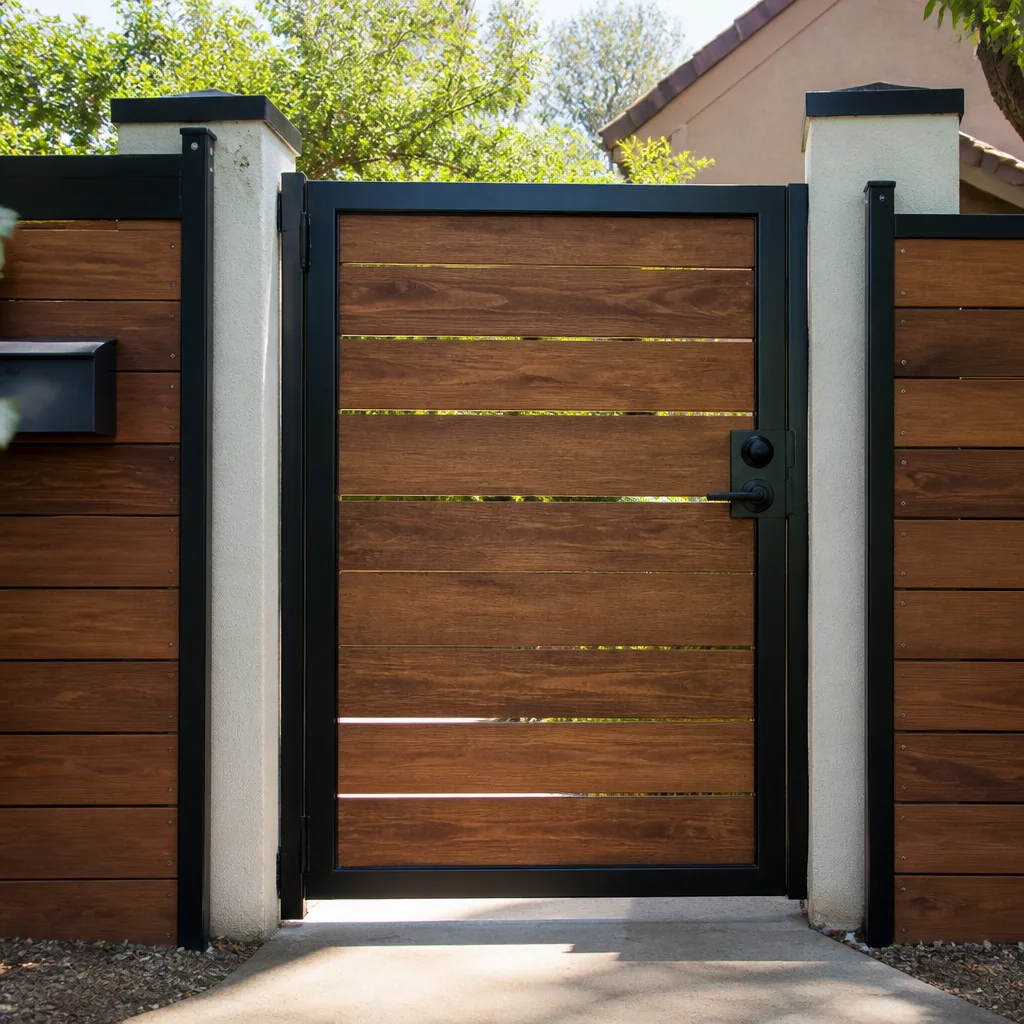 Wood & steel frame
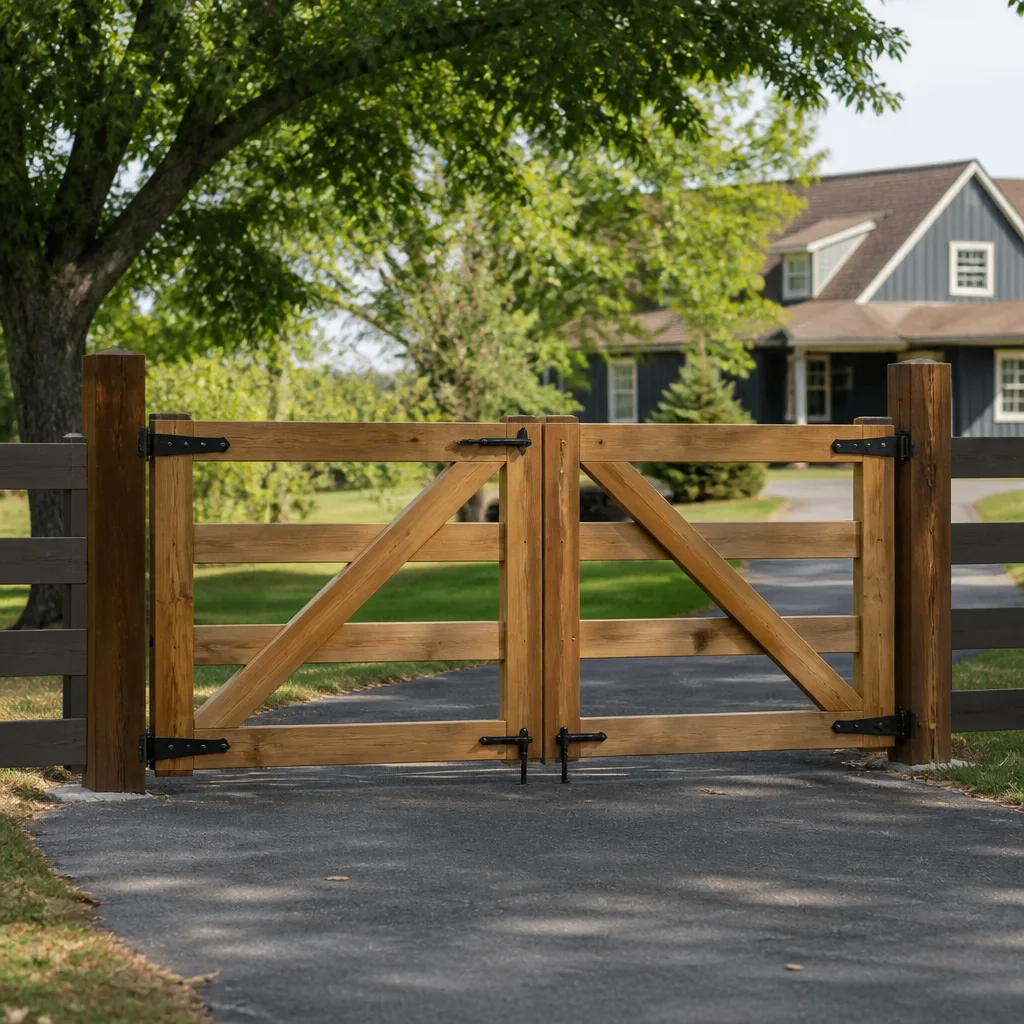 Farm & ranch
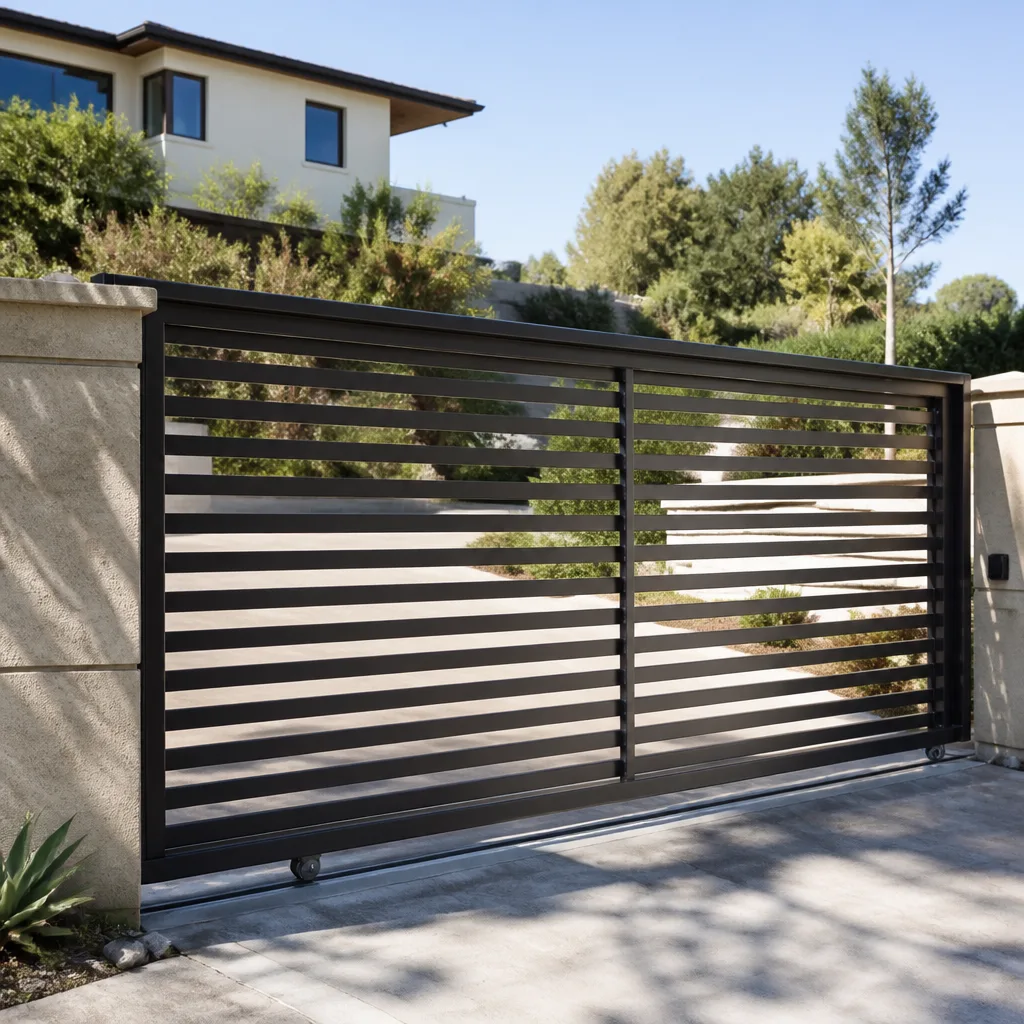 Sliding driveway gates
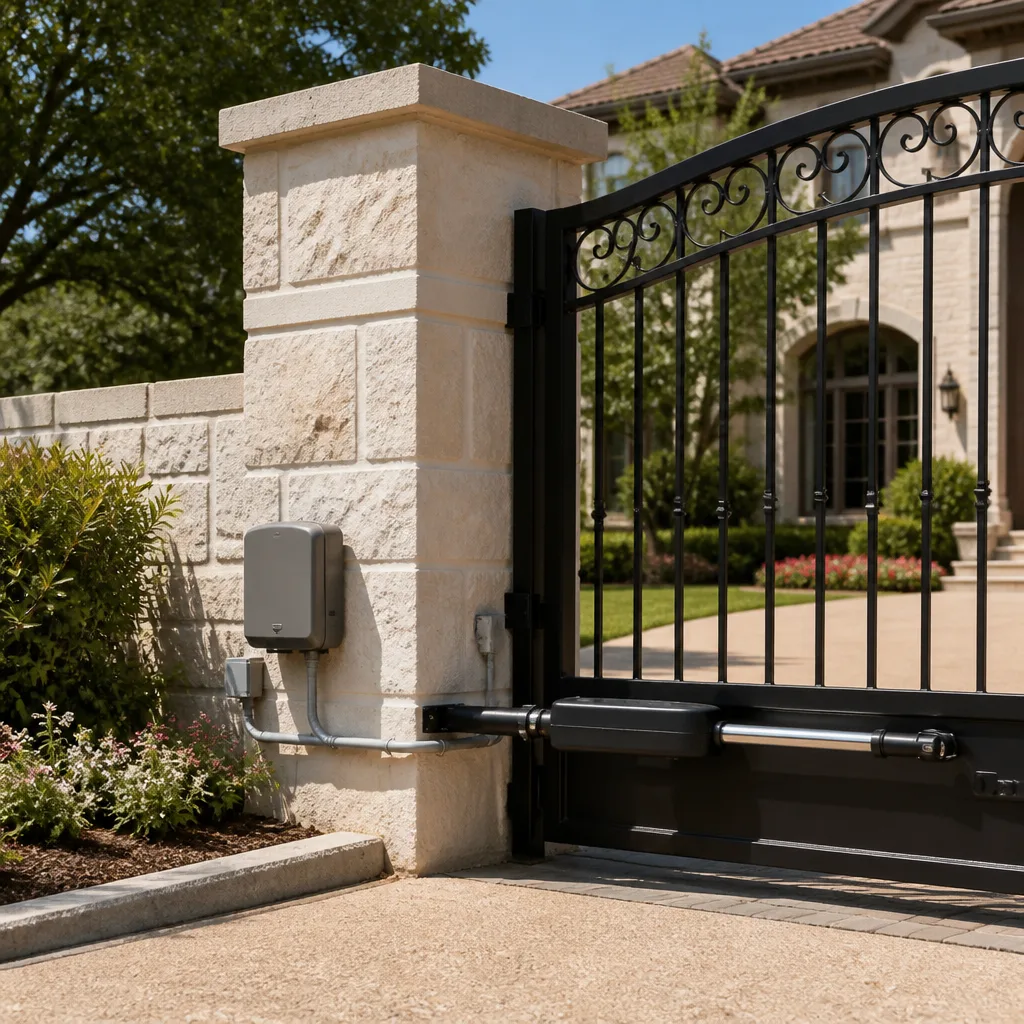 LiftMaster operators
Free on-site gate assessment - hinges, posts, and your LiftMaster or Nice gate operator checked before anything is quoted
The assessment is free and the quote is the invoice.
Get your free estimateDIY vs Professional Gate Repair: The Corona Homeowner’s Decision Guide
The most dangerous DIY gate repair isn’t wrestling a sagging swing gate back onto its hinges. It’s adjusting a counterbalance system or opening the housing on a gate operator whose capacitors still hold a charge even after the unit is unplugged. Search YouTube for “gate repair Corona” and you’ll find plenty of confident videos that skip that detail entirely. This guide draws the line by task, not by personality type, so you know exactly where safe homeowner work ends and where Gate Repair services from a licensed pro in Corona should step in.
Styles & brands we work with
Quick Answer
Most gate repair in Corona falls into three buckets: cleaning and minor alignment work that any careful homeowner can handle, mechanical repairs that require specific tools and technique, and electric gate work involving stored energy or line voltage that demands a trained technician. The realistic split is roughly one-third DIY-friendly, one-third situational, and one-third professional-only. Your decision should hinge on the specific task, the age of your system, and whether you have the right tools on hand, not on how handy you generally are.
Table of Contents
- The Stored Energy Problem: What Most DIY Guides Skip
- Task-by-Task Breakdown: What’s Safe, What’s Situational, What’s Not
- The Hidden Costs of DIY Gate Repair Nobody Calculates
- The Tool Gap: Why DIY Takes Three Times Longer Without These
- How to Pre-Diagnose Your Gate Problem Before Calling Anyone
- The One Category Where DIY Is Almost Always Correct
- What Your Gate Brand Actually Changes About Repair Difficulty
- Common Mistakes to Avoid
- When to Call a Professional
- Frequently Asked Questions
- The Bottom Line
The Stored Energy Problem: What Most DIY Guides Skip
The internet treats all gate work as if it’s the same level of risk. It isn’t. The dividing line that matters most is whether the part you’re touching stores energy some way other than its own weight.
A manual swing gate that drags on the ground stores very little energy beyond its mass. It’s annoying, it’s heavy, and it can pinch fingers, but the failure mode is predictable. A counterbalance system on a cantilever slide gate is different. Those springs and weights carry hundreds of pounds of tension. If a spring lets go while you’re adjusting it, the result is not a bruised knuckle. We’ve seen the aftermath of it in Corona neighborhoods, and it’s not something you walk away from easily.
Gate operators compound this. A LiftMaster or FAAC operator that’s been unplugged still stores charge in its capacitors. Capacitors exist specifically to hold electricity. Discharging them incorrectly is a shock hazard, and on larger operators running 240V circuits, it’s a potentially lethal one. That’s not dramatic language. It’s the reason the electrical enclosure on any gate operator carries warning labels.
So before you open a single panel, ask one question: does this part store energy beyond its own weight? If the answer is yes, treat it like a job for a gate specialist, not a Saturday project.
Task-by-Task Breakdown: What’s Safe, What’s Situational, What’s Not
Here’s the Gate Repair Cost Breakdown: The Corona Homeowner’s Reference for 2026 we give friends and neighbors in Corona. No gate company profits from telling you to DIY the easy stuff, and no responsible technician pretends the dangerous stuff is a learning opportunity.
Genuinely Safe for a Careful Homeowner
- Cleaning the gate track on a slide gate: debris builds up in Corona’s dry, dusty stretches, especially near the Santa Ana River corridors and the foothills where wind carries grit. A stiff brush and a shop vacuum solve most of it.
- Lubricating hinges and rollers: a can of white lithium grease and ten minutes of work. More on this in the DIY section below.
- Tightening visible fasteners: hinge bolts, bracket screws, post caps. Use the correct size socket, not an adjustable wrench.
- Realigning a photo eye sensor: if your gate reverses or refuses to close, the safety sensor often gets knocked slightly out of alignment. Loosen, reposition, tighten, test.
Situational: Depends on Your Comfort and Tools
- Replacing a wheel or roller on a manual gate: doable if the gate is properly supported and you have a jack stand rated for the weight. Never support a gate with a car jack alone.
- Adjusting the close limit on an operator: possible on many BFT and Linear units, but you need to know your specific model’s menu structure. A wrong setting can slam the gate or leave it open.
- Replacing a ground loop or safety edge sensor: wiring is low voltage, but improperly installed sensors leave your gate unsafe. This is a judgment call.
Professional-Only: Do Not Attempt Yourself
- Counterbalance spring adjustment or replacement on cantilever gates. Stored kinetic energy. Severe injury risk.
- Any work inside a gate operator housing involving capacitors, transformers, or line voltage. Unplugged does not mean discharged.
- Repairing or replacing structural posts: in Corona’s clay-heavy soil, a leaning post usually means the footing has failed. Swapping the post without addressing the footing is a two-year temporary fix at best.
- Re-hanging a large iron gate: gates routinely weigh 300 to 800 pounds. When they come off their hinges, gravity wins fast.
- Rewiring an automatic gate that trips a breaker: that’s the system telling you there’s a short or a surge. Chasing it without a meter and proper training is how fires start.
The Hidden Costs of DIY Gate Repair Nobody Calculates
Online cost calculators love comparing part prices. A $40 wheel versus a $300 service call looks like obvious savings. What those calculators never include is what happens when the fix goes wrong. In our work across electric gate repair in Corona, we routinely see DIY attempts that turned a straightforward repair into a replacement.
Here’s what actually costs money when DIY gate repair goes sideways:
- Warranty voidance: most gate operators from Viking and FAAC carry a manufacturer warranty that’s explicitly voided by unauthorized service. If your opener is under three years old, an unlicensed repair attempt may mean you’re paying full price for the next failure.
- Code violations: Corona requires automatic gate systems to meet UL 325 safety standards. An improperly installed safety edge or photo eye can leave you liable if someone is injured. California has specific rules about entrapment protection, and your homeowner’s insurance may not cover claims arising from a non-compliant DIY repair.
- Compounding damage: a misaligned slide gate that isn’t corrected grinds the chain, wears the sprocket, and eventually kills the operator motor. That $40 wheel you installed becomes a $1,800 operator replacement.
- The second visit factor: the average DIY repair that goes wrong takes about twice as long for a professional to correct as the original problem would have taken to fix cold. We’re untangling whatever was changed, not just diagnosing the root cause.
- Your time: a gate repair that takes a specialist 45 minutes often eats an entire weekend for a homeowner who’s figuring it out from videos. At any reasonable valuation of your time, that math collapses fast.
The Tool Gap: Why DIY Takes Three Times Longer Without These
Most gate repairs are not intellectually hard. They’re physically awkward. The difference between a 45-minute professional repair and a six-hour homeowner struggle is almost always the tools, not the knowledge.
Here’s what gate technicians carry that most garages don’t have:
- A pipe stand or jack stand rated for 500+ pounds: you cannot safely support a sagging gate with a car jack. The gate will shift. You need a stable, rated support that sits flat on the ground.
- Deep sockets and breaker bars: gate hardware is often recessed and heavily torqued. A standard ratchet set strips bolts or won’t reach them.
- A digital multimeter that reads DC voltage: most gate accessories run on 24V DC. Guessing at a wiring fault without a meter is not diagnosis. It’s a coin flip.
- An impact driver with matching bits: old gate hardware in Corona’s climate gets seized. Hand-turning a 15-year-old bracket screw can take twenty minutes per bolt.
- Thread tap and die sets: cross-threaded hardware happens constantly on older gates. Without a tap set, you’re drilling and hoping.
- Replacement hardware on hand: gate pros carry boxes of the common bolts, washers, and rollers because they know something will snap during disassembly. Homeowners make a second hardware store run, then a third.
The honest takeaway: if you’re missing more than two of these tools, the DIY job will probably take you three to four times longer than the video suggested, and you’ll still be making hardware runs mid-repair.
How to Pre-Diagnose Your Gate Problem Before Calling Anyone
Here’s something most gate companies won’t tell you: a sharp homeowner can save real money by doing legitimate diagnosis before the technician arrives. Not repair. Diagnosis. Walking a contractor through what you observed helps them bring the right parts on the first trip, which reduces labor time and gets your gate working faster.
When you call Windsor Gate Repair home for service in Corona, the questions we ask are the same ones you should ask yourself before dialing:
- What exactly does the gate do (or not do)? Does it not open at all, open halfway, open but not close, close but not latch, reverse unexpectedly, or make a new noise? Write down the specific behavior.
- Is the problem consistent or intermittent? Gates that work in the morning but fail in the afternoon heat are often a different problem than gates that stopped working entirely. In Corona, chip seal and asphalt can radiate heat that affects sensor behavior in summer.
- Does the operator respond at all? If the LED display is dark, check the breaker first. If it shows a code, write it down. That code is often model-specific and tells a technician exactly where to look.
- Does the gate move manually? Put the operator in manual/bull gear mode (most units have a release handle). If the gate drags or catches by hand, you’ve isolated a mechanical issue separate from the automation. If it moves smoothly, the problem is in the operator or electronics.
- What changed recently? Heavy winds, a vehicle bump, landscaping work, new sprinkler heads, recent power outages. Corona’s Santa Ana winds regularly push gates just far enough out of alignment to trip limit switches.
- Which brand and approximate age is the system? Look for the manufacturer label on the operator. Viking, BFT, Linear, FAAC. The brand narrows down known failure patterns significantly.
A five-minute walkthrough that covers these questions turns a vague “my gate is broken” service call into a targeted repair visit with the right parts on the truck.
The One Category Where DIY Is Almost Always Correct
Cleaning, lubrication, and sensor alignment. That’s it. This is the work that requires no stored-energy contact, no wiring, no load-bearing support, and no specialized tools beyond what you already own. And it prevents a meaningful percentage of the repair calls we get in Corona.
Here’s the step-by-step, because doing these three things annually keeps most slide gate systems running smoothly:
- Clean the track first. Use a stiff-bristle brush to remove compacted dirt and debris from the V-track or round rail. For embedded grime in the grooves, a flathead screwdriver works as a scraper. Then vacuum the track and surrounding area. In Corona’s dry months, this may be needed quarterly rather than annually, particularly if you live near open fields or equestrian areas.
- Lubricate moving contact points. Use white lithium grease, not WD-40. Apply to hinge pins, roller bearings, wheel axles, and the chain if you have one. Wipe away excess. Over-lubricating attracts dust, and in Corona there’s always dust.
- Check the safety photo eyes. Wipe the sensor lenses with a dry cloth. Confirm both eyes face each other squarely. On most brands, a proper alignment shows a steady green indicator light on at least one eye. If the light is blinking, adjust the sensor position until it holds steady.
- Inspect the wheels or rollers. Look for flat spots, wobble, or metal-on-metal grinding sounds when the gate moves. If you see significant wear, note it and keep an eye on it. You haven’t caused a problem, but you’ve spotted the next one early.
- Test the gate. Run it through two or three full cycles, both from the remote and the manual release. Listen for any new noise after lubrication. A properly lubricated gate should run noticeably quieter.
If after all this your gate still grinds, drags, or fails to close properly, you’ve done the easy part correctly. The next step is a mechanical or electrical diagnosis that belongs in professional hands.
What Your Gate Brand Actually Changes About Repair Difficulty
Gate brands are not interchangeable. The repair process for a Viking operator differs meaningfully from a BFT or a Linear. That’s why we’re factory-familiar with nine major brands, not just one or two. Your brand determines parts availability, diagnostic codes, and how the operator responds to faults.
Here’s what brand actually means in practice:
- FAAC and BFT: European engineering. Hydraulic and electromechanical operators with tighter tolerances and model-specific programming sequences. The menu structure is less intuitive than American brands, and guessing at settings without the manual usually makes things worse. Common in higher-end Corona properties and HOAs.
- Linear: very common on American residential properties. Parts are widely available, and the programming interface is generally straightforward. The issue is age: we see a lot of Linear operators in Corona that are ten to fifteen years old, and capacitor failure is the leading cause of their eventual demise.
- Viking: commercial-grade equipment that occasionally shows up on larger residential estates. These are built to take abuse, but the repair path is different. Viking operators often use separate control boards and contactors, and diagnosing them requires working inside a live panel more often than on smaller residential units.
For a homeowner, the practical implication is simple: the more specific you can be about the brand when you call for help, the faster your repair moves. If you don’t know the brand, a photo of the operator housing or the remote usually identifies it.
Common Mistakes to Avoid
- Treating an unplugged gate operator as safe to open. Capacitors hold charge. Always treat the inside of an operator housing as live until a professional with a meter says otherwise. We cannot stress this one enough.
- Using WD-40 as gate lubricant. It’s a solvent and moisture displacer, not a lubricant. It strips away whatever grease was there and evaporates, leaving the gate dry and noisier within a month.
- Adjusting counterbalance springs without understanding the load. This is the single most dangerous thing a homeowner can attempt on a gate. Full stop.
- Replacing a safety sensor with a cheaper, incompatible part. UL 325 compliance in Corona isn’t optional. The wrong photo eye or safety edge leaves the gate non-compliant and creates liability you don’t want.
- Ignoring intermittent problems until they become permanent. A gate that fails once a week is telling you something specific. By the time it fails daily, the repair has usually grown from a part replacement to a system repair.
- Assuming a sagging gate just needs a hinge adjustment. In many Corona yards, the post itself has begun to lean. Tightening the hinge buys weeks, not years. The footing is the actual problem.
When to Call a Professional
Call a gate specialist if the problem involves a counterbalance spring, anything inside an operator housing, a structural post, a tripping breaker, or an automatic gate that no longer stops or reverses when it should. Those are not judgment calls. They are safety issues, and some of them are life-safety issues covered in our Gate Repair Emergency Preparedness Guide for Corona Homes.
You should also call if you’ve already attempted a diagnostic and the problem persists. A second opinion after a failed DIY attempt costs less than a third attempt that damages the operator beyond repair. Gate installation in Corona and repair work both benefit from a technician who sees the same brand failures week after week, not once a year.
Windsor Gate Repair offers free estimates in Corona. Call (855) 382-0601 and we’ll walk you through what you’re seeing and what it likely means.
Frequently Asked Questions
Gate repair in Corona typically runs between $150 and $450 for most mechanical and electrical fixes, with full operator replacements ranging from $1,200 to $3,500 depending on the brand and horsepower. Simple lubrication and sensor alignment work falls at the lower end or can be done by the homeowner for the cost of supplies. Call (855) 382-0601 for a free estimate on your specific gate.
Low-voltage sensor wiring may be within reach for a homeowner with a multimeter and the correct parts, but anything inside the operator housing should be treated as professional-only work. The capacitors in gate operators hold charge after the unit is unplugged, which is a shock risk that basic wiring experience does not prepare you for. When in doubt, the safe call is a gate specialist.
Most common gate repairs take between one and three hours on site, assuming parts are available. Specialized operator boards or uncommon brand components may take a few days to source, at which point the installation itself is usually quick. Pre-diagnosis from the homeowner shortens the on-site time meaningfully.
In Corona specifically, we see a lot of track debris buildup and hardened lubrication from the dry, dusty conditions, along with heat-related sensor drift in summer. Santa Ana winds knock gates out of limit-switch alignment every fall and winter. The mechanical load issues come from post footings shifting in the area’s clay-rich soil.
If the structural posts and the gate itself are in good condition, repair is usually the financially sensible choice. If the gate is sagging because posts have shifted, the operator is over ten years old, and the safety sensors are obsolete, replacement often costs less over a five-year horizon. We’ll give you an honest read either way.
We work on all major gate brands including FAAC, BFT, Linear, and Viking, plus LiftMaster, Ghost Controls, DoorKing, Elite, and Mighty Mule. We’re brand-agnostic: we fix the system you already have rather than defaulting to an upsell. Call (855) 382-0601 and tell us what you’re running.
The Bottom Line
The DIY-versus-professional gate repair question resolves down to stored energy and tools. If the task is cleaning, lubricating, or aligning sensors, you can do it this weekend with what’s in your garage. If it involves a spring under tension, a capacitor, a tripping breaker, or a post that’s no longer plumb, those are professional jobs and attempting them yourself is how small problems become expensive ones. For everything in between, our more guides & resources on pre-diagnosis and an honest phone call usually sorts it out fastest. Corona homeowners who keep their gates clean, catch problems early, and know where their skill ends get the most years out of their systems.
Written by the team at Windsor Gate Repair, serving Corona since 2012.
See the difference
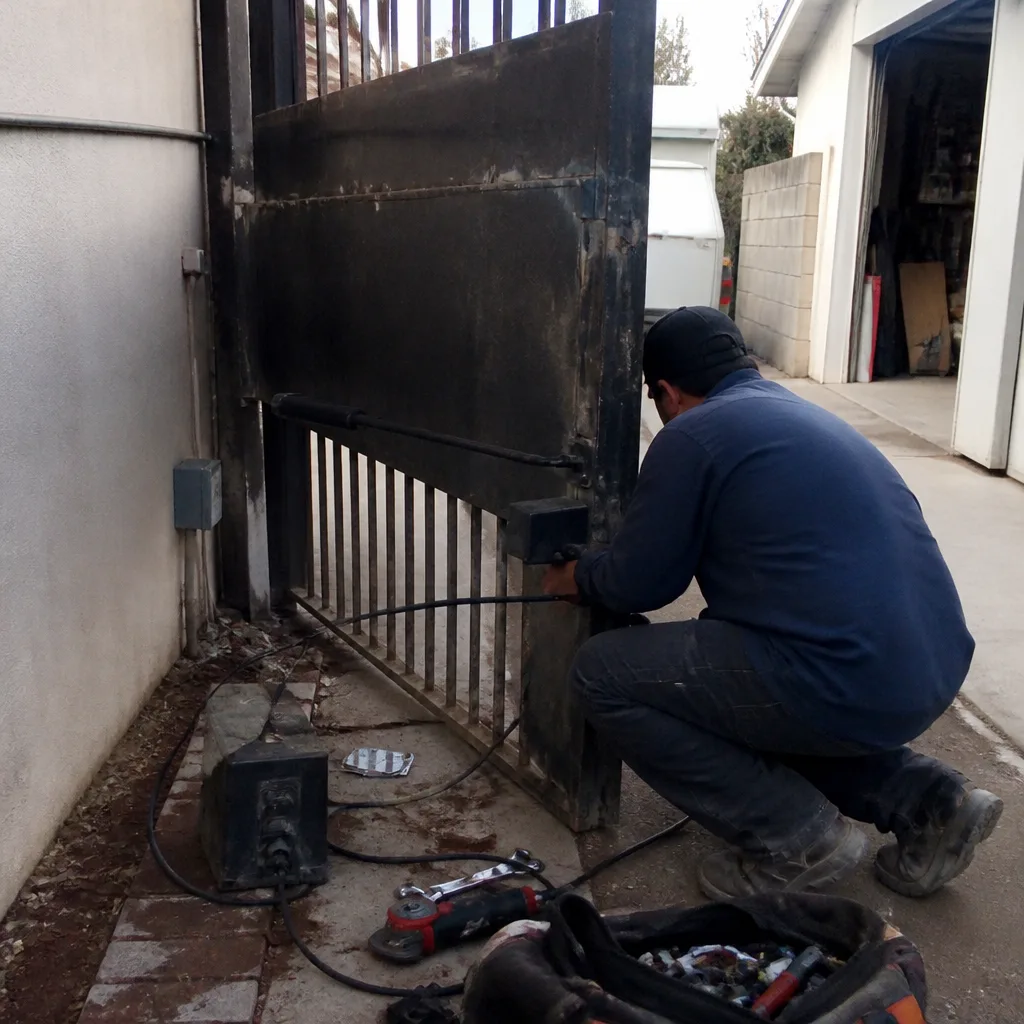 Before
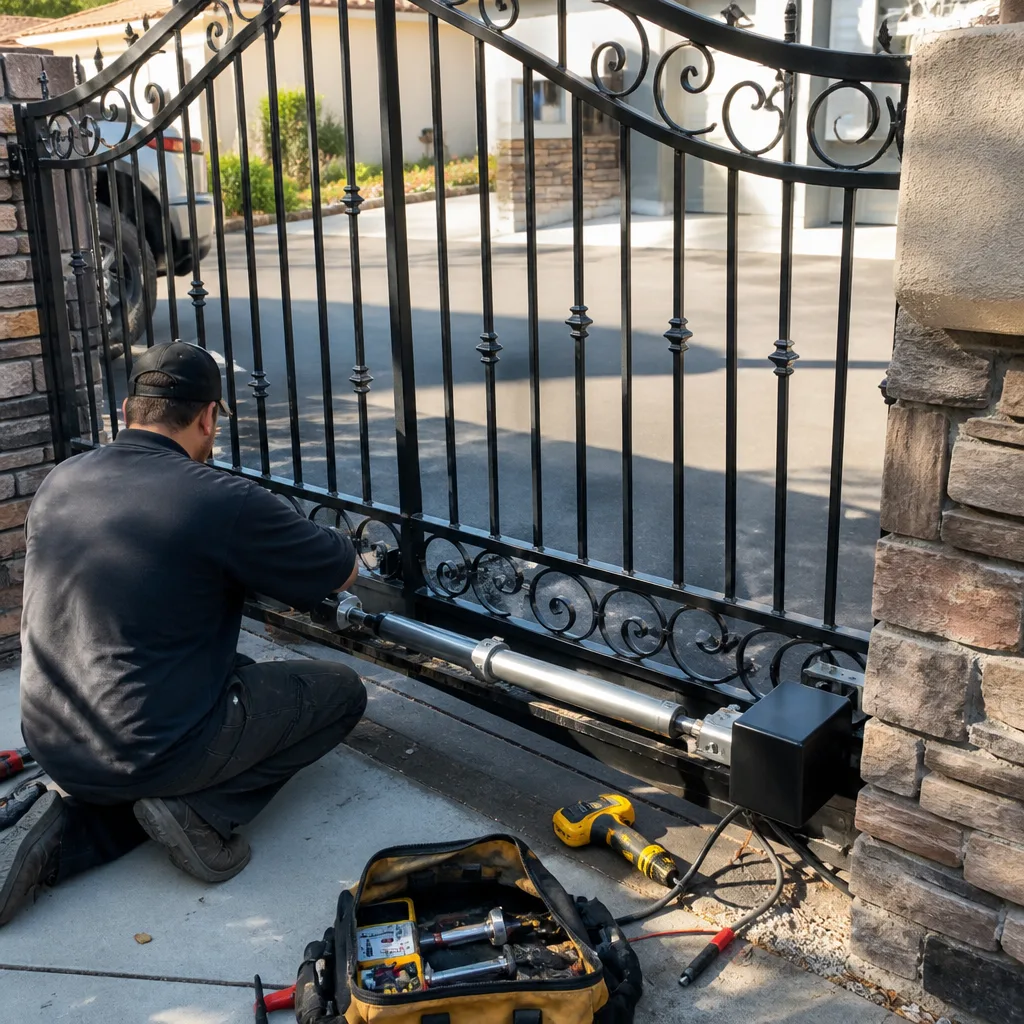 After
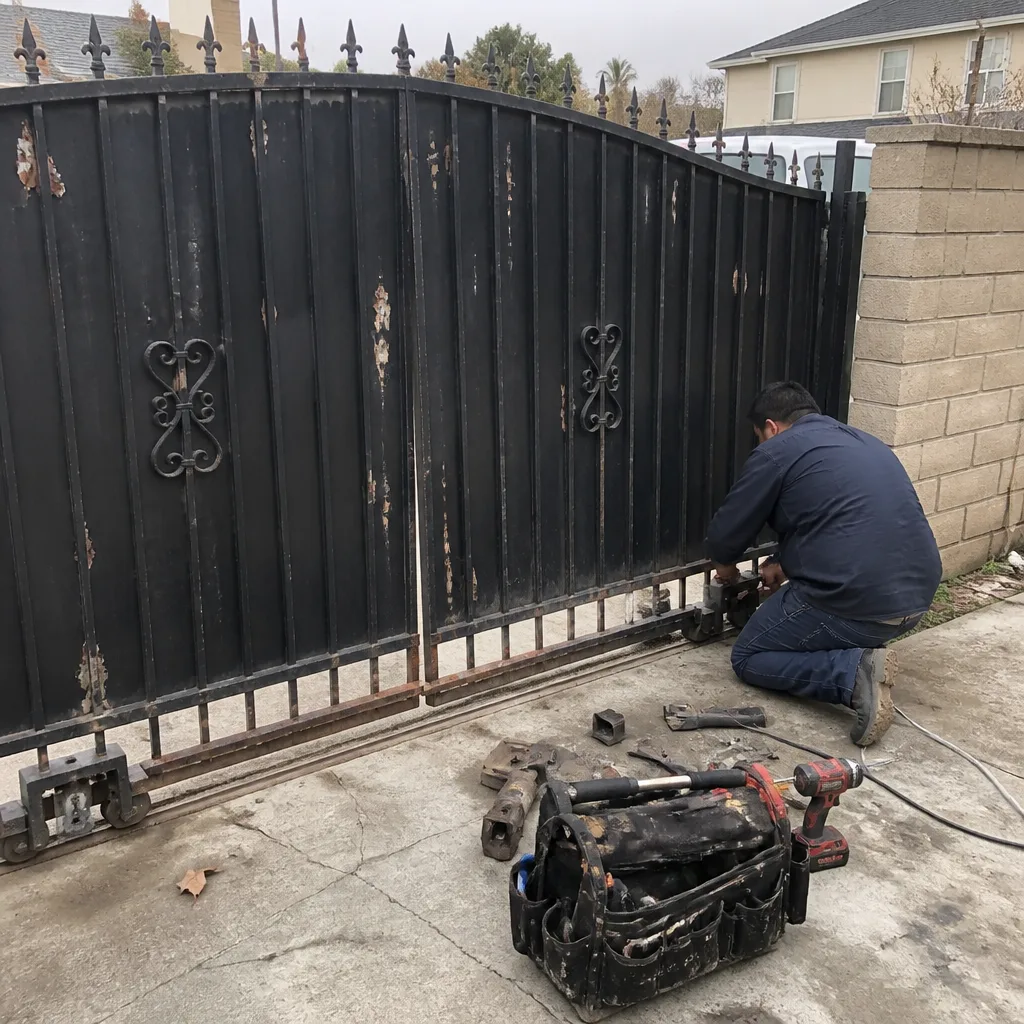 Before
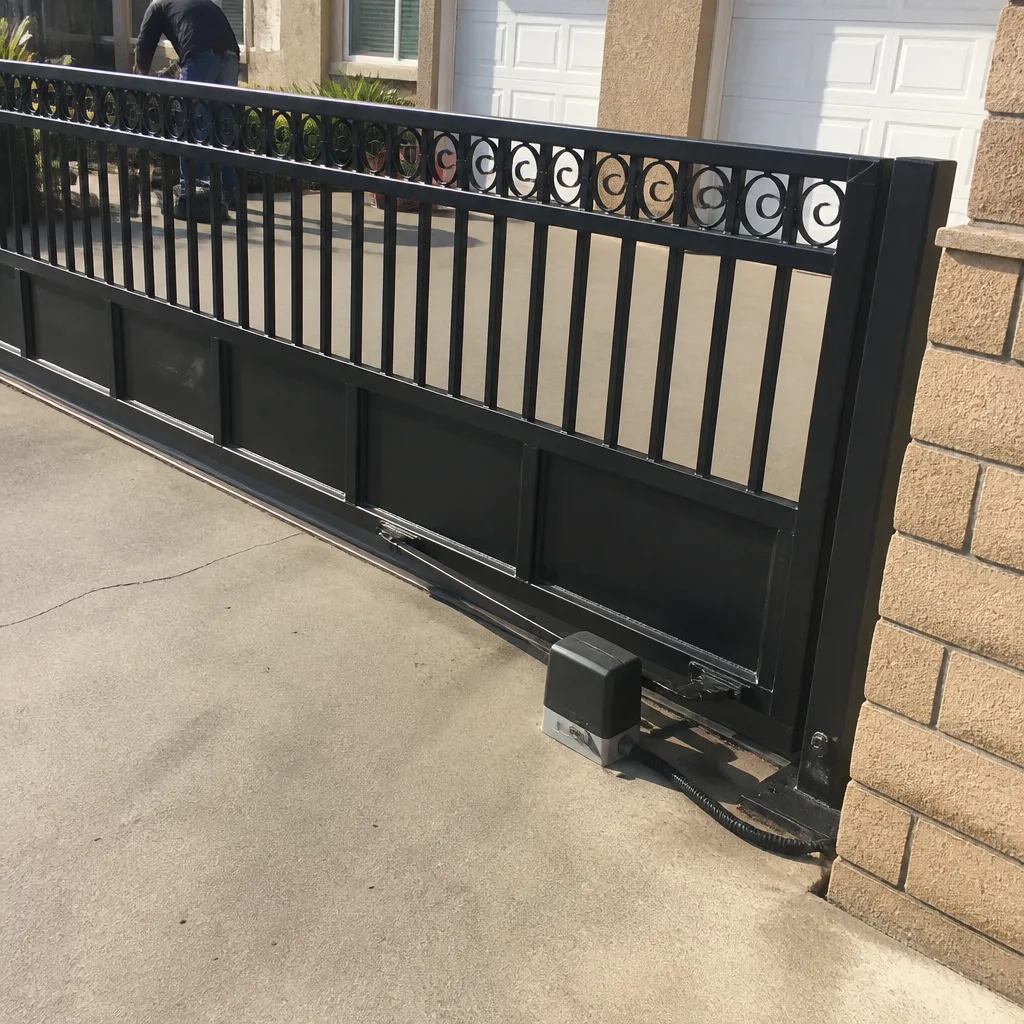 After
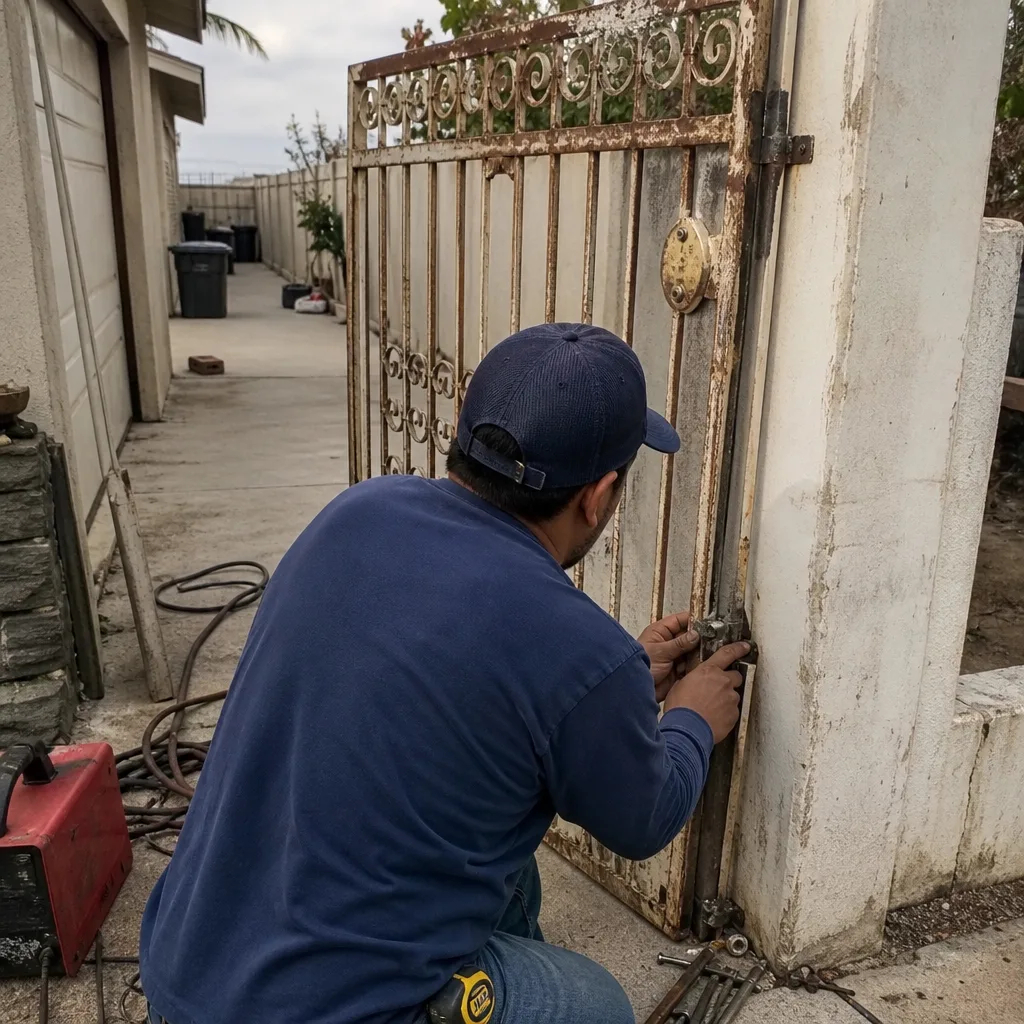 Before
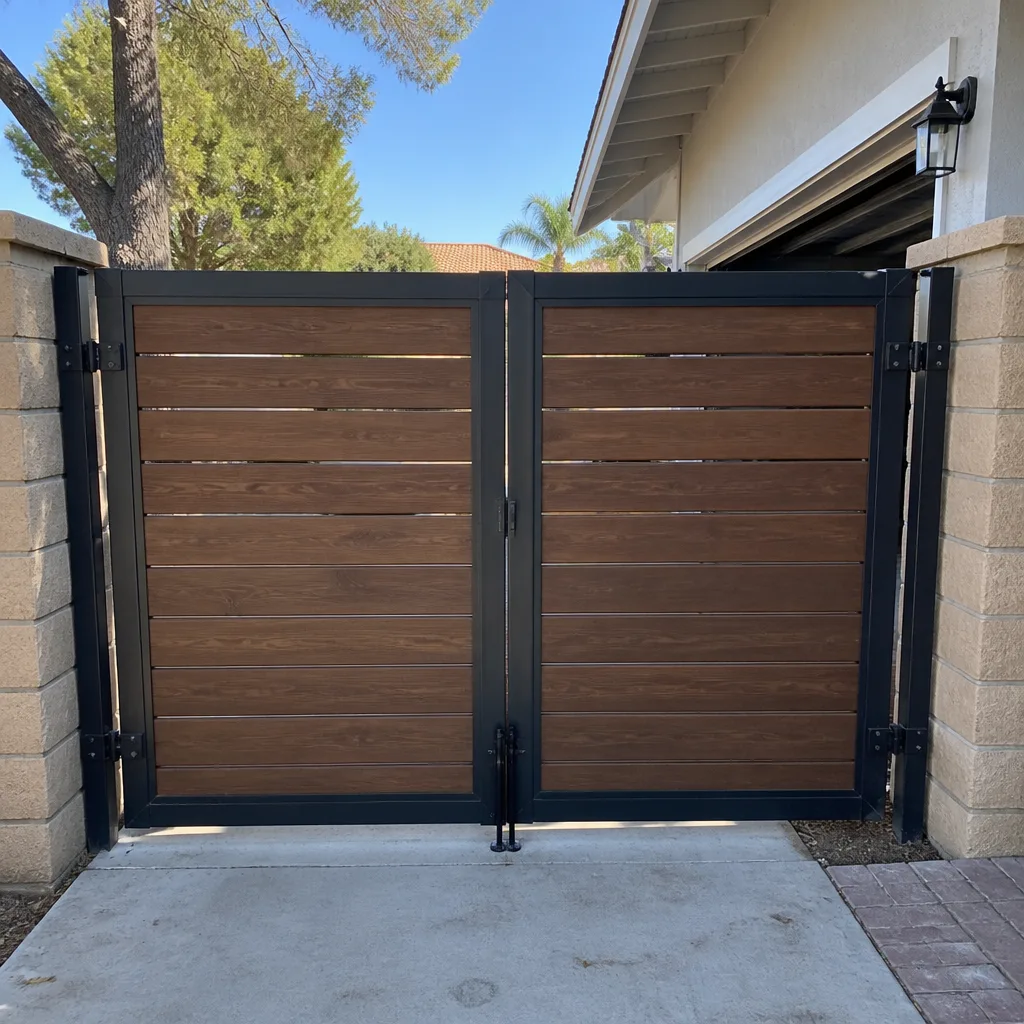 After