
Last updated October 30, 2026
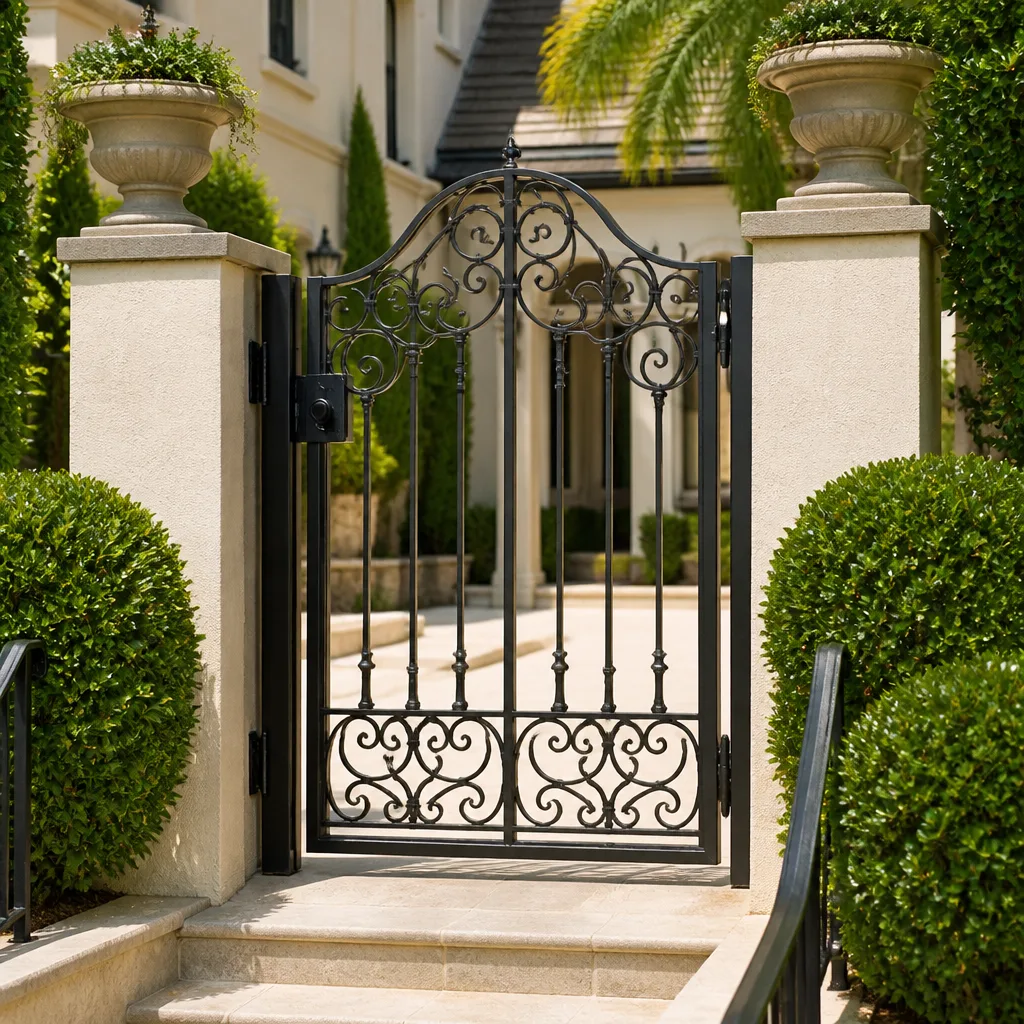 Wrought iron
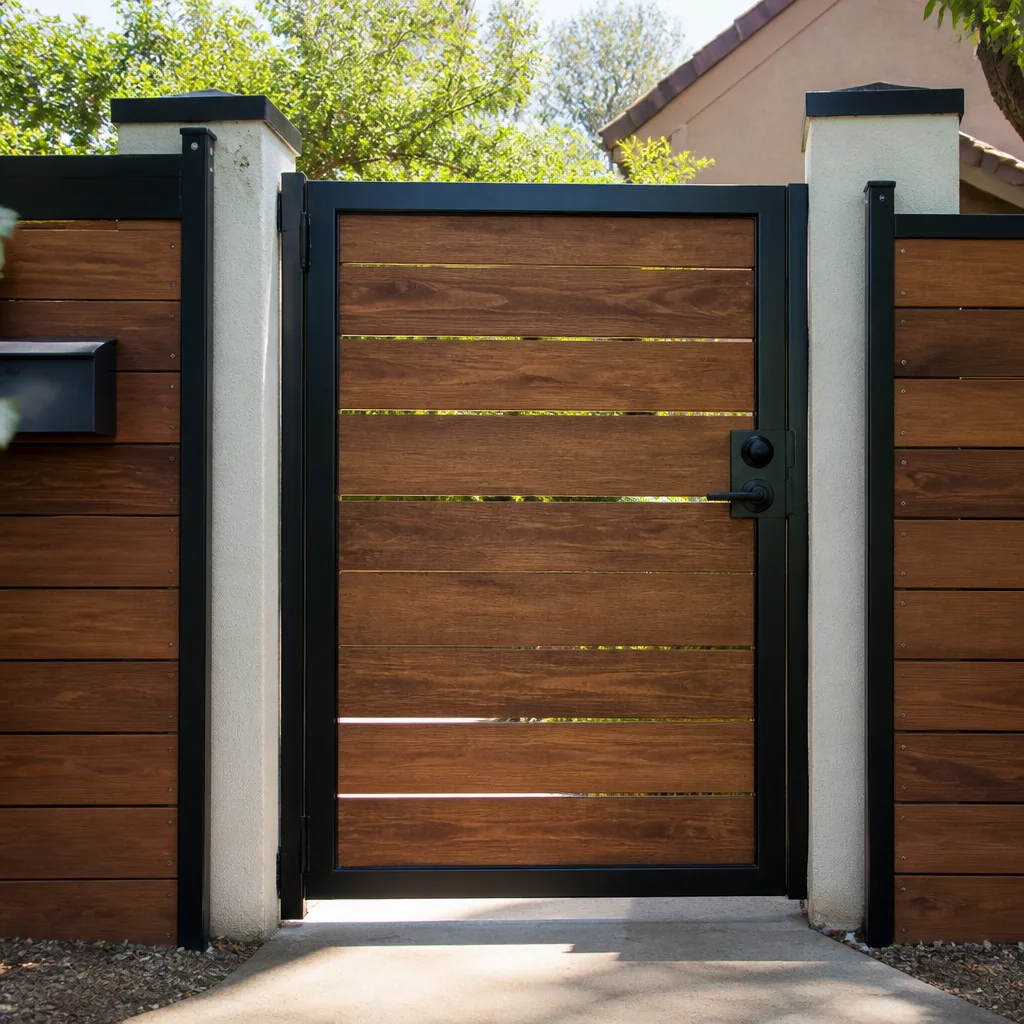 Wood & steel frame
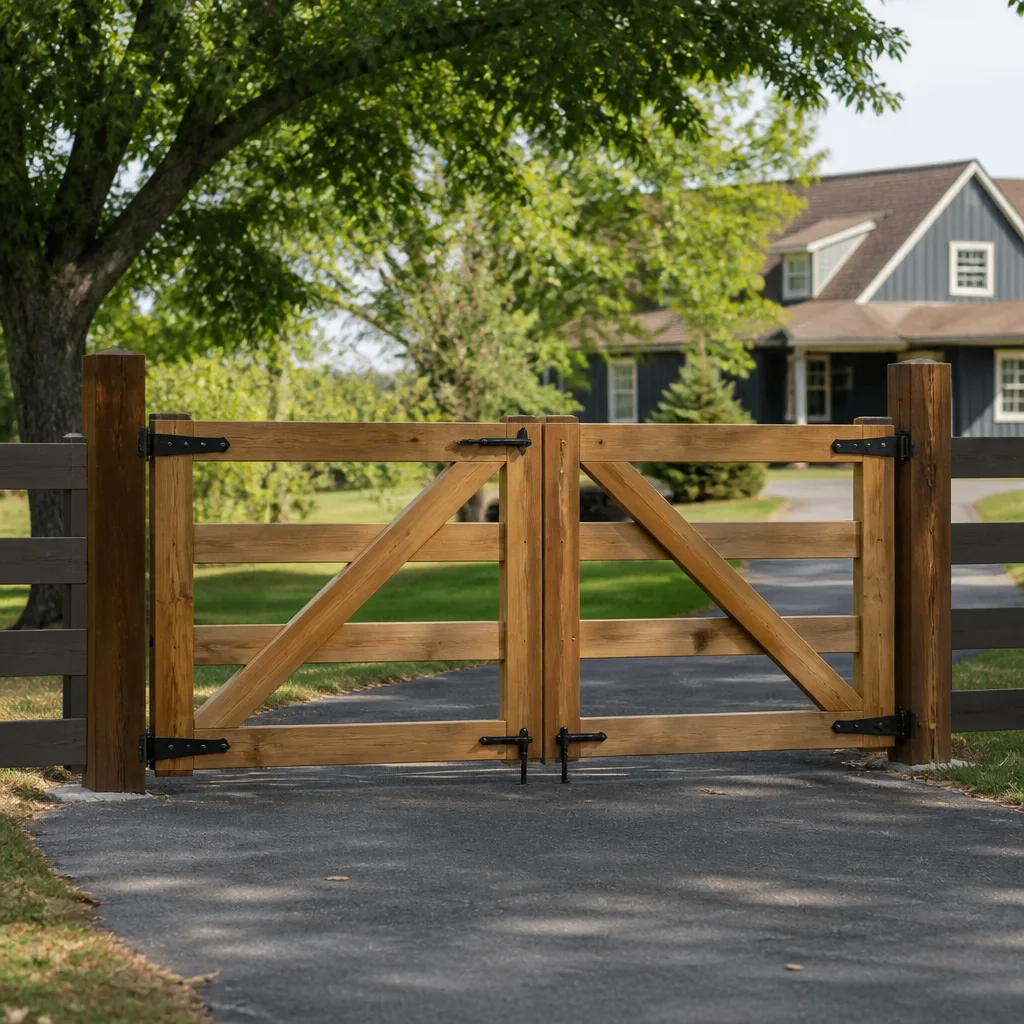 Farm & ranch
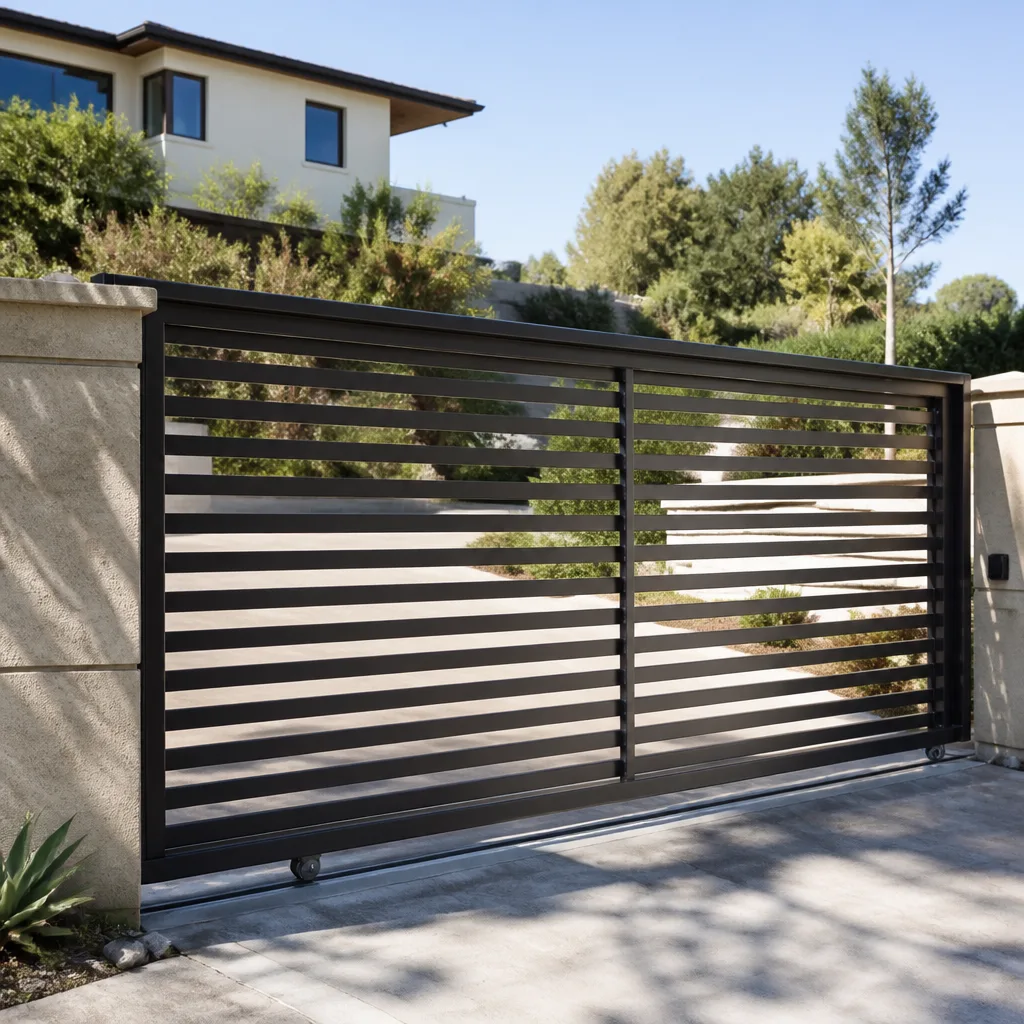 Sliding driveway gates
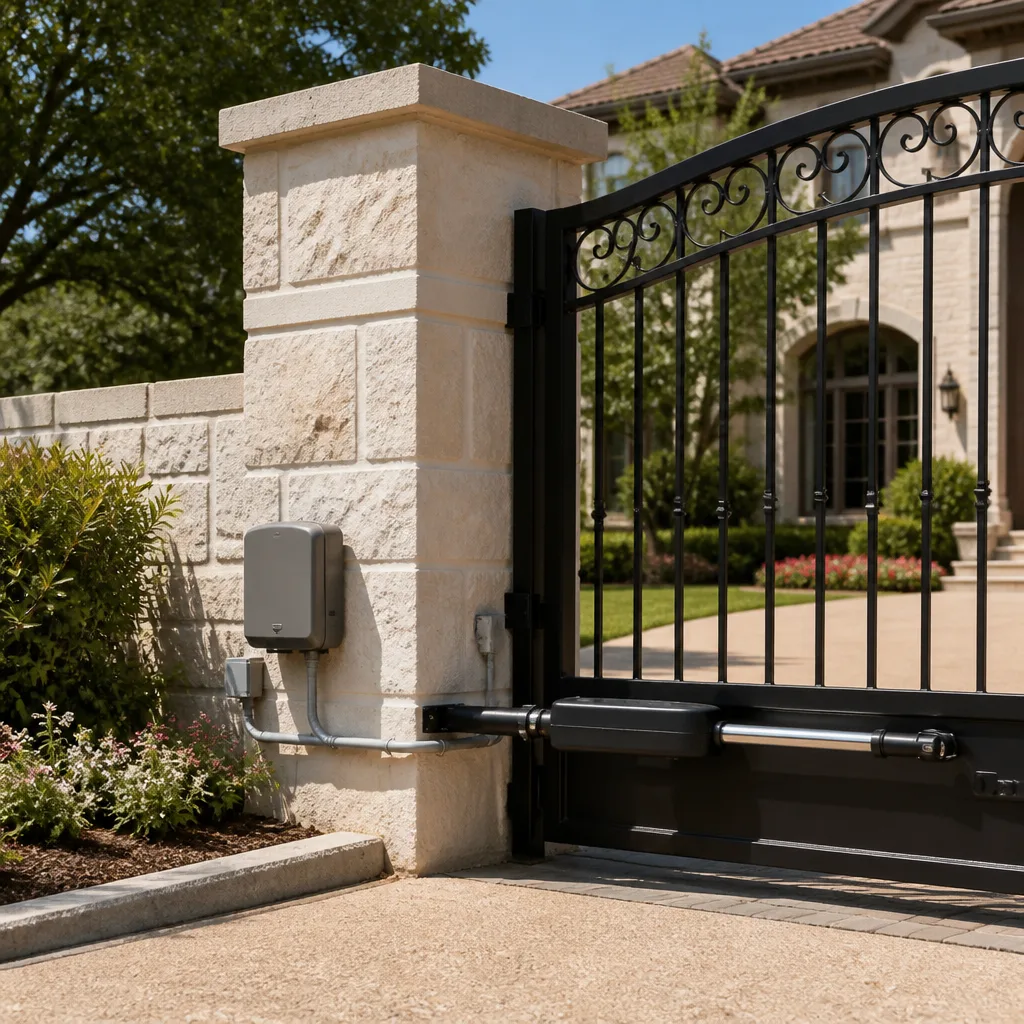 LiftMaster operators
Free on-site gate assessment - hinges, posts, and your LiftMaster or Nice gate operator checked before anything is quoted
The assessment is free and the quote is the invoice.
Get your free estimateSeasonal Gate Repair Care for Corona: Year-Round Homeowner’s Guide
Most homeowners in Corona assume their automatic gate fails because a part wore out. Sometimes that’s true. But more often, the failure started months earlier as a slow, seasonal shift: a steel frame expanding in July heat, a concrete footing settling after winter rain, a hinge corroding from sprinkler overspray that never fully dries. This guide walks through what actually happens to gate hardware across Corona’s climate calendar and what to check each season so a minor adjustment doesn’t become a full gate replacement.
Styles & brands we work with
Quick Answer
Seasonal gate care in Corona means adjusting clearances before summer heat expands steel frames, checking latches and operator arms after fall Santa Ana wind events, inspecting footings and rust after winter rain, and addressing irrigation overspray damage year-round. Most seasonal gate problems are preventable with four short inspections per year, each tied to a specific weather pattern rather than a calendar date.
Table of Contents
- Summer: Thermal Expansion and Steel Frame Adjustment
- Fall: Santa Ana Wind Stress on Latches and Operators
- Winter: Rain, Footings, and Electrical Vulnerability
- Spring: Post-Rain Inspection Protocol
- Irrigation Overspray: The Year-Round Corrosion Problem
- Seasonal Task Calendar for Corona Homeowners
- Brand-Specific Seasonal Notes: Ghost Controls, DoorKing, Elite, Mighty Mule
- Common Mistakes to Avoid
- When to Call a Professional
- Frequently Asked Questions
- The Bottom Line
Summer: Thermal Expansion and Steel Frame Adjustment
Corona’s summer temperatures routinely cross 100°F, and a steel gate frame responds to that heat in a measurable way. Steel expands at roughly 0.0000065 inches per inch of length per degree Fahrenheit. For a 12-foot driveway gate made of powder-coated steel, a temperature swing from a 40°F January night to a 105°F July afternoon means the frame can grow by nearly a quarter inch along its length. That does not sound like much. It’s enough to make a gate that cleared the ground by half an inch in February drag against the driveway by August.
We see this pattern every summer on gates across Corona. The homeowner notices a new scraping sound, or the gate starts binding halfway through its travel, or the operator motor sounds strained. The assumption is that something broke. What actually happened is that the frame expanded, the clearance shrank, and the gate began fighting its own geometry.
What to Check Before Peak Heat
- Ground clearance: With the gate fully closed, measure the gap between the bottom rail and the driveway. For a 12-foot steel gate, plan on at least 3/4 inch of clearance by late spring. That gap will shrink by summer.
- Hinge-side alignment: Stand at the hinge post and sight down the gate’s top rail. If the gate is level, the rail should run straight. A slight bow or sag that appears in June usually traces back to thermal stress plus a settling post.
- Operator attachment points: On automated gates, the operator arm bracket takes the brunt of frame movement. Check the bolts for signs of loosening. Thermal cycling works bolts loose faster than most homeowners expect.
- Cantilever wheels or track rollers: If your gate rolls on wheels, spin each one by hand. A wheel that was fine in April can bind in July if the frame expanded into it.
How to Pre-Adjust Clearances to Accommodate Expansion
- Measure first, adjust second. Record the gate’s ground clearance at three points: hinge side, middle, latch side. Write the numbers down. You’ll lose track of whether the gate shifted if you don’t have a baseline.
- Adjust the hinge-side post plate first. Most residential swing gates in Corona use adjustable hinge plates. Loosening the plate bolts and re-leveling the gate is often a 20-minute job for a technician with the right tools and a helper.
- Reset the operator travel limits after any frame adjustment. This is a step homeowners commonly skip. If you change the gate’s physical position even slightly, the operator’s open and close limits need to be re-learned or the motor may push the gate past its new stop point and strain the gearset.
- Lubricate hinge pins with a lithium-based grease before the heat arrives. Do not use WD-40 as a lubricant; it displaces moisture but leaves a minimal film. A proper grease stays in place through a Corona summer.
If the gate already drags by August and adjusting the hinge plates does not resolve it, the post itself may have moved. That’s a structural issue, not a clearance issue, and it usually means the footing was undersized for the gate’s weight when the original installer poured it. For a thorough look at how we handle exactly this kind of repair, see our Gate Repair in Corona page.
Fall: Santa Ana Wind Stress on Latches and Operators
Santa Ana winds are Corona’s most underestimated gate problem. Moisture from the coast dries out, humidity drops into single digits, and northeast winds gust 40 to 60 mph through the Santa Ana River corridor and up against the foothill neighborhoods. A 60 mph gust pressing against a 6-foot-tall, 12-foot-wide solid gate creates hundreds of pounds of lateral force. That force lands on three components: the latch, the operator arm, and the hinge hardware.
The latch takes the first hit. When wind pushes against a closed gate, the latch pin bears the full load. A mechanical latch that was already marginal will bend, deform, or pop open. On automated gates, the operator’s internal limit switch becomes the second line of defense, but only if the operator was installed with a proper stop. If the wind slams the gate against an end stop that is not adjusted correctly, the shock load transfers straight into the operator’s gear box.
Post-Wind Inspection Checklist
- Test the latch engagement. Close the gate manually and watch the latch pin enter the receiver. If it scrapes the side of the receiver, the gate frame or post shifted. If it does not fully seat, wind has bent something.
- Inspect the operator arm bolts on both ends. Wind load flexes the arm at its mounting brackets. Look for hairline cracks in the powder coat around bolt holes; that’s the first sign of metal fatigue.
- Run the gate through one full open and close cycle. Listen for a change in motor pitch. A strained whine after a wind event often means the gate hit its stop too hard and pushed the operator’s travel out of calibration.
- Check the safety photo eyes. Dust and debris kicked up by Santa Ana winds coat photo eye lenses. A dirty lens can cause intermittent false stops or prevent the gate from closing reliably.
- Look at the hinge brackets for gap changes. Compare the gap between the gate and the post at the top hinge and the bottom hinge. Uneven gaps after wind mean the post has rotated or the gate has racked.
For automated gates, we recommend running this inspection after any Santa Ana event with sustained gusts above 40 mph. Corona gets multiple such events each fall, and we’ve seen gates that survived the first two windstorms fail on the third because small stress fractures kept growing. Windsor Gate Repair’s Electric Gate Repair in Corona service handles post-wind diagnostics for all nine brands we work on, from entry-level Mighty Mule openers to commercial DoorKing systems.
Winter: Rain, Footings, and Electrical Vulnerability
Corona averages roughly 12 inches of rain per year, almost all of it falling between November and March. That’s not a lot compared to coastal cities, but it arrives in concentrated bursts. When a winter storm drops two inches of rain in 48 hours onto Corona’s clay-heavy soils, the ground around gate posts saturates and expands. Clay swells when wet. Then it shrinks when it dries. This wet-dry cycle is the leading cause of post movement in Corona’s residential developments, where cut-and-fill grading left a mix of native clay and imported fill around footing holes.
Post movement shows up slowly. First the gate binds slightly at the latch. Then the gap at the top hinge widens. Then the operator starts running hot because the gate is fighting its own weight. By the time the homeowner notices the gate “suddenly” stopped working, the footing has usually been moving for months.
What Rain Does to Gate Components
- Concrete footings: Saturated clay expands laterally against the footing sides, then contracts during dry spells. Repeat over several winters and the footing can tilt up to several degrees, carrying the post with it.
- Steel posts and hinges: Rainwater pooling at the base of a post works into micro-cracks in the powder coat. Rust starts at the weld points first because welding removes the protective coating locally.
- Electrical junction boxes: Low-mounted junction boxes or operator control boards can take on water if they were not sealed correctly or if conduit drains into them. A single wet winter is enough to corrode terminal blocks.
- Keypads and card readers: Moisture intrusion into keypad enclosures causes intermittent button failures. The first sign is usually a keypad that works in dry weather but becomes unresponsive during or right after rain.
After any storm that drops more than an inch of rain, wait two or three days for the soil to begin draining, then check the gate for binding. If the gate worked before the storm and binds after, you’re looking at soil expansion, not a mechanical failure. The fix is usually a clearance adjustment, not a new operator. But do not ignore it: a gate that binds through a wet winter and into a hot summer is a gate that will eventually burn out its motor or crack its own hinges.
Spring: Post-Rain Inspection Protocol
Spring is the most important inspection season in Corona, because it’s the first moment you can see the cumulative damage from winter rain before summer heat adds thermal stress on top of it. We recommend a structured walk-through in late March or early April, before daytime temperatures climb into the 90s.
Step-by-Step Spring Inspection
- Inspect the post bases visually. Look for a gap between the concrete footing and the surrounding soil. A visible ring-shaped gap means the soil has dried and contracted away from the footing. If the post also leans slightly, the footing has moved.
- Check for rust bloom. Rust bloom is the fine, orange-brown discoloration that appears on powder-coated steel where the coating was chipped or scratched and moisture got underneath. In Corona, you’ll see it first at hinge weld points, bolt heads, and the bottom rail where sprinkler water splashes.
- Test every hinge pin. With the gate open, lift up on the latch end. A properly installed hinge set should show no vertical movement. If the gate lifts more than a fraction of an inch, the hinge bushings or pins are worn, and that wear accelerates in summer heat.
- Pour water on the footing area and watch drainage. If water pools at the post base, that’s where rust and soil swelling will concentrate next winter. Fix the drainage now, a simple regrading that takes an hour, rather than paying for a footing replacement later.
- Wipe down the photo eyes and keypad. Remove the winter grit. A clean lens is a reliable lens.
- Run the operator through five full cycles. Listen for changes in sound. Any grinding, clicking, or hesitation that was not there last fall is a red flag.
Spring is also the cheapest time of year to fix problems. A hinge replacement in April costs less than a hinge replacement plus an operator motor replacement in August, after the summer expansion cycle turns a worn hinge into a misaligned gate that burns out the motor. If the inspection turns up more than you want to handle, it’s worth getting a second opinion before summer. Our Gate Repair in Corona technicians walk through this exact protocol with homeowners every spring, and the estimate is free.
Irrigation Overspray: The Year-Round Corrosion Problem
Corona’s residential developments are landscaped heavily, and most of that landscaping runs on timed irrigation. Sprinkler heads placed near driveway gates routinely overspray onto the gate’s bottom rail, hinge posts, and operator housing. This is not a seasonal problem. It’s a daily, year-round cycle: water hits the gate, the water evaporates in the afternoon heat, minerals and chloramines remain on the surface, and the next morning’s sprinkler cycle adds more. Over the course of a year, a gate that sits in sprinkler overspray accumulates hundreds of wet-dry cycles that a gate in a dry area never experiences.
The damage is predictable. Hinge pins corrode from below, where water runs down the hinge and into the pin bushing. Bottom rails rust first at the weld seams. Powder coat delaminates in sheets once moisture gets underneath. Operator arms fare worst on many Corona properties because they sit low, close to the path of the sprinkler arc, and their pivot points are packed with grease that turns into a water-holding paste when overspray hits it.
What to Do About It
- Adjust sprinkler heads so they stop short of the gate. This is the only permanent fix. Every other solution is mitigation.
- If the sprinkler cannot be adjusted, install a physical diverter. A small landscape shield, a row of pavers, or a low border strip between the sprinkler head and the gate will block most of the overspray.
- Rebuild or replace corroded hinges before they fail. Hinges are cheap compared to gates. A corroded hinge that seizes transfers all of its load onto the remaining hinges, and the gate starts to sag. A sagging gate ruins its own operator.
- Wipe down exposed metal after each watering cycle if you notice standing droplets. It’s not elegant, but it works. Mineral residue from Corona’s municipal water and the occasional well water in unincorporated areas east of the city accelerates corrosion when left to bake in the sun.
- Measure ground clearance at three points and record the numbers
- Adjust hinge plates if clearance has dropped below 1/2 inch
- Lubricate hinge pins and operator arm pivots with lithium grease
- Reset operator travel limits if any physical adjustment was made
- Check that all bolt heads on hinges and operator brackets are tight
- Listen for new scraping or binding sounds when the gate runs
- Watch a full open-close cycle every week; any change in speed is meaningful
- Clear debris from the gate track or ground path after trash pickup days
- Check the operator housing for heat buildup; motors that run too hot shorten their own lives
- After each wind event above 40 mph, inspect latch engagement and operator arm bolts
- Clean photo eye lenses of dust and debris
- Run the gate through a full cycle and listen for motor strain
- Look for hairline cracks in powder coat around bolt holes
- After any storm above one inch of rain, wait two days and check for gate binding
- Inspect post bases for soil gaps or visible tilting
- Check junction boxes and keypads for moisture intrusion
- Look for rust bloom at weld points and bolt heads
- Follow the six-step spring inspection protocol above
- Fix drainage issues at post bases before next winter
- Schedule any needed hinge or latch replacements before summer heat
- Evaluate whether the operator is reaching the end of its service life
- Ignoring a gate that scrapes in summer and fixes itself in winter. That’s not a gate that fixed itself. That’s a gate that’s cycling between two different states of misalignment, and the underlying cause, a moving post or a worn hinge, is getting worse every year.
- Lubricating without cleaning first. Spraying fresh grease over old grease loaded with silica dust from Corona’s dry summers creates an abrasive paste that grinds hinge pins down faster than no lubrication at all.
- Resetting the operator limits without fixing the physical gate problem. If the gate is binding because a hinge is seized, adjusting the operator to push harder just burns out the motor. The operator is telling you something; listen to it.
- Letting sprinkler overspray hit the gate for years without addressing it. We’ve replaced gates in Corona at 12 years old that should have lasted 25, and the difference was almost always a sprinkler head pointed at the bottom rail.
- Waiting until a Santa Ana wind event breaks the gate to inspect it. The wind exposes existing weaknesses; it doesn’t create them. A gate that survives a windstorm was already in good shape. A gate that fails was already broken in slow motion.
- Treating all four seasons the same. Corona doesn’t have four dramatic seasons, but it has four distinct stress patterns. Checking the same things every month means missing the specific things each season does to your gate.
- Assuming a new operator will fix a structural problem. If the post is out of plumb, no operator on the market will run the gate correctly for long. The operator is the last component in a chain that starts at the footing.
For brushless DC operators like Ghost Controls and newer Mighty Mule units, overspray corrosion on the operator arm mounting bolts can eventually cause the arm to work loose, which is a safety issue. The gate may still open and close, but the arm’s force is no longer transferring cleanly into the gate. If you see rust streaks running down from any bolt head on the operator arm or hinge plate, that’s the time to have it looked at.
Seasonal Task Calendar for Corona Homeowners
This calendar is built around Corona’s actual weather, not a generic four-season template. Adjust by about two weeks depending on the year, but the sequence holds year after year.
Late April to Early May: Pre-Heat Adjustment
June to September: Heat Monitoring
October to November: Post-Santa Ana Checks
December to February: Wet Season Observations
March: Full Spring Inspection
Brand-Specific Seasonal Notes: Ghost Controls, DoorKing, Elite, Mighty Mule
Different gate operators respond to Corona’s seasons in different ways. We work on all of these brands regularly, and the seasonal failure patterns are specific enough to be worth knowing.
Ghost Controls
Ghost Controls makes battery-powered, solar-compatible linear actuators that are popular on residential driveway gates throughout Corona’s newer developments. The seasonal concern here is battery performance. Winter’s shorter daylight hours and Santa Ana dust coating the optional solar panel reduce charging capacity, and a battery that was fine in September can struggle to complete a full gate cycle in December. The fix is usually manual charging or a panel cleaning, not a new operator. Summer heat is less of a problem for the electronics than for the actuator arm, which can bind if the gate’s thermal expansion pushes it past its designed travel.
DoorKing
DoorKing operators are built for commercial duty cycles, and they run heavier gates than most residential units can handle. That doesn’t make them immune to seasonal stress. We see the most DoorKing failures after the first Santa Ana events of fall, when a wind gust slams a solid commercial gate against its end stop and the internal limit switch loses calibration. DoorKing’s limit adjustment is straightforward, but if the gear box absorbed the shock, the operator will whine on subsequent cycles. That’s a repair best done before the gate gets daily use again.
Elite
Elite gate operators, particularly the SL and CSW series, are common on Corona hillside properties where the gate is mounted on a slope. That slope creates a year-round drain on the operator because the gate’s weight is always trying to roll or swing downhill. Seasonal rain makes the problem worse: saturated soil on a slope shifts the footing, the gate sags, and the Elite operator works harder. Spring is the time to check slope-gate post plumb and rebalance the gate if it’s drifted over winter.
Mighty Mule
Mighty Mule is the entry-level option you’ll find on many Corona single-family driveway gates, and its seasonal weakness is the control board. Power surges during winter thunderstorms and the occasional brownout during summer’s peak AC demand both shorten the board’s life. If a Mighty Mule gate stops responding after a storm or a heat wave, the board is often the first component to check. The good news is that Mighty Mule parts are widely available and replacement is usually quick.
If your operator is one of these brands and you’re seeing seasonal issues that don’t match the descriptions above, we diagnose by brand and by symptom. We’re factory-familiar with all of them, and our approach is to fix the system you already have rather than sell you a replacement you don’t need yet. For a full breakdown of what that looks like, see our Electric Gate Repair in Corona page.
Common Mistakes to Avoid
When to Call a Professional
Some seasonal gate work is genuinely doable for a homeowner with a wrench and a level: cleaning photo eyes, tightening visible bolts, clearing irrigation overspray, recording measurements. Other jobs need a technician who does this every day. Call a professional when the post has visibly moved or the footing shows a gap you can fit a finger into, when rust has eaten through a hinge plate or bolt, when the operator’s motor pitch changes and does not return to normal, when the gate has hit a hard stop hard enough to jar the post, or when you’ve adjusted clearances and the gate is still binding. Automatic gate systems involve enough stored mechanical force that a misadjusted operator can be dangerous to work around, and we’d rather see you call early than after a failure. Windsor Gate Repair offers free estimates in Corona, call (855) 382-0601.
Frequently Asked Questions
Four times a year, tied to the seasonal calendar above. Corona’s climate doesn’t require monthly attention, but a gate that goes from March to October without inspection will reveal its first problem in the worst possible conditions: July heat or the first Santa Ana event of fall.
Thermal expansion. Your steel gate frame grows measurably in Corona’s summer heat, reducing its ground clearance by enough to drag on the driveway. The gate wasn’t adjusted with enough clearance when it was installed, or it has been running with minimal clearance for years and the heat is exposing it.
Yes, but indirectly. Heat doesn’t kill operators directly; it kills them by making the gate physically harder to move. When the frame expands and clearance disappears, the operator draws more current and runs hotter. Over one summer, a gate running in a constant state of thermal binding can cut months or years off a motor’s life.
Run the five-point post-wind checklist: test latch engagement, inspect operator arm bolts, run the gate through a full cycle and listen, clean the photo eyes, and check for uneven hinge gaps. Call a technician if any of these reveal a problem; the wind didn’t cause it, it revealed it.
We don’t recommend it. A leaning post means the footing has moved or the post has rusted at ground level. Fixing it requires removing the gate, excavating or cutting the post, and resetting or replacing it, all while keeping the gate’s weight controlled. This is structural work with real safety risk, and it’s the kind of job where doing it wrong creates a worse problem for the next repair.
A basic seasonal adjustment, hinge lube, limit reset, and post-inspection typically runs $150 to $300 depending on gate size and operator type. Footing repair or post replacement starts higher because it involves excavation and concrete work. We quote every price before any work starts, and the estimate is free. Call (855) 382-0601 for an exact quote for your gate.
The Bottom Line
Corona’s four seasonal stress patterns are predictable, and nearly all of the gate failures they cause are preventable with attention at the right time. Measure and adjust clearances in spring before the heat expands your gate frame. Inspect latches and operator arms after every major Santa Ana event. Watch for footing movement and electrical moisture after winter storms. And deal with irrigation overspray before it corrodes your hinges from below. A gate that gets this level of attention will outlast its operator, its hinges, and probably its original concrete. Windsor Gate Repair home covers the full lifecycle, from seasonal maintenance to full Gate Installation in Corona, so you’re working with one specialist team from first inspection to eventual replacement, if that day ever comes.
Written by the team at Windsor Gate Repair, serving Corona since 2012.
See the difference
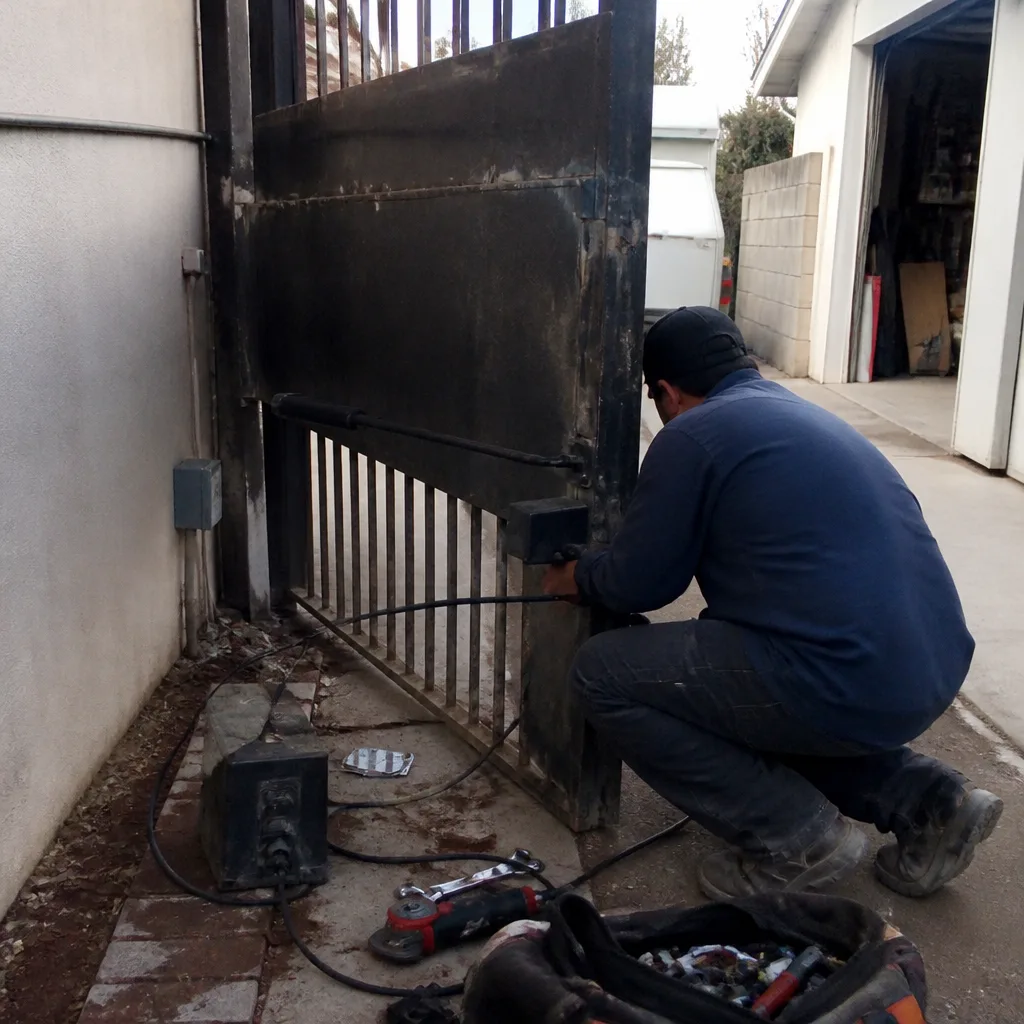 Before
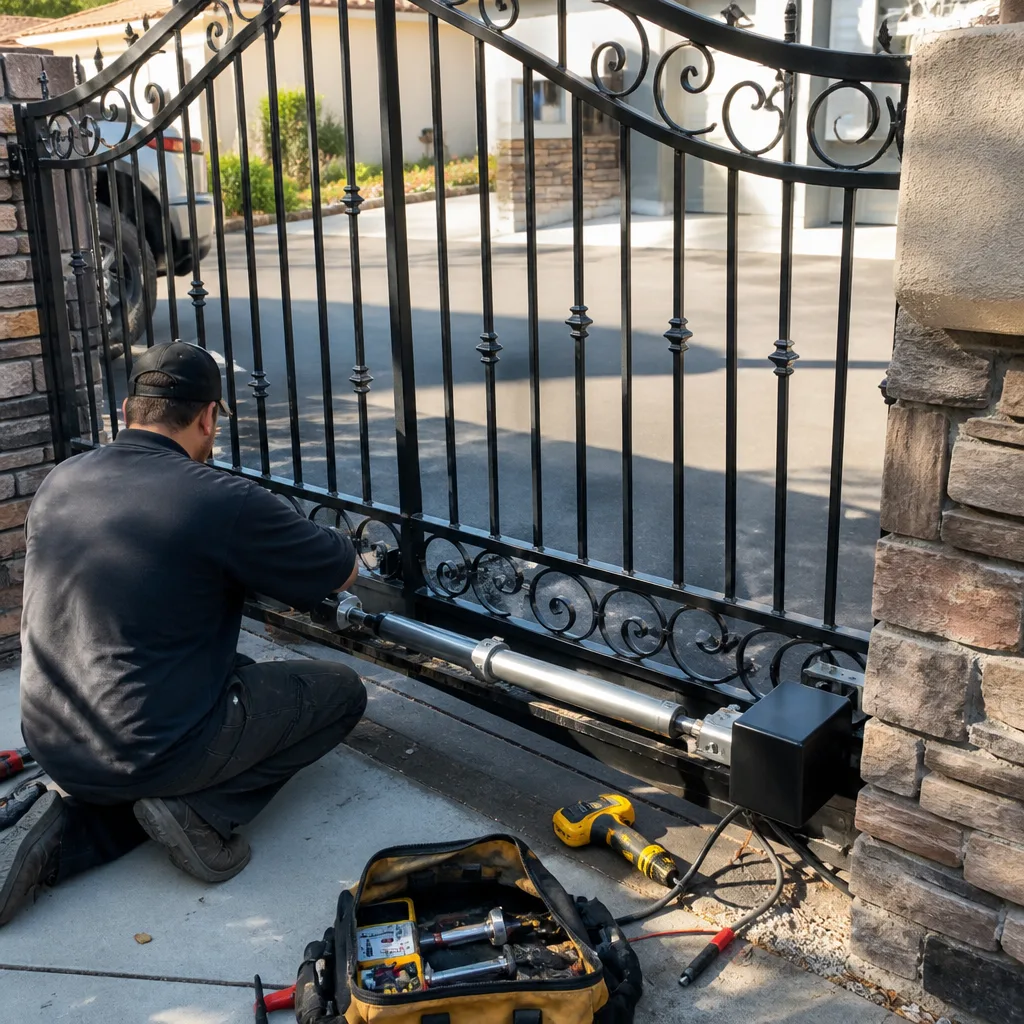 After
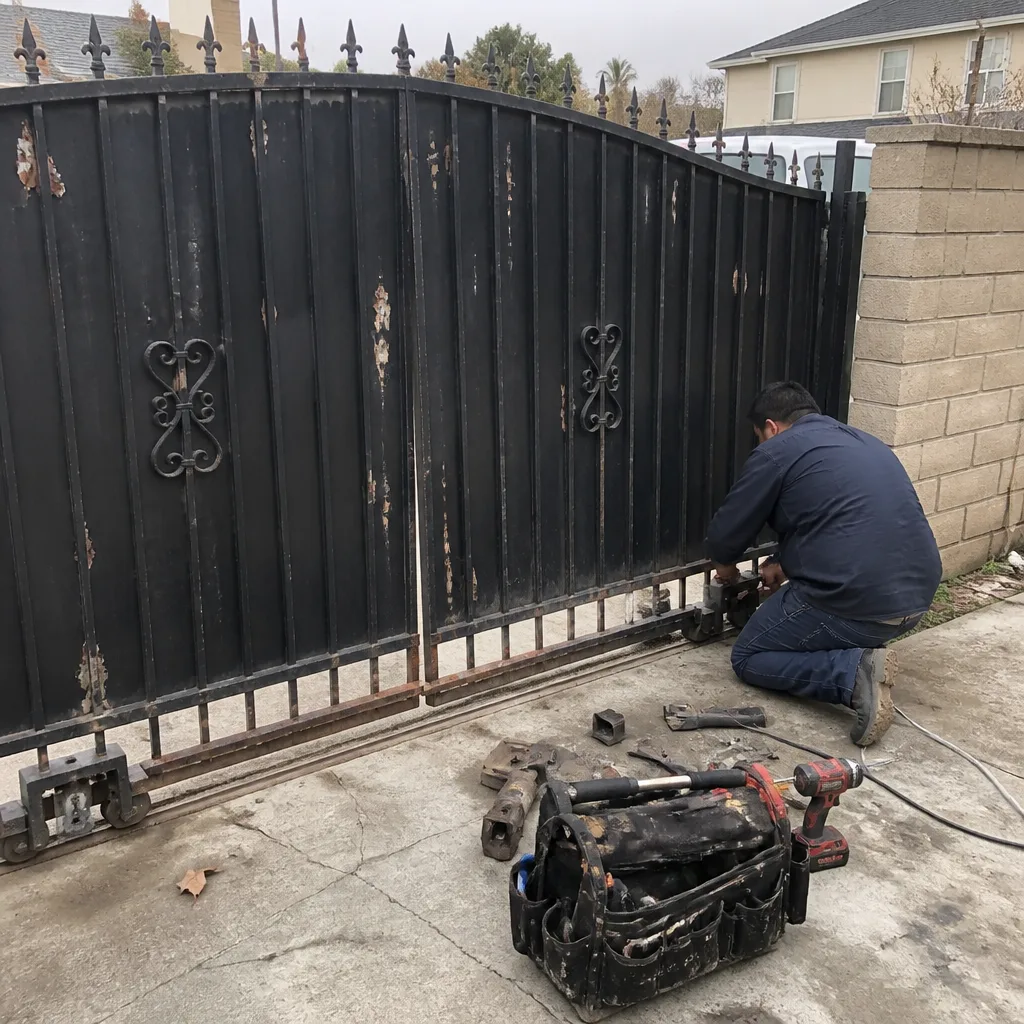 Before
 After
 Before
 After