
Last updated October 30, 2026
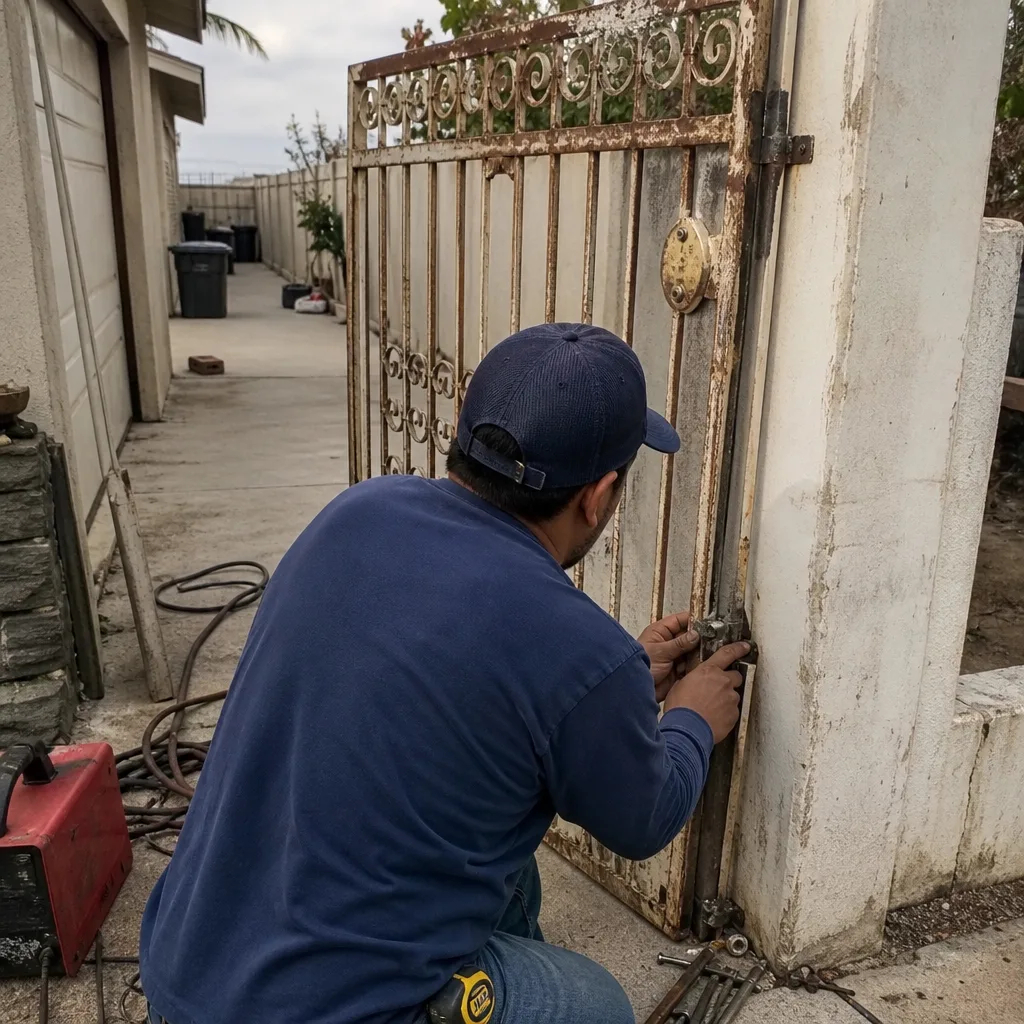
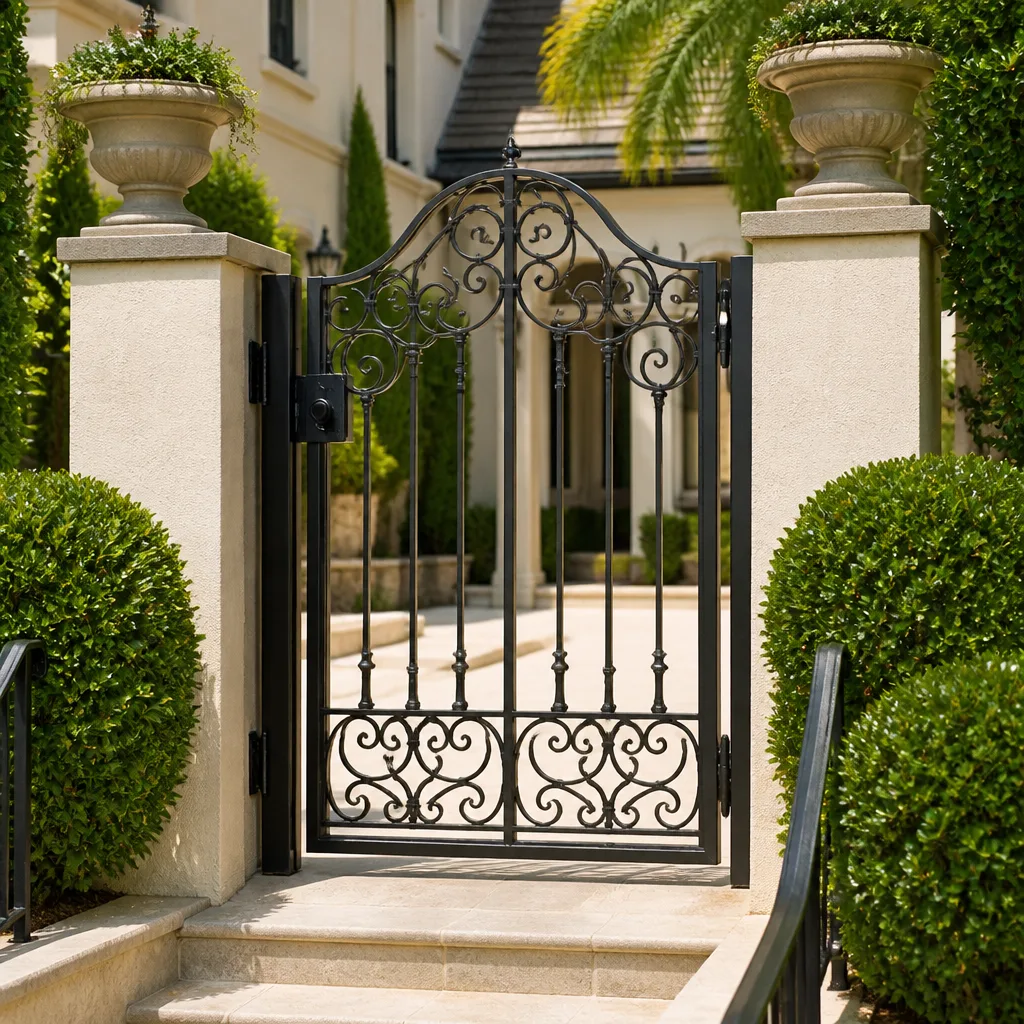 Wrought iron
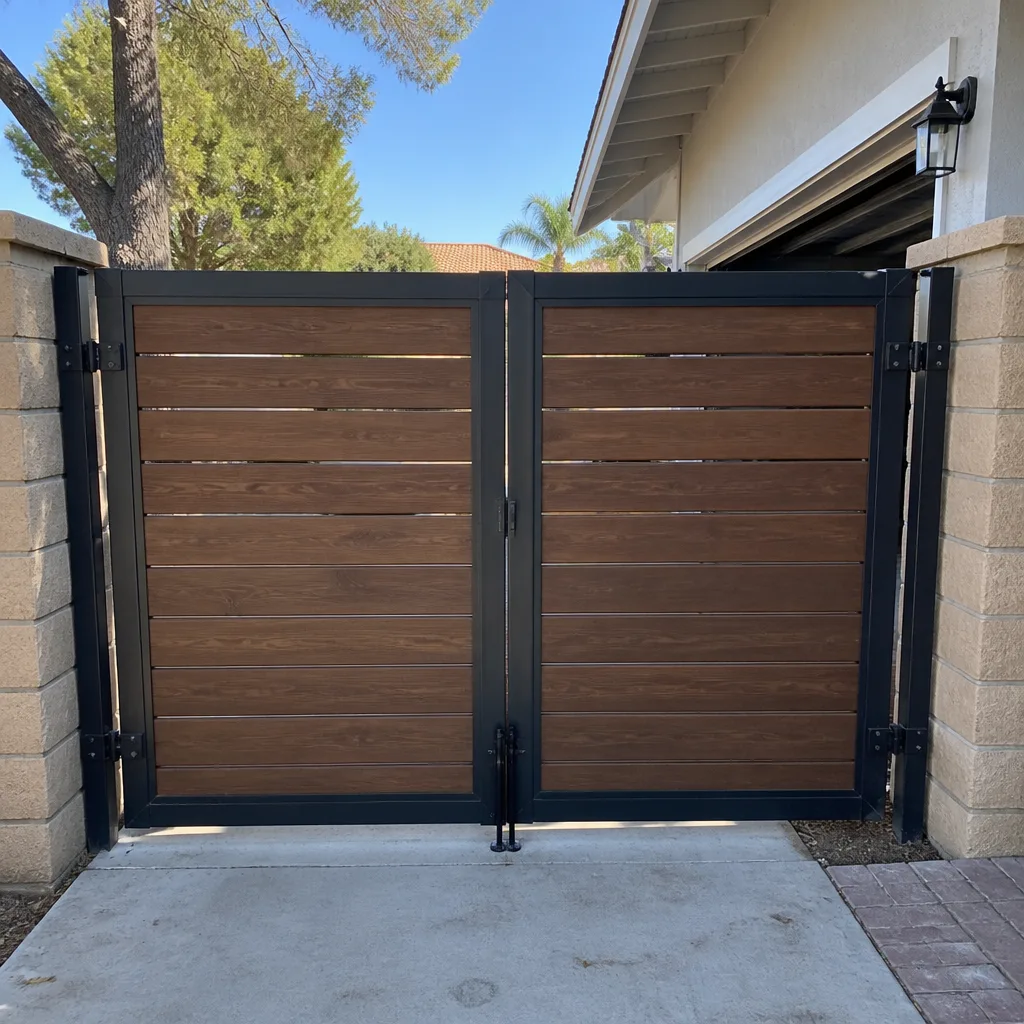
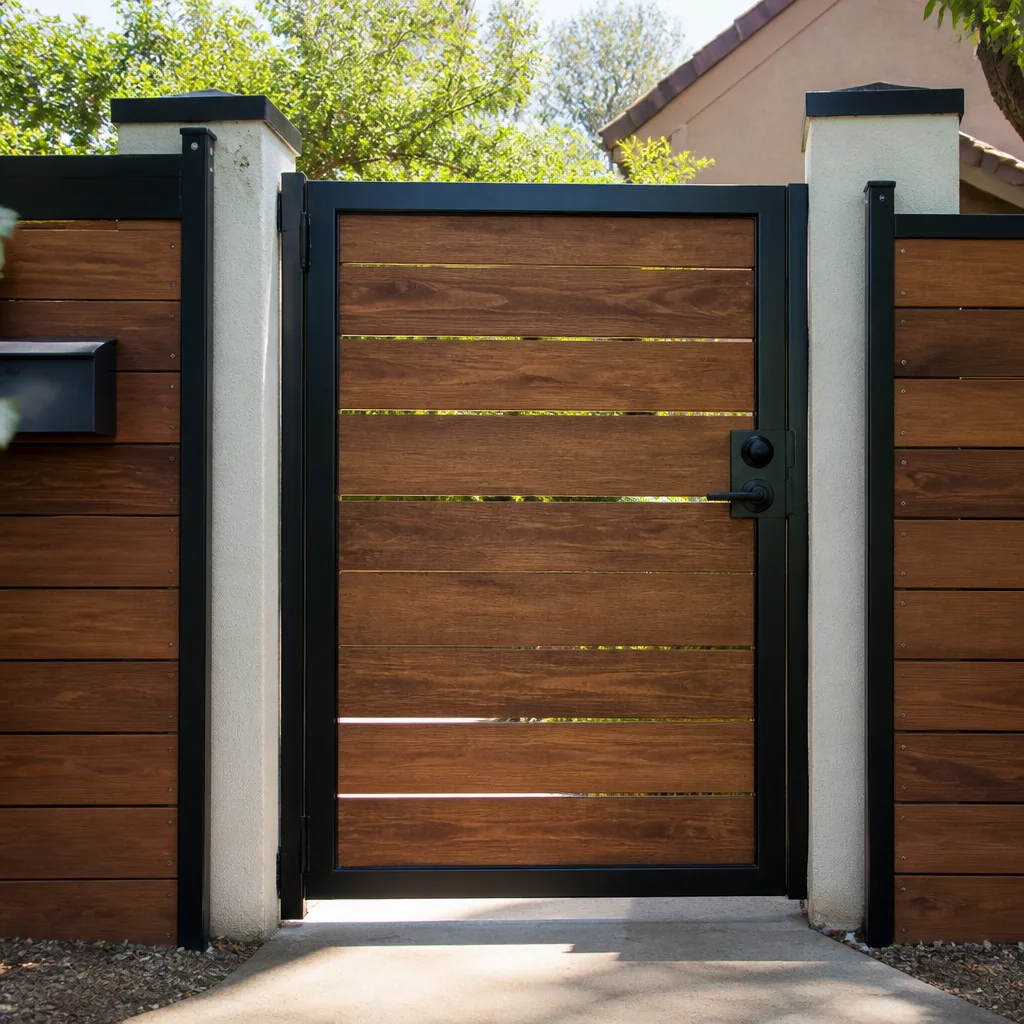 Wood & steel frame
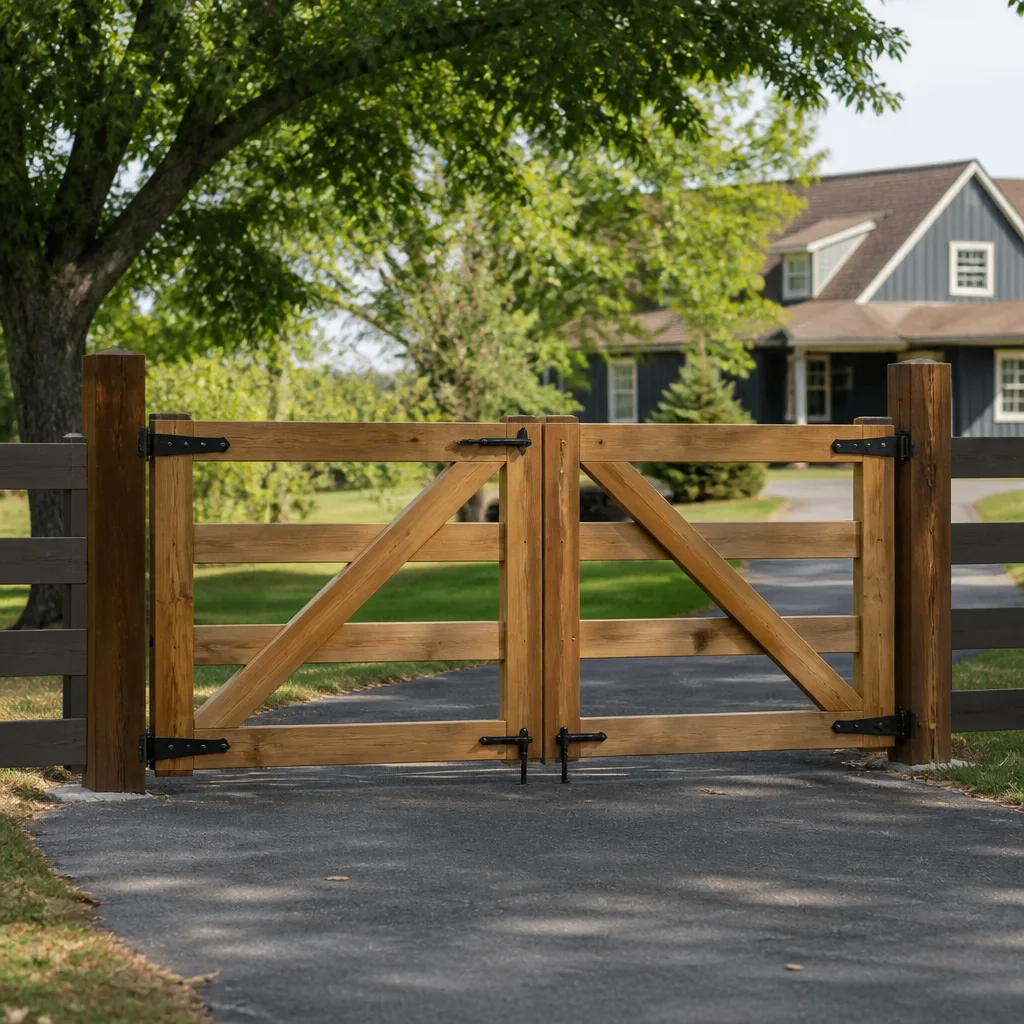 Farm & ranch
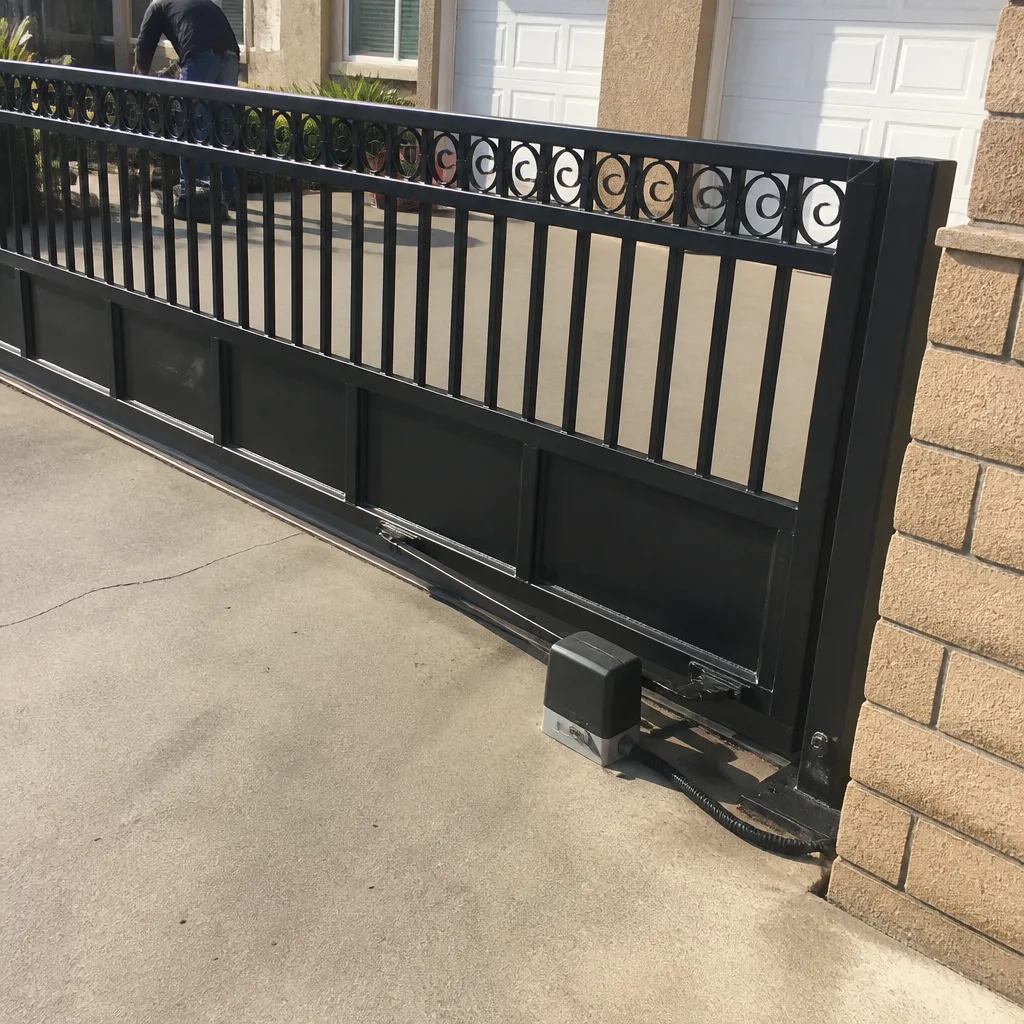
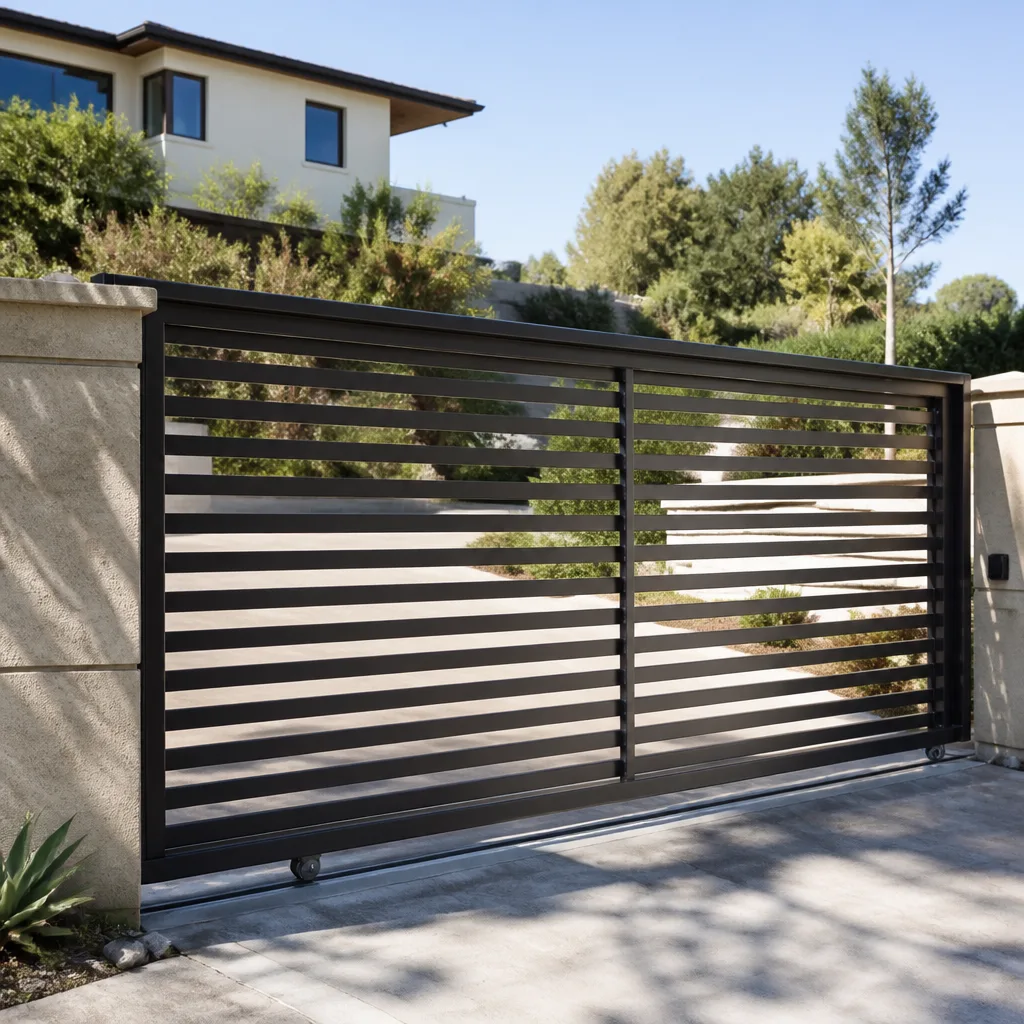 Sliding driveway gates
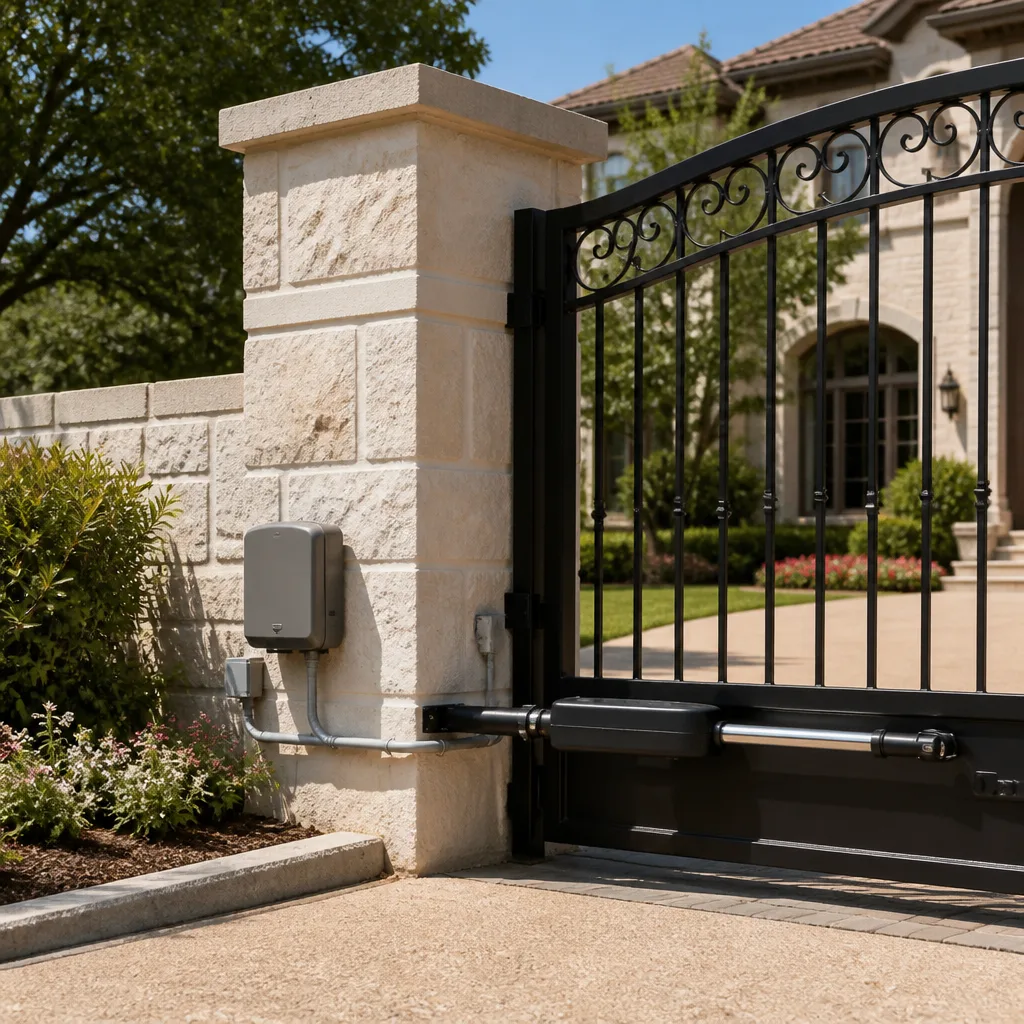 LiftMaster operators
Free on-site gate assessment - hinges, posts, and your LiftMaster or Nice gate operator checked before anything is quoted
The assessment is free and the quote is the invoice.
Get your free estimateHow to Hire a Gate Repair Contractor in Corona: A Step-by-Step Guide
Ask any contractor “what brand is your gate operator?” and if they can’t answer in under five seconds, you’re probably talking to a generalist who subcontracts the real work. In Corona, where automatic driveway gates are standard on newer homes east of the 15 and throughout the master-planned communities, this distinction matters more than people realize. A gate that won’t open isn’t a fence problem, it’s an electromechanical systems problem. This guide walks you through hiring a gate repair contractor in Corona who actually knows the difference, with the exact questions to ask, the licensing nuances most homeowners miss, and the estimate red flags that signal you’re being padded. You’ll learn how to separate a dedicated gate technician from a fence company with a gate line item on their menu.
Styles & brands we work with
Quick Answer
To hire a gate repair contractor in Corona, start by asking five diagnostic questions about gate operator brands, low-voltage wiring, and safety reversal systems. Verify that the contractor’s license category actually covers gate automation work (C-13 fencing vs. C-10 electrical, depending on the scope), request an itemized written estimate before any work begins, and confirm whether they stock gate control boards and operators locally in the Inland Empire rather than ordering parts from a distributor after you’ve already paid a diagnosis fee. This is a gate repair in Corona specialist’s framework, and Windsor Gate Repair uses it daily to separate genuine gate technicians from companies that list gate repair as a side service.
Table of Contents
- The Five Diagnostic Questions to Ask Before Booking
- Why Licensing Category Matters: C-13 vs. C-10 in California
- How to Read a Gate Repair Estimate Line by Line
- Local Parts Stocking vs. Order-In Repair: What It Means for Your Timeline
- What a Proper Service Call Should Include (That Many Contractors Skip)
- Corona-Specific Gate Failure Patterns and Code Notes
- Common Mistakes to Avoid
- When to Call a Professional
- Frequently Asked Questions
- The Bottom Line
The Five Diagnostic Questions to Ask Before Booking
Before you schedule any gate repair in Corona, pick up the phone and ask these five questions. The answers will tell you in about 90 seconds whether you’re talking to a gate specialist or a company that added “gate repair” to a broader home services list because the search volume looked good. We’ve been on the receiving end of enough calls from Corona homeowners who got burned twice, the first time by their gate failing and the second time by a technician who didn’t know the system, that we can tell you exactly what a competent answer sounds like. For more guidance, see our more guides & resources.
Question 1: “What brand is your gate operator?”
A gate specialist answers this like you asked them their own name. LiftMaster. FAAC. BFT. They might ask follow-ups about the model number or the age of the unit. A generalist hesitates. They may say “it doesn’t really matter” or “we work on everything.” Here’s why that answer is a red flag: gate operators are not interchangeable. A Mighty Mule residential swing arm runs on completely different control logic than a BFT commercial slide operator. If a technician doesn’t know that brand compatibility determines the diagnostic path, they’ll burn billable hours figuring it out on your property. Ask for a brand name in the first minute. If they can’t name one, hang up.
Question 2: “Can you diagnose a low-voltage short on a gate control board, or do you only replace boards?”
This is the question that separates technicians from board-swappers. A trained gate tech can test a LiftMaster control board for voltage drops, identify whether the fault is on the accessory side or main power side, and often repair a shorted photo-eye run or a corroded limit switch harness without replacing the board. Board-swappers quote a $600 to $1,200 board replacement on a $40 wiring fault. We work on your brand, and that means we diagnose it before we quote a replacement. A competent answer to this question mentions troubleshooting, not just part numbers.
Question 3: “Do you test the safety reversal system on every gate service call?”
A UL 325 compliant gate operator must reverse when it encounters an obstruction. That’s not a nice-to-have, it’s a safety requirement that protects children, pets, and vehicles. In Corona, where many homes are in HOA-governed communities with street-facing pedestrian gates and driveway gates that cycle dozens of times a day, a gate that fails to reverse is an injury waiting to happen. A specialist answers yes without caveats. A generalist may not know what UL 325 is. Keep reading and we’ll cover the full safety verification later in this guide.
Question 4: “What gate brands do your techs stock parts for locally?”
If the answer is “we order everything” or something vague, that’s useful information. A dedicated gate contractor in the Corona market stocks control boards, photo-eye kits, limit switches, and operator arms for the brands that dominate Southern California installations: FAAC, LiftMaster, BFT, and Mighty Mule. Why does local parts access matter? Because a gate outage is a security event for most homeowners. You want the gate repaired within a day or two, not two weeks after a distributor ships a board from Texas. We’ll break down the parts-stocking logistics later in this guide.
Question 5: “Is gate repair a service you provide, or a service you subcontract?”
This is the blunt question that most people are too polite to ask. Ask it anyway. If the company on the phone is a general contractor or a fence company, there’s a meaningful chance they send a subcontracted tech who may or may not be the same person you talked to. In Corona’s competitive home services market, this happens more often than people realize. A dedicated gate company answers confidently: gate repair is what we do, our technicians work on gates every day. If they stumble, you have your answer. Gate specialists, not generalists, that’s the standard. The Windsor Gate Repair home team is one such specialist, and every job on the schedule is a gate job.
Why Licensing Category Matters: C-13 vs. C-10 in California
California’s contractor licensing system groups work by classification, and gate systems straddle a gray line that many Corona homeowners never think to check. The classification on the contractor’s license determines what they’re legally allowed to do, and the penalty for ignoring this is that insurance may not cover disputes that arise from unlicensed-scope work. Here’s what to understand before you sign anything.
A C-13 Fencing Contractor can legally install, repair, and replace gates, gate hardware, and manual gate systems. That includes the gate itself, the hinges, the posts, the latch, the track, the wheels. If you have a manually operated chain link gate or a decorative iron gate without automation, a C-13 license covers the work.
The gray area appears when the gate is automated. An electric gate operator runs on 120V or 240V line power from your electrical panel. A gate operator’s control board, motor, and transformer are electrical equipment. In California, work on line-voltage equipment may fall under a C-10 Electrical Contractor’s license depending on the scope. Specifically, running new branch circuit wiring from the panel to the gate operator is electrical work, full stop. Replacing a bad operator on an existing circuit is more ambiguous, but if the contractor is doing any work on the power feed, load side, or wiring between the operator and the panel, you want someone with the proper license.
The practical takeaway for Corona homeowners: ask the contractor what their license classification is and what they’re licensed to do specifically for gate operators. A C-13 with extensive gate experience is legitimate for the mechanical side. A C-10 is legitimate for the electrical/operator side. Many dedicated gate companies hold one or both classifications. What you don’t want is a general contractor or handyman with no gate-specific classification and no proof of operator training. If the contractor cannot explain the distinction between the gate mechanical scope and the gate electrical scope, they’re not a specialist. Windsor Gate Repair focuses exclusively on electric gate repair in Corona and the mechanical gate repair and gate installation work that surround it. Our teams diagnose and repair gate systems every day, so the licensing discussion is one we’re equipped to have honestly and specifically, not an afterthought.
How to Read a Gate Repair Estimate Line by Line
Gate repair estimates are where murky contractors make their money. A vague line item like “gate repair labor: $650” without a description of what that labor involves is an invitation to a dispute. In Corona’s market, where HOA managers and property managers often have to approve expenditures before work starts, a line-itemed estimate isn’t just good business, it’s often a requirement. Here’s how to read one.
What a legitimate itemized estimate includes:
- Diagnostics – usually a flat diagnostic call fee, often waived if you proceed with the repair. Expect $75 to $150 in Corona for a diagnostic call to your property.
- Parts with brand and part number – not “operator replacement,” but “LiftMaster LA400 control board, part #K1D8079-1CC” or “FAAC 455 D control board.” If the estimate won’t name the part, you don’t know what you’re paying for.
- Labor hours – a specific number of hours or a fixed labor charge for the scope. “Labor, 3 hours at $95/hour” is honest. “Labor, as needed” is not.
- Trip fee / travel charge – if the contractor charges one, it should be disclosed in writing before the appointment. Many Corona companies include the first 15 miles in the diagnostic fee and charge beyond that; ask.
- Disposal fee – for the old operator or gate hardware being removed. If there’s a separate line item for it, fine. If it’s buried in a vague “miscellaneous” line, ask for the actual number.
- Permit and inspection acknowledgment – if the work requires a permit in the city of Corona (generally for new gate installation or major electrical work, not for like-for-like operator replacements), the estimate should say who pulls the permit.
The most common padding tactic we’ve seen is a large “labor” line with no hour count and no scope description. When a contractor assigns $800 to a generic labor charge and will not break down what that covers, it often means they’re hedging against their own uncertainty about the job. A dedicated gate specialist who diagnoses before quoting can give you a fixed price for a defined repair. Demand that level of specificity. The price is quoted and agreed before any work starts, in writing. If a contractor won’t put a fixed price in writing before ringing you up for the work, that’s not a gate specialist, that’s a sales operation.
Local Parts Stocking vs. Order-In Repair: What It Means for Your Timeline
When your gate quits in Corona, the repair timeline depends on one thing more than any other: does the company have the part on a shelf somewhere near you, or are they going to order it from a distributor after they’ve already collected your diagnosis fee? This matters because a gate that won’t close is an open invitation to your property. You’re not paying for speed, you’re paying for security restoration.
Here’s how the two models work in practice. An order-in company diagnoses the fault, works up an estimate, gets your approval, then places a parts order. The order goes to a distributor or direct to a manufacturer. Depending on the part, lead time in the Inland Empire averages 3 to 10 business days. Add shipping, weather, and the distributor’s own stock status, and a simple LiftMaster control board replacement can leave your gate down for two weeks. If the part is a backordered commercial operator from FAAC or BFT, it can be three weeks or more.
A locally stocked company has the part in hand. They diagnose the fault, confirm the part number matches, and schedule the repair, same day or within a day or two. That’s the entire difference, and it’s why the question “what do you stock locally?” matters so much. If a company stocks control boards, photo-eye kits, limit switches, and operator arms for the dominant brands in the Corona market, their repair timeline is measured in days, not weeks.
Windsor Gate Repair carries parts for the brands we see most in Corona driveways and commercial properties: LiftMaster, FAAC, BFT, and Mighty Mule. That doesn’t mean we stock every part for every operator ever made, no one in California does. But a company that works on gate operators every day knows which parts fail predictably in the Inland Empire heat and which to keep on hand. We’d rather quote you from stock than from a distributor’s backorder list. For homeowners and HOA managers weighing gate installation in Corona versus repairing an aging system, parts access is a legitimate part of that conversation. Ask about it.
What a Proper Service Call Should Include (That Many Contractors Skip)
You might assume a gate repair service call means the tech finds the broken part and replaces it. That’s the minimum. A proper gate service call in Corona should include diagnostic work that many companies skip because it takes time and doesn’t add an obvious line item to the invoice. When those steps are skipped, the gate works for two weeks and then fails again, because the root cause was never identified. Here’s what a thorough gate service call covers.
1. Load testing
A gate operator motor has to work against the actual weight and resistance of your gate. If the gate’s hinges are worn, if the gate has sagged on its posts, or if a wheel has flattened, the operator works harder than it was designed to. A proper service call includes a load test, measuring the current draw of the motor against the manufacturer’s specifications. If the motor is drawing too many amps, the problem might not be the motor at all, it might be a mechanical issue on the gate itself that’s overloading the operator. A technician who skips load testing will replace the motor, and the new motor will burn out early for the same reason the old one did.
2. Limit adjustment
Gate operators open and close based on limit settings that tell the motor when to stop. Over time, these settings drift, especially on chain-driven slide gates that cycle hundreds of times a week. A limit that’s set too far closed can cause the gate to slam against the end stop. Too far open, and the gate doesn’t fully clear the opening. Proper service includes adjusting and verifying both open and close limits per the manufacturer’s specs. This is a five-minute adjustment that prevents stress fractures, chain wear, and operator overheating. Many techs skip it because the gate “basically works.”
3. Safety reversal verification
This is the ultrasonic or in-ground sensor system that makes the gate reverse if a child, pet, or vehicle is in its path. UL 325 requires it on all automatic gate operators. A proper service call tests the reversal system under load, not just with a soft touch. The tech should test the reversal with the gate moving toward a physical obstruction and confirm the gate reverses within the manufacturer’s specified force threshold. In our experience, this is the single most commonly skipped step on gate service calls in the Corona market. It’s also the one that matters most for safety.
4. Battery backup check (if equipped)
Many Corona homes with automatic gates have battery backup systems, especially in areas east of the 15 where power flickers during Santa Ana wind events. A proper service call verifies the battery charges, holds voltage, and actually opens the gate when the AC power is cut. A dead battery backup is worse than no backup at all, because it creates the expectation of functionality when the power goes out and the gate fails to operate.
5. Photo-eye and safety-edge continuity test
The photo-eye sensors on either side of the gate opening and the safety edges on the closing face are the primary safety components. A proper service call tests continuity on both. Corroded photo-eye wiring, common in Corona’s alkaline soil and irrigation runoff, reads as a control board fault to an untrained tech. The wiring gets replaced, not the board. Continuity testing is how you know the difference.
If the company you’re considering doesn’t mention these steps or can’t tell you what their service call includes when you ask, you have useful information. They’re doing the minimum, and you’ll pay for it later.
Corona-Specific Gate Failure Patterns and Code Notes
Corona has gate problems that don’t show up the same way in Irvine or Rancho Cucamonga, and a gate contractor who works in Corona every day learns them by pattern recognition. Here’s what we see on a recurring basis, and what it means for your hiring decision.
Summer heat is the first one. Corona regularly sees daytime highs above 95°F from June through September, and gate control boards, especially those mounted in non-ventilated plastic enclosures on south-facing walls, operate at temperatures well above their rated range. Thermal failures on control boards happen in waves during July and August. A technician familiar with Corona knows to check for heat-related relay failures before replacing a board that might be heat-stressed, as covered in our Seasonal Gate Repair Care for Corona: Year-Round Homeowner’s Guide. A technician driving out from a cooler coastal market might miss it entirely.
The second pattern is Santa Ana wind damage. When the desert air blows through, gates catch it. A 14-foot ornamental steel gate is basically a sail in 50 mph gusts. The wind stress breaks hinge welds, bends track brackets, and overloads operator motors. We replace or repair more wind-damaged gate hardware in Corona every October through December than any other season. A gate specialist in Corona schedules proactively for this; a generalist reacts to it.
Third, the Inland Empire’s alkaline soil and irrigation overspray cause corrosion and sensor wiring failures on photo-eyes and safety edges. This shows up most often on pedestrian gates in HOA communities where the common-area irrigation runs adjacent to the gate footing. The wiring corrodes underground, the continuity fails, and the gate control panel displays a fault that looks like a board problem. Diagnosing it correctly requires a low-voltage continuity test on each sensor leg, not a board swap.
On the code side, the city of Corona enforces California Building Code and the relevant sections of the California Electrical Code for any gate installation that involves new electrical work. For like-for-like operator replacement, most residential jobs in Corona don’t require a permit, but new gate installations with fresh electrical runs typically do. If your contractor tells you a permit isn’t needed and you’re adding a new operator to a gate that’s never had one, verify that with the city’s building department. A proper specialist knows when to pull a permit and when the scope doesn’t require it. You should never have to argue with a contractor about whether they’re willing to work to code.
Common Mistakes to Avoid
- Hiring a fence company for gate operator problems. Fence companies are excellent at fences. Gates are a different trade. A fence company technician may know how to re-hang a sagging gate, which is genuinely useful, but diagnosing a FAAC hydraulic operator fault requires different training. Ask the diagnostic questions from the first section; if the answers are vague, move on.
- Skipping the written estimate. Never approve gate work on a verbal price. Corona has enough gate contractors that an honest one will put a fixed price in writing before work starts. A verbal quote gives the contractor room to add “unexpected complications” later. The price is quoted and agreed before any work starts, and that agreement should be on paper.
- Choosing a company that doesn’t stock parts locally. A two-week parts wait on a gate that won’t close is an open security risk for your entire property. For HOA managers in Corona, a downed gate at a community entrance is also a resident complaint generator. Ask about local parts access before you commit.
- Replacing a complete operator when a component-level repair would work. Some companies default to selling a new LiftMaster or BFT operator when the actual fault is a $120 limit switch or a $40 photo-eye sensor. Ask for the actual diagnosis before accepting a replacement recommendation. Brand-agnostic diagnosis means working with the system you have, not using a repair call as a sales opportunity.
- Ignoring the safety reversal test. A gate that doesn’t reverse is dangerous. It is not a minor issue. When your contractor finishes a service call, ask specifically whether the safety reversal system was tested and whether the gate meets UL 325 standards. If the answer is no or a shrug, call a different company next time.
- Prioritizing the lowest quote over diagnostic rigor. The cheapest quote often belongs to the company doing the minimum work, skipping the load testing, skipping the limit adjustment, skipping the safety verification. You pay for it in repeat failures. A fair price from a specialist who diagnoses thoroughly is cheaper in the long run than a lowball quote followed by a second repair in six weeks.
When to Call a Professional
Some gate issues are worth a hands-on look from a homeowner: a rusty hinge that needs oil, a brush seal that’s come loose, a keypad that needs new batteries. But the line between “minor maintenance” and “potentially dangerous failure” is crossed faster than most people realize. If your gate operator makes a grinding noise, if the gate jerks or hesitates while moving, if the safety reversal isn’t working, if the control board shows fault codes, or if the gate won’t respond to remote controls or the keypad consistently, call a professional. These are symptoms of mechanical stress, control board failure, or safety sensor faults, and they rarely self-resolve. Gate systems are powerful machinery; a sliding gate that weighs 800 pounds or more under load can cause serious injury or property damage if it fails during operation. Do not attempt to remove or adjust high-tension springs, operator chains, or hydraulic components yourself. Windsor Gate Repair offers free estimates in Corona, call (855) 382-0601. Your gate, back on track.
Frequently Asked Questions
Gate repair in Corona typically costs $150 to $500 for most mechanical fixes like hinge replacement, limit switch adjustment, or photo-eye sensor repair, while control board replacement and operator motor replacement run $400 to $1,200 depending on the brand and model. The biggest variables are the gate operator brand (BFT and FAAC commercial parts generally cost more than Mighty Mule residential parts), whether the part is stocked locally, and whether the issue is a component-level repair or a full operator replacement. A written estimate before work starts is the standard. Call (855) 382-0601 for an exact quote, estimates are free.
For common failures like photo-eye wiring faults, limit switch adjustments, or remote control reprogramming, a gate specialist with local parts access can often complete the repair same day in Corona. For control board or operator motor failures that require parts from stock, the repair may be same-day or next-day. For rare parts that no local company stocks, same-day is not realistic. Ask about parts availability when you call for the estimate.
In our experience across Corona driveways, LiftMaster residential operators are the most common, followed by FAAC and BFT for swing gates on larger properties and in HOA communities. Mighty Mule appears frequently on DIY-installed gates and ranchette properties east of the 15. A gate specialist should be fluent across the full range, from Mighty Mule to FAAC, so the brand on your gate doesn’t become the reason the repair takes longer or costs more. See our Choosing the Right Gate Repair Brand: A Buyer’s Guide for Corona for details.
Like-for-like gate hardware repair and operator replacement on an existing gate typically does not require a permit in Corona. New gate installation with new electrical runs or structural changes to the gate, posts, or footings often does require a permit, and the city’s building department can confirm your specific scope. A licensed gate contractor should tell you clearly whether your job requires a permit and who is responsible for pulling it.
A proper diagnostic and repair call for a mechanical issue, like a hinge replacement or a sensor fault, usually takes 1 to 2 hours. A full operator replacement with load testing, limit adjustment, and safety reversal verification typically takes 3 to 4 hours. If a technician quotes 30 minutes for an operator replacement, they’re skipping the safety verification steps. If they can’t complete a diagnosis in one call, the relevant question is whether they stock the part locally or need to order it.
Intermittent gate operation in Corona usually points to one of three causes: thermal stress on the control board during summer heat, moisture or corrosion on photo-eye or safety-edge wiring from irrigation overspray, or a photocell obstruction from landscaping. In our experience, the heat-related board failures show up in July and August, and the irrigation-related sensor failures show up year-round but peak in the growing season. A continuity test on the sensor legs and a heat-load test on the board will find the fault. Call (855) 382-0601 for a diagnostic visit, estimates are free.
The Bottom Line
Hiring a gate repair contractor in Corona comes down to one principle: ask the questions that force the company to prove they’re a specialist. What brand is your gate operator? What does your service call include? What do you stock locally? Do you test the safety reversal system on every job? A dedicated gate specialist answers these questions directly and gets the diagnosis right the first time. A generalist answers vaguely and costs you time, money, and security. In a city where gates are as common as garages and the summer heat and Santa Ana winds test them constantly, the difference between a gate tech and a fence company with a gate add-on is the difference between a gate that works for a week and a gate that works for a decade. Gate specialists, not generalists. We work on your brand, and we quote the price before any work starts. Learn more about our Gate Repair services. Windsor Gate Repair offers free estimates in Corona. Call (855) 382-0601.
Written by the team at Windsor Gate Repair, serving Corona since 2012.
See the difference
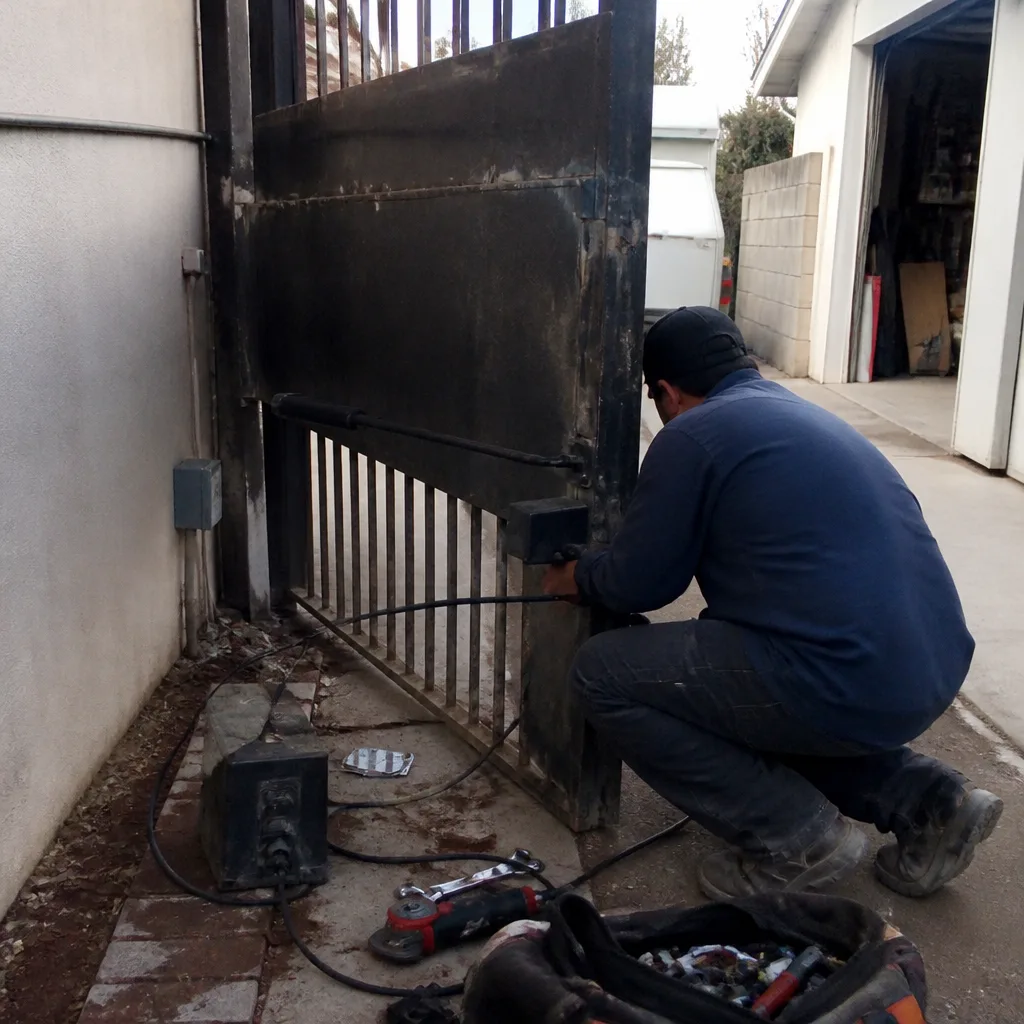 Before
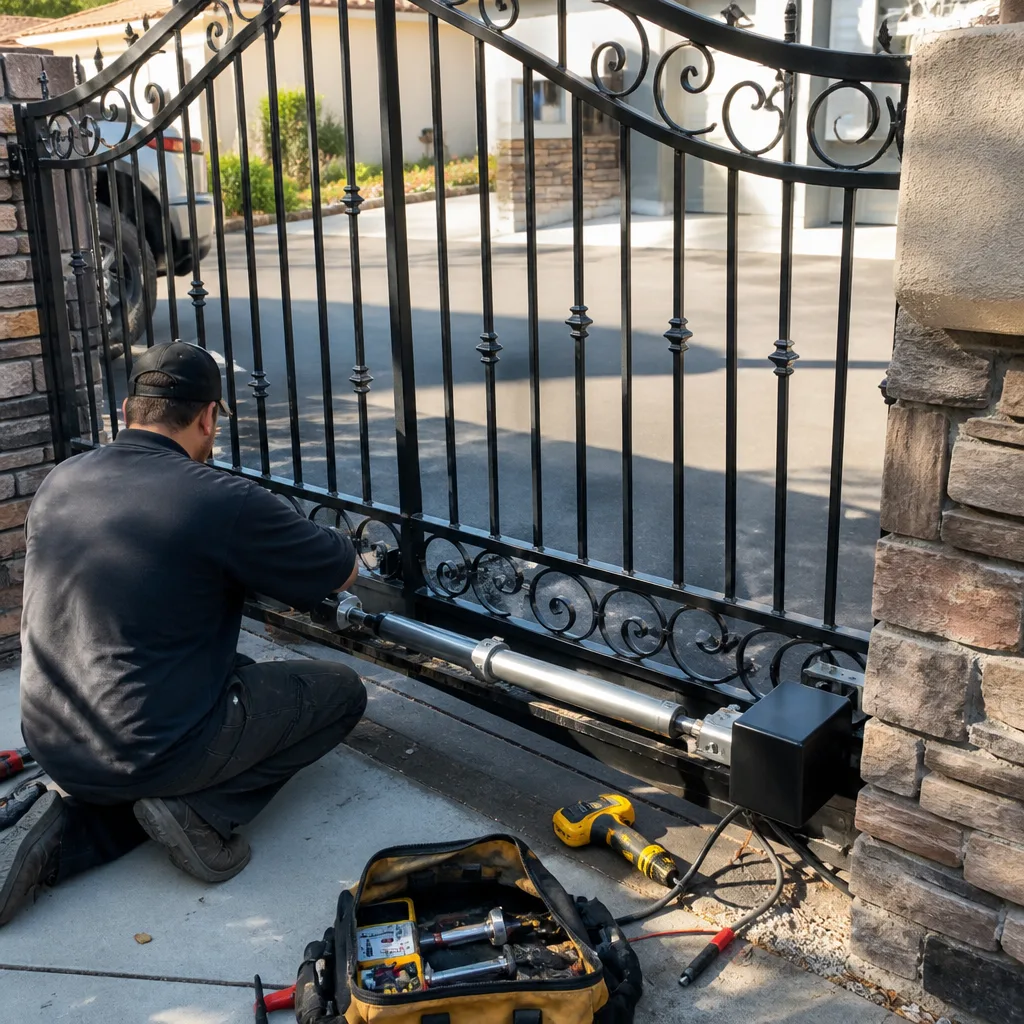 After
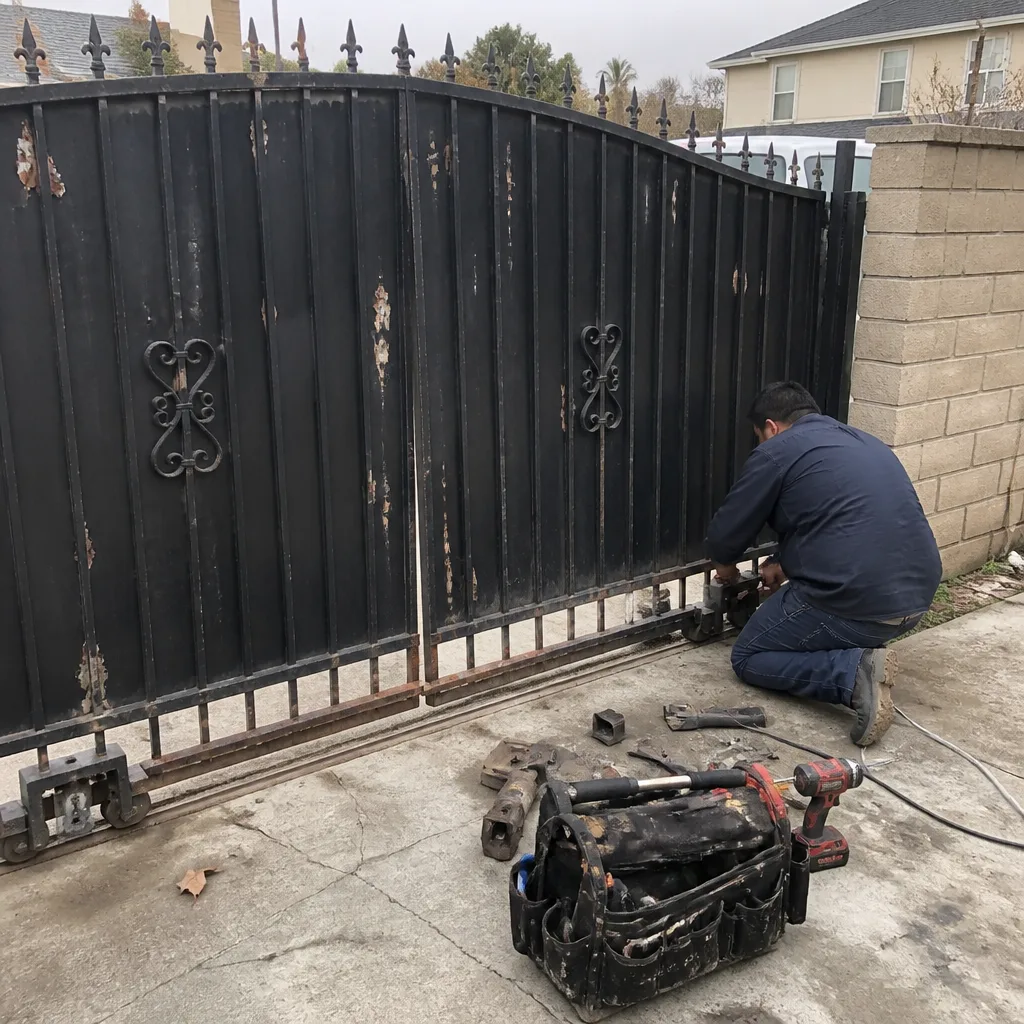 Before
 After
 Before
 After