
Last updated October 30, 2026
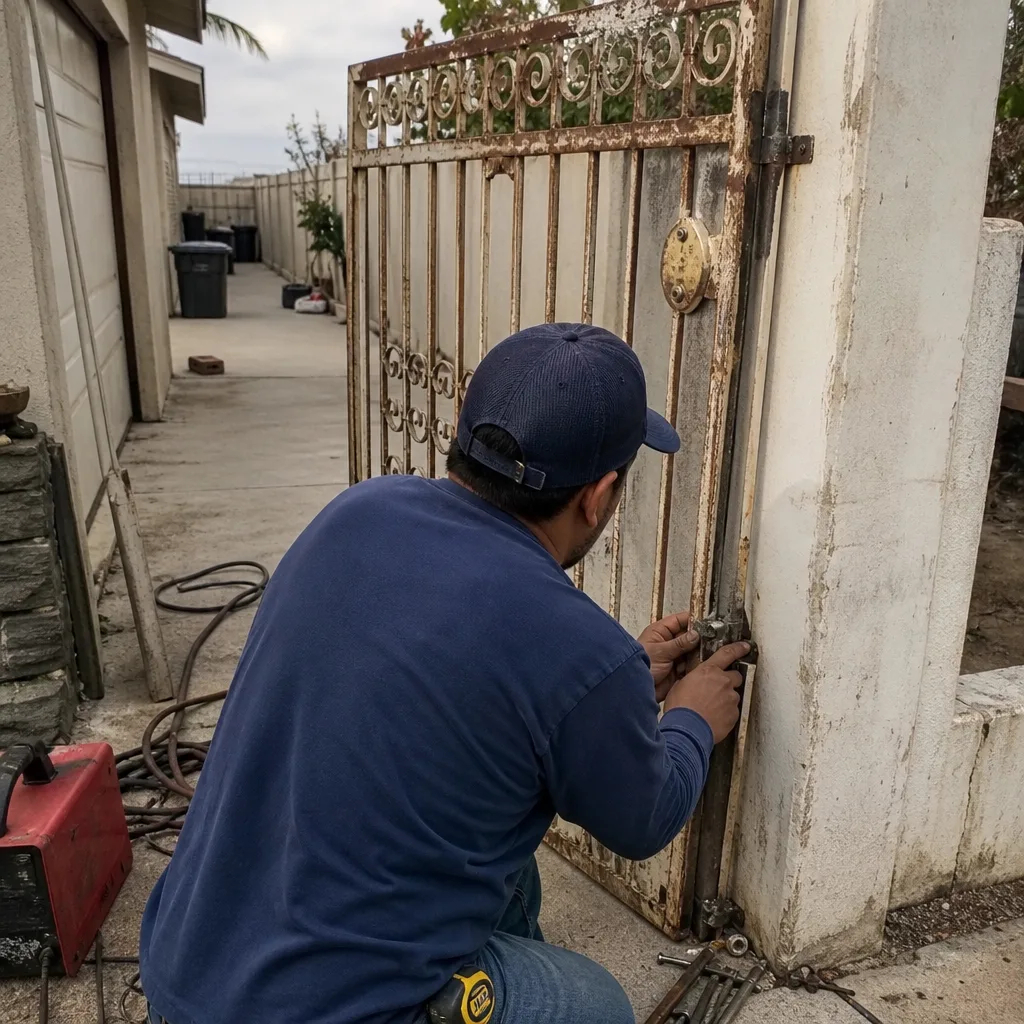
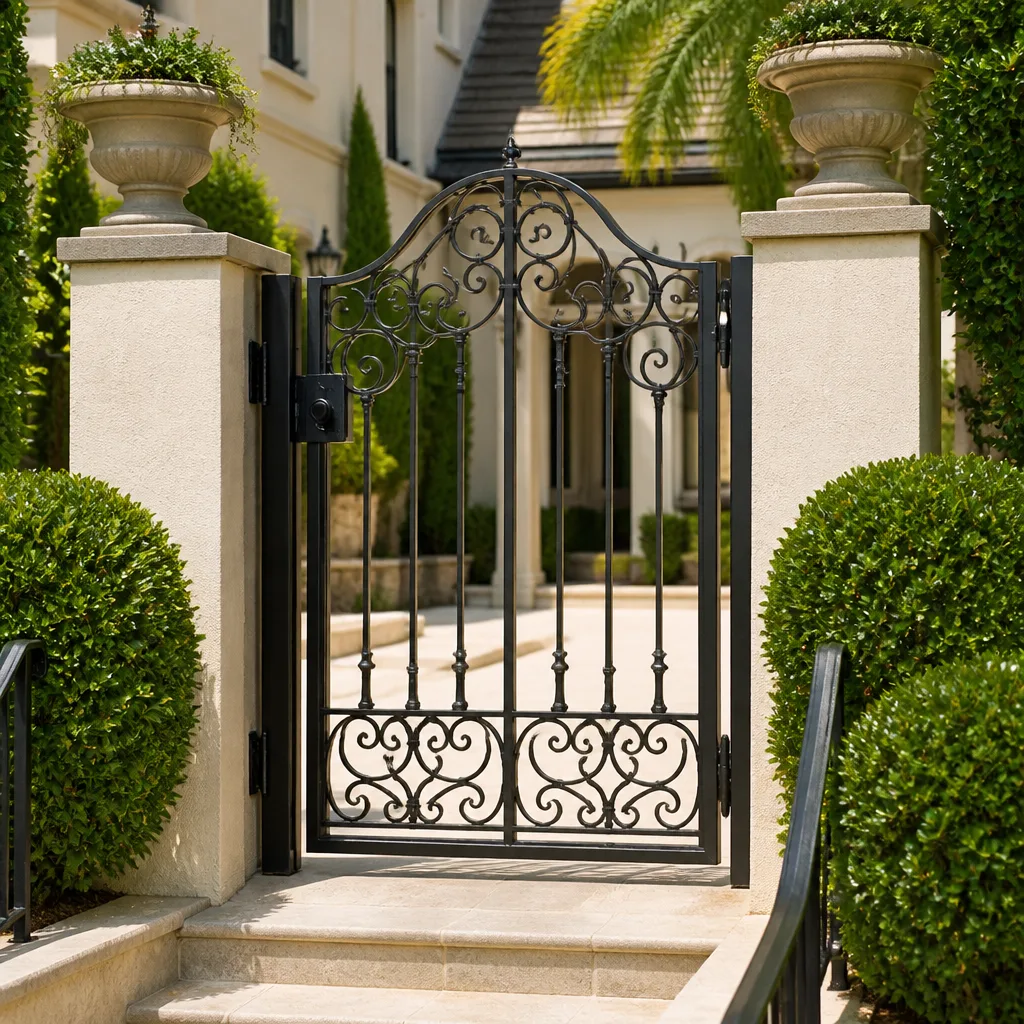 Wrought iron
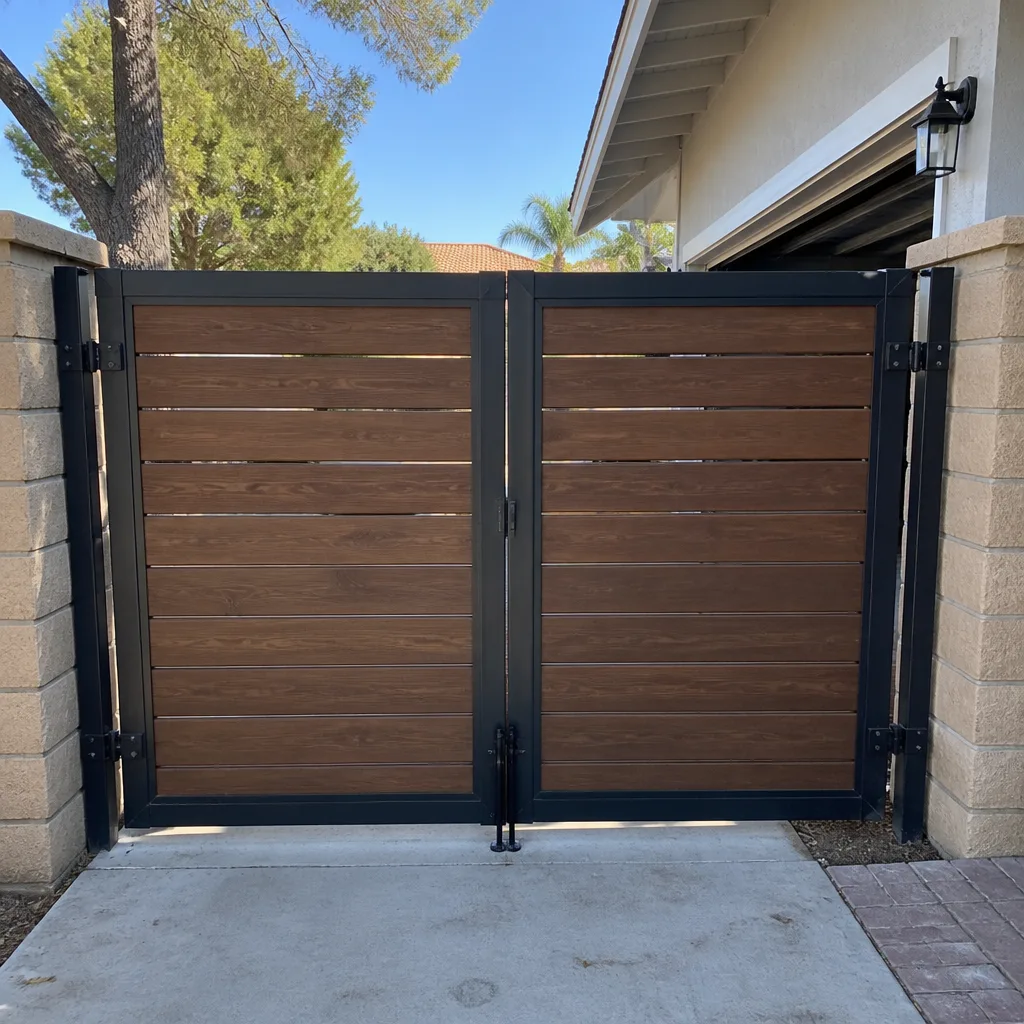
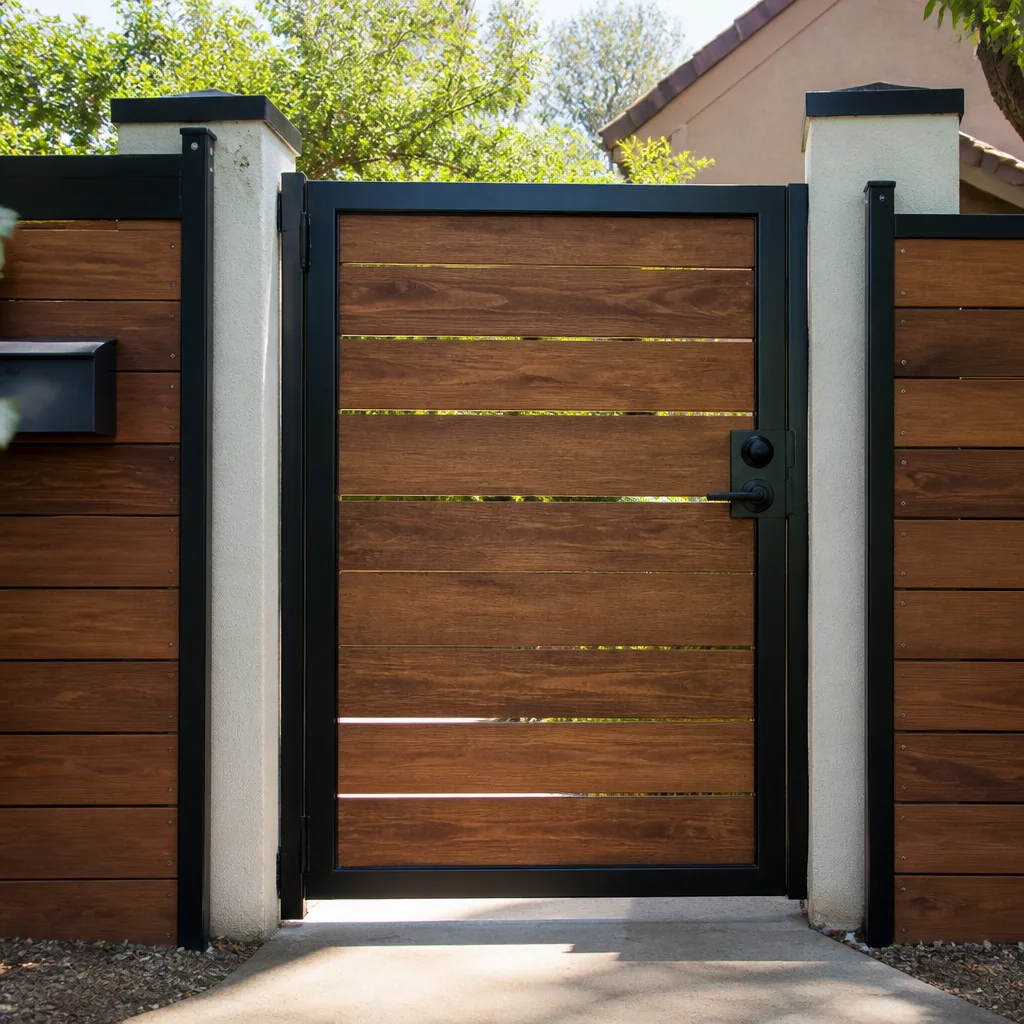 Wood & steel frame
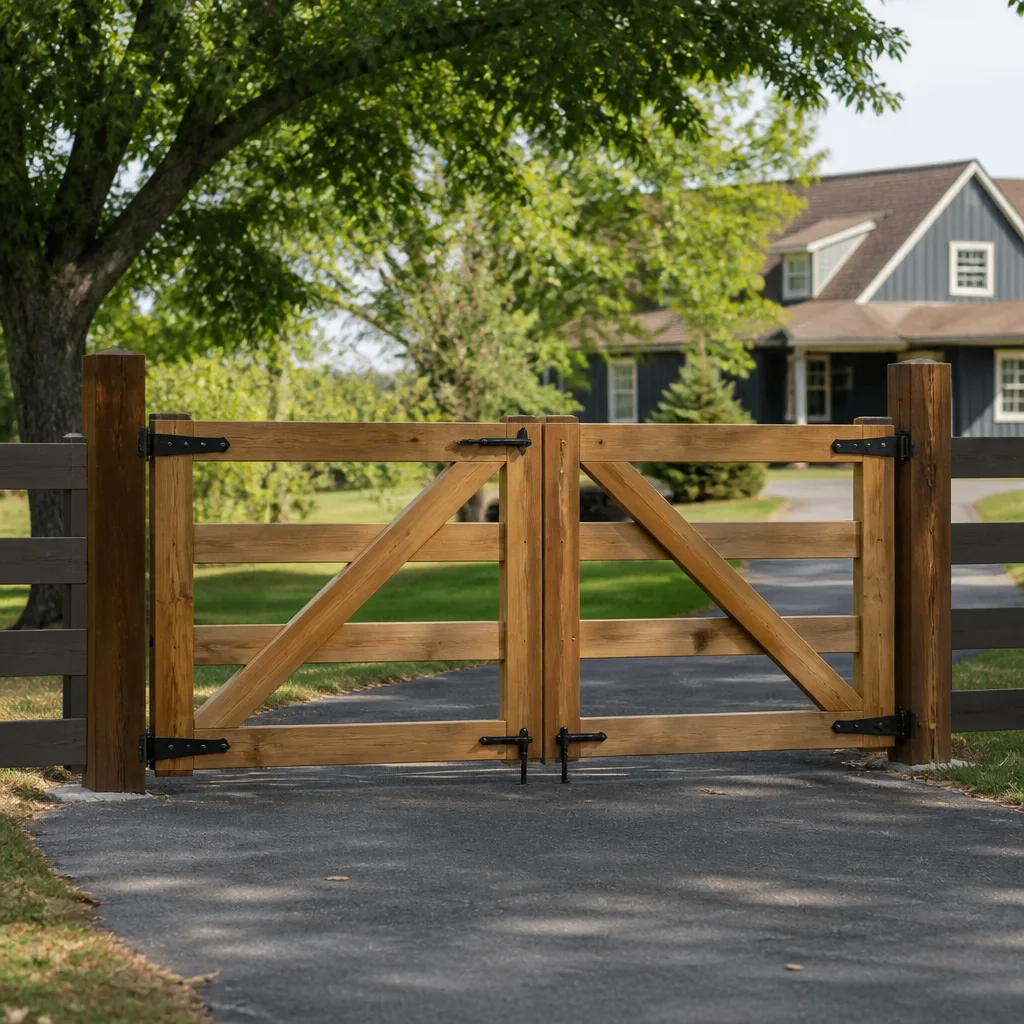 Farm & ranch
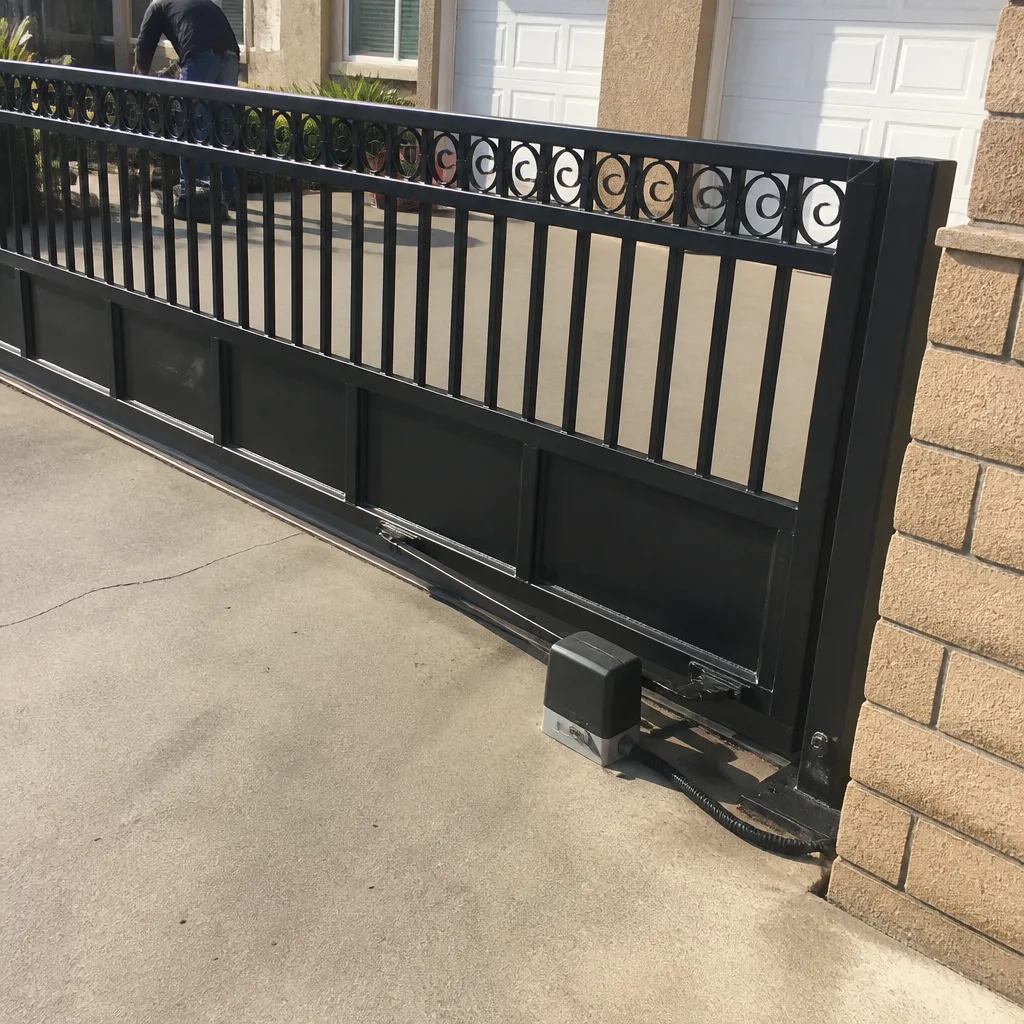
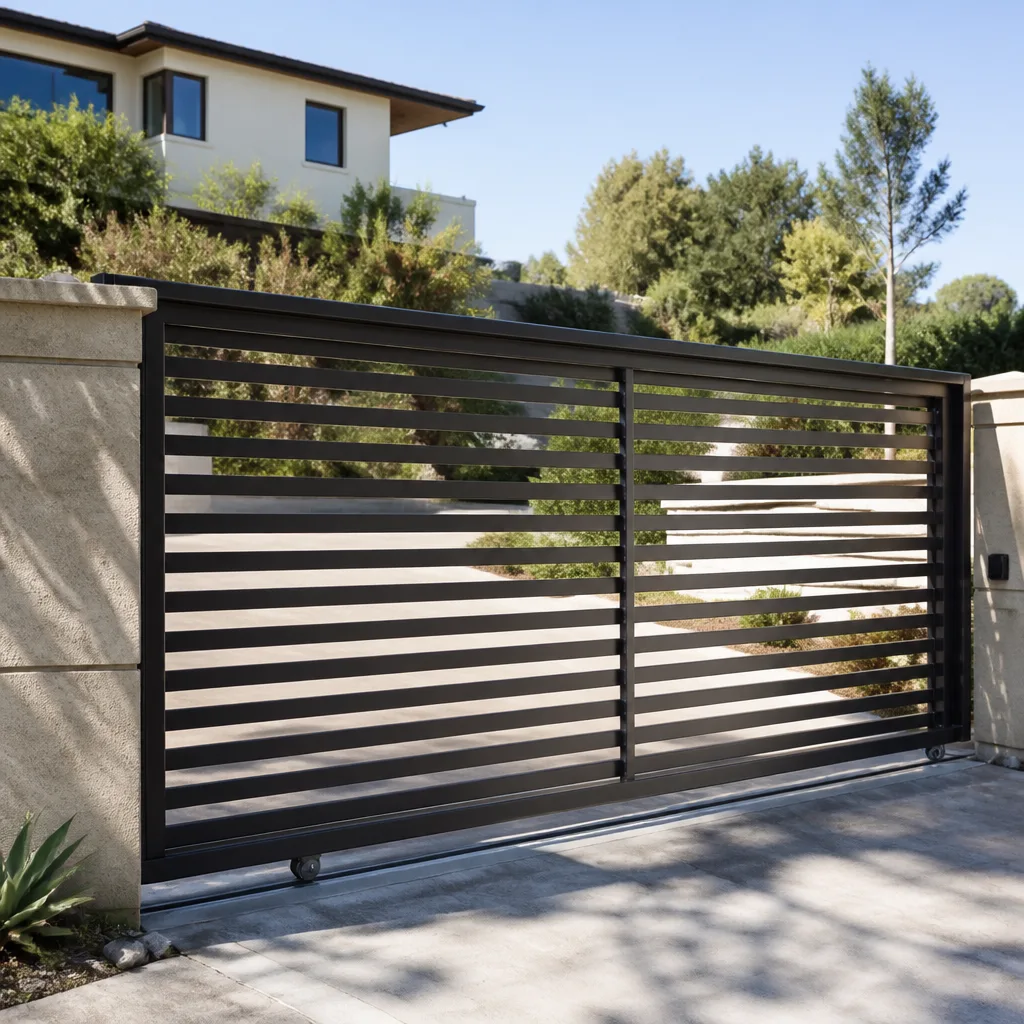 Sliding driveway gates
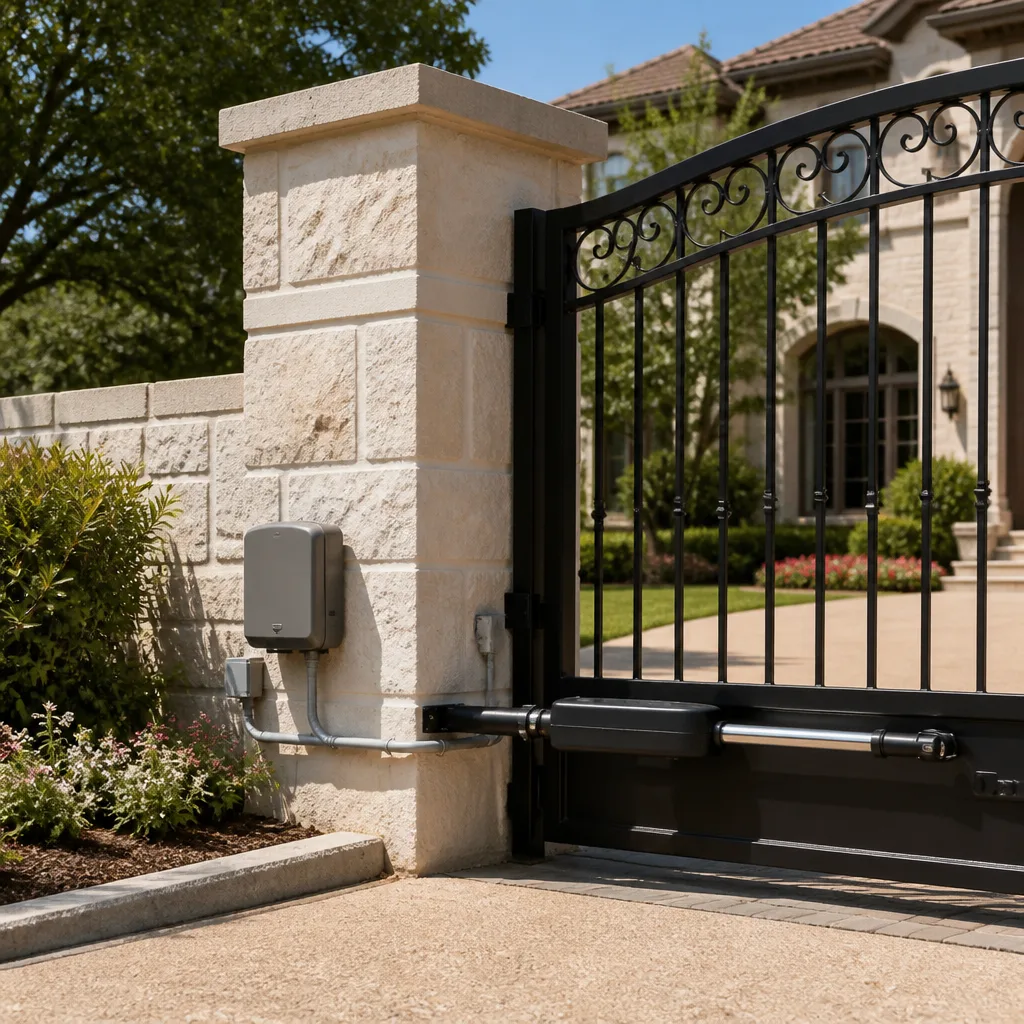 LiftMaster operators
Free on-site gate assessment - hinges, posts, and your LiftMaster or Nice gate operator checked before anything is quoted
The assessment is free and the quote is the invoice.
Get your free estimateThe Complete Gate Repair Guide for Corona Homeowners
Most gate failures in Corona aren’t random. They follow predictable seasonal patterns that start with UV-degraded photo eyes in July and end with wind-bent arms by November. A homeowner who understands these local variables can catch problems early, avoid emergency calls, and make smarter repair-versus-replace decisions. This guide maps Corona’s climate to the specific gate failures we see on a weekly basis, so you know what to watch for, what it costs, and when to call a gate repair specialist.
Styles & brands we work with
Quick Answer
Gate repair in Corona typically costs $150 to $600 for common fixes like hinge replacement, sensor realignment, and opener troubleshooting, while full electric gate system repairs can run $800 to $2,500 depending on the operator brand and damage extent. Corona’s intense heat, Santa Ana winds, and hard water create specific failure patterns that make seasonal inspection worthwhile, as covered in our Complete Guide to Gate Repair in Corona. Most repairs are completed same-day when parts are in stock, and a brand-agnostic gate specialist can fix what you have rather than pushing a full replacement.
Table of Contents
- Why Corona’s Climate Is Harder on Gates Than You Think
- Swing Gates vs. Sliding Gates in Corona: What the Wind Does to Each
- Hard Water and Your Gate: The Inland Empire Mineral Problem
- The Gate Brands Most Common in Corona and What Fails on Each
- Repair vs. Replace: The 6-Month Cost Test
- HOA Gate Requirements in Dos Lagos, Eagle Glen, and Beyond
- DIY Gate Triage: What to Check, What to Never Touch
- The Corona Gate Maintenance Calendar
- Common Mistakes to Avoid
- When to Call a Professional
- Frequently Asked Questions
- The Bottom Line
Why Corona’s Climate Is Harder on Gates Than You Think
Corona sits in a thermal sweet spot for heat accumulation. Summer temperatures routinely cross 100°F, and the sun exposure on west-facing gates is relentless from about 2 p.m. until sunset. That heat does measurable damage to gate components in ways coastal cities like Newport Beach or Long Beach never experience.
Control boards are the first casualty. A gate opener’s circuit board sits inside a metal housing that can reach 140°F internally on a 100°F day. Capacitors degrade faster at these temperatures, and solder joints expand and contract through daily thermal cycling. We see more control board failures in Corona between July and September than in the other nine months combined.
Wire insulation is the second heat victim. Low-voltage wire running from the house to the gate, often through PVC conduit laid just under soil or along block walls, breaks down faster in sustained heat. The insulation becomes brittle, cracks form, and moisture intrusion follows. Intermittent “ghost” problems, where a gate opens fine at 8 a.m. but won’t respond at 3 p.m., are almost always heat-expanded wiring or a failing board in a Corona summer.
Rubber and plastic seals, including the weatherstripping on gate frames and the boots on limit switches, harden and crack after two to three Corona summers. A gate that starts squeaking or grinding in August isn’t just dry; it’s often a rubber component that has lost its flexibility entirely.
What does not fail the same way in Corona as it does at the coast? Rust. Corona’s dry heat means corrosion rates are a fraction of what beachside properties face. Your gate won’t rust through near the coast, but it will bake, crack, and fail electronically first. Understanding this difference is why Corona-specific repair guidance matters. Anyone who tells you salt air is your problem has never worked a summer in the Inland Empire.
We’ve built our Gate Repair in Corona service around these exact failure patterns, which is why our technicians arrive already knowing what July heat does to a Viking control board or how a week of Santa Anas bends a FAAC swing arm.
Swing Gates vs. Sliding Gates in Corona: What the Wind Does to Each
Santa Ana winds aren’t a coastal phenomenon. They scream through the Cajon Pass and the Santa Ana Canyon, and Corona’s hillside communities take the brunt. Wind gusts of 40-60 mph are common during fall and winter Santa Ana events, and sustained winds of 20-30 mph can last for days. This wind load is the single biggest differentiator between gate styles in Corona.
Swing gates act like sails. A double swing gate, where each leaf is 8-12 feet wide, can catch enough wind to bend the gate arms, loosen hinges, and, in extreme cases, bend the gate leaf itself. The most common wind-related failure we see on exposed hillside lots is a bent linear actuator arm. When a FAAC or BFT piston-style opener fights a wind gust, the arm takes the load. Once bent even slightly, the gate binds mid-travel, and the opener motor works harder until it eventually trips its thermal overload or strips the internal gears.
Sliding gates handle wind better because they move parallel to the fence line and don’t present a broad face to the wind. But they have their own Corona-specific weakness: debris. Santa Ana events blow leaves, tumbleweeds, and palm fronds into the track channel. A sliding gate that derails during a windstorm is almost always a debris problem, not a hardware failure. The fix is usually a track cleaning and a roller check, but if the gate has been forced off its track, the roller brackets may be bent and need replacement.
For exposed hillside lots in communities like Sierra del Oro or the hills above Eagle Glen, we generally recommend sliding gates where the setback allows. They hold up better in sustained wind, require less frequent arm replacement, and fail less dramatically. That said, swing gates are the dominant style in most Corona HOA communities because of lot geometry and curb appeal. If you have a swing gate on a wind-exposed lot, budget for an annual hinge and arm inspection in late September, before Santa Ana season kicks in.
The practical takeaway: in Corona, wind stress is a seasonal event, not a random one. A gate that works flawlessly all summer can fail the first week of October, and the cause is rarely mysterious to anyone who works these systems daily. If you’re weighing a Gate Installation in Corona, wind exposure should be part of the conversation before you commit to a style.
Hard Water and Your Gate: The Inland Empire Mineral Problem
Corona’s water comes from the Chino Basin and imported Colorado River sources, and it carries high mineral content: calcium carbonate, magnesium, and dissolved solids that measure consistently in the hard-to-very-hard range. That water ends up on your gate through irrigation overspray, morning dew interacting with dust, and occasional hose-downs. The result is mineral buildup on moving parts that most gate guides don’t even mention.
Rollers and tracks on sliding gates are the primary victims. Hard water deposits form a chalky white crust on the track surface. Over time, this crust acts like fine-grit sandpaper. The rollers grind against it, wearing flat spots and developing play. A sliding gate that starts vibrating or making a rough, scraping sound mid-travel usually has mineral-crust buildup, not a failing motor. The fix is often as simple as scraping the track and cleaning the rollers, but if the buildup has been ignored for years, the rollers themselves may need replacement.
Hinges on swing gates suffer a slower version of the same problem. Mineral deposits work into the hinge pin bore, accelerating wear and causing the gate leaf to sag. A sagging gate leaf that scrapes the ground at the latch end is a hinge wear problem, and hard water speeds it up considerably.
The Mineral Cleaning Schedule That Works in Corona
- Every 90 days: Wipe down exposed rollers, hinges, and the track with a dry cloth. If you see white chalky buildup, scrub it with a stiff nylon brush and white vinegar. Rinse with clean water and dry thoroughly.
- Every 6 months: Inspect the full track length for crust in the wheel channel. Use a flat-blade scraper for heavy deposits, then re-lubricate with a dry silicone spray, never WD-40 or grease, which attract dust and create a grinding paste.
- Annually: Remove the gate cover (if applicable) and check the chain or belt drive for mineral dust accumulation. Blow it out with compressed air if needed.
If you’re on well water in the unincorporated areas east of the 15, your mineral content is likely even higher. Double the cleaning frequency for those properties.
This is one of those small maintenance habits that sounds trivial until you price out a full roller and track replacement. Fifteen minutes of cleaning four times a year beats a $400-$800 track rebuild. For homeowners who want a specialist to handle it, this type of cleaning is part of what we do on a Electric Gate Repair in Corona service call.
The Gate Brands Most Common in Corona and What Fails on Each
Corona’s gate population is a mix of builder-installed entry-level systems and aftermarket upgrades driven by HOA requirements. Over the years, we’ve developed a clear picture of which brands dominate the local market and which components fail on each. Knowing your brand tells you what to expect.
Linear operators are widespread in Corona’s suburban tract communities built between 1995 and 2015. The Linear LDO and LSO series are workhorses, but their limit switches wear out after roughly 7-10 years of daily cycling. When a Linear gate stops mid-travel or overruns its stop position, the limit switch assembly is almost always the culprit. The good news: this is a straightforward repair, and parts are readily available.
FAAC systems are common in higher-end custom homes and small commercial properties. FAAC hydraulic operators are smooth and long-lived, but they’re sensitive to fluid level. A FAAC gate that moves slower than it used to, or stops and reverses for no obvious reason, is often low on hydraulic fluid or has air in the lines. Flying by the seat of your pants with a FAAC system usually makes things worse; these are precision machines that reward methodical diagnosis.
BFT operators show up frequently in newer Corona developments, particularly in communities built after 2010. BFT control boards are sophisticated, but they don’t tolerate power surges well. A lightning strike or a grid event can fry a BFT board even when the operator itself is fine. If your neighborhood has overhead power lines and you have a BFT, a surge protector on the gate circuit is the cheapest insurance you’ll ever buy.
Viking operators are the heavy-duty choice for commercial and large residential gates in Corona. They’re built like tanks, but their capacitor packs age out around year 8-12. When a Viking gate hums but doesn’t move, or moves very slowly, the capacitor is the first suspect. We see this regularly on commercial gates along the 91 corridor industrial areas.
We’re factory-familiar with all four of these brands plus LiftMaster, Ghost Controls, DoorKing, Elite, and Mighty Mule. That range matters in a city like Corona, where a single property management company might oversee 30 gates running five different brands. The ability to diagnose what’s actually on the property, rather than pushing a single-brand replacement, saves property managers real money and downtime. We work on your brand, not just the one we happen to sell.
Repair vs. Replace: The 6-Month Cost Test
The most expensive decision a Corona homeowner can make is the wrong one on a repair-versus-replace call. Here’s the framework we use, and it’s grounded in real part lifespans. No guesses, no upsells.
When a Repair Is Clearly Worth It
- Hinge replacement on a gate under 10 years old: $150-$400 depending on gate weight and hinge type. If the gate leaf itself is straight and the posts are solid, new hinges give you another 8-12 years of service.
- Limit switch replacement: $120-$300 on most Linear, LiftMaster, and Mighty Mule operators. If the board and motor are otherwise healthy, this is a no-brainer fix.
- Photo eye realignment or replacement: $100-$250. Heat-baked photo eyes fail mechanically, but the wiring and operator rarely suffer collateral damage.
- Track cleaning and roller replacement on a sliding gate: $200-$500. A full track rebuild is $800+, but early intervention at the roller stage usually prevents that.
When a Replacement Is the Honest Answer
- A control board on a 15+ year-old operator: A replacement board for an older FAAC or Viking can run $400-$900. If the operator is already past its expected service life and the motor is showing age, you’re putting a new board in an old machine. We’ll tell you that directly.
- A gate leaf with structural rust or weld fatigue: Repairing a cracked weld on a sagging gate leaf is a patch, not a fix. The crack will return, usually within 6-12 months, because the underlying metal fatigue hasn’t gone anywhere.
- An operator with both a failed board and a seized motor: At that point, replacement cost is often 70-80% of a new operator with warranty. The repair math doesn’t work.
The benchmark we give Corona customers is this: if the cost of the repair exceeds 50% of a new part or system and the remaining components are past half their expected life, replace. If the repair is under 40% and the remaining components have 5+ years left, repair. In the 40-50% zone, we talk through the options with you and let the facts drive the decision. It’s your gate and your money. Our job is to give you accurate information, not a sales pitch.
HOA Gate Requirements in Dos Lagos, Eagle Glen, and Beyond
Corona has one of the highest concentrations of HOA-governed communities in Riverside County. Master-planned developments like Dos Lagos, Eagle Glen, Sierra del Oro, and The Retreat set specific standards for gate appearance, operation, and even the type of opener allowed. If you live in one of these communities, your gate repair options are constrained by rules you signed up for at close of escrow.
Most Corona HOAs require that any gate replacement match the original architectural specification. That often means a specific gate style, a specific color, and sometimes a specific operating mechanism. In gated communities, the perimeter entry gates are typically HOA property, but your individual driveway gate is yours to maintain, subject to architectural review.
Common HOA gate requirements we encounter in Corona:
- Appearance standards: The gate must be maintained in the original finish. Rust, peeling paint, or visible damage can trigger an HOA violation notice. Many HOAs allow 30-60 days for correction.
- Opener restrictions: Some communities require specific operator types, usually for noise or safety reasons. Replacing an HOA-approved operator with a different model can require architectural committee approval.
- Safety requirements: Most Corona HOAs reference California Building Code for gate safety, which requires photo eyes on powered gates and proper force settings. A gate that auto-closes on a vehicle is both an HOA violation and a liability nightmare.
- Maintenance timelines: Many HOAs require gates to be functional at all times. A broken gate that sits for 30+ days can trigger fines in addition to the repair cost.
If you’re in an HOA, check your CC&Rs before scheduling major gate work, especially full replacement. We’ve seen homeowners buy a new gate and operator only to discover the HOA doesn’t approve the model. That’s an expensive mistake. When we do a Gate Installation in Corona, we always ask about HOA constraints up front because it saves the homeowner from a costly redo.
DIY Gate Triage: What to Check, What to Never Touch
Some gate troubleshooting is safe and smart for a homeowner. Other steps can genuinely injure you or make the problem worse. Our DIY vs Professional Gate Repair guide explains where the line sits.
What You Can Safely Check
- Power source: Is the gate plugged in? Is the GFCI outlet tripped? Is the circuit breaker on? A surprising number of “dead” gates are just a tripped outlet.
- Obstruction in the track or path: Look for debris, rocks, or plant growth blocking the gate. Clear it and test again.
- Photo eye alignment: If the gate starts to close but reverses, the photo eyes may be misaligned or dirty. Wipe the lenses and check that the indicator lights are steady (not blinking).
- Manual release function: Every automatic gate has a manual release. You can use it to open or close the gate by hand to get your car in or out until a technician arrives.
What You Should Never DIY
Gate springs, torsion bars, and high-tension cables carry enough stored energy to cause serious injury or death if they release unexpectedly. Even on a residential gate, a spring under tension can break bones. Never attempt to adjust, remove, or replace gate springs without proper training and tools. This is not “just a bigger garage door spring.” The forces involved are in the same danger category, and the consequences of a mistake are severe.
Control board and wiring work is also off-limits for most homeowners. Even with the power off, a capacitor can hold a charge strong enough to hurt you. And mis-wiring a board can fry a $500 component in five seconds.
The professional approach to Windsor Gate Repair home service: we’d rather walk you through a safe triage step on the phone than have you attempt something risky out of frustration. Call first. If it’s safe, we’ll help you fix it over the phone at no charge. If it’s not safe, we’ll come to you.
The Corona Gate Maintenance Calendar
This is the maintenance rhythm that matches Corona’s actual climate, not a generic “check your gate twice a year” suggestion.
March through May: Post-Rain Inspection
- Check for rust blooms on hinges, brackets, and gate frame corners after winter rains. Corona’s winter is short, but even a few rain events with our mineral-heavy water can trigger oxidation.
- Test the auto-reverse force setting. Rain and soil shifts can change how the gate meets its stops.
- Clear drainage channels around the track so standing water doesn’t create mineral crust.
- Verify battery backup function (if equipped). Heat hasn’t stressed the board yet this year, but you’ll want the battery healthy by June.
June through September: Heat Stress Monitoring
- Listen for changes in motor pitch during the hottest part of the day. A struggling motor at 3 p.m. is often a heat-degraded capacitor or a failing board.
- Watch for slow-down in gate travel speed. Hydraulic systems (FAAC primarily) lose efficiency in high heat. If it’s noticeably slower in August than April, check fluid levels.
- Inspect rubber seals and weatherstripping: they should still be flexible. Crumbly or cracked rubber means replacement before autumn wind season.
- Keep the track clear of dust. Summer is dry and windy in Corona; dust accumulation accelerates roller wear.
October through November: Santa Ana Preparation
- Schedule a hinge and arm inspection for swing gates, especially on hillside lots. This is the highest-value maintenance call of the year for exposed properties.
- Check that all gate bolts and brackets are tight. Wind vibration loosens hardware over time, and Santa Ana season will find every loose bolt.
- Confirm the gate can be manually operated if power goes out. Santa Ana events in Corona can trigger Public Safety Power Shutoffs, and you don’t want to be stuck inside your driveway.
- Clean the track thoroughly one last time before winter rains mix with mineral dust and set up like concrete.
December through February: Winter Check
- Corona has a mild winter, but the occasional frost can affect rubber components. Inspect boots and seals for cracks after the first cold snap.
- Test the gate after any significant rain. Water intrusion into the operator housing, even in dry Corona, is possible when the ground is saturated.
- Review the year’s repairs. If you had more than two service calls in 12 months, it may be time for a comprehensive system assessment rather than another patch.
This calendar reflects what we’ve learned fixing gates in Corona for years. It’s rooted in this city’s climate, not a generic template. Follow it, and you’ll catch 80% of failures before they strand you.
Common Mistakes to Avoid
- Ignoring a slow gate: Hydraulic and mechanical systems don’t get faster on their own. A gate that’s 30% slower than it used to be is telling you something specific. Ignoring it turns a $200 fluid top-off into a $900 pump replacement.
- Using WD-40 on everything: WD-40 is a solvent and water displacer, not a durable lubricant for gate rollers and hinges. It actually strips existing lubricant and attracts dust. Use dry silicone spray instead.
- Forcing the gate when it’s stuck: If a gate won’t move, the opener is already struggling. Forcing it by hand or repeatedly cycling the opener strips gears, burns out motors, and bends arms. Disengage the manual release and figure out why it’s stuck.
- Replacing the opener without checking the gate itself: A new operator on a gate with sagging hinges or a bent leaf will fail prematurely. The gate structure comes first. An opener is only as good as the gate it moves.
- Overlooking photo eye cleaning as a recurring chore: In Corona, heat-baked photo eye housings, dust accumulation, and occasional irrigation spray mean the lenses need cleaning more often than the manual suggests. A blinking indicator light is an easy fix, but only if you actually look at it.
- Buying parts without confirming compatibility: Not all Linear boards work with all Linear operators. Same for FAAC, BFT, and Viking. Buying the wrong board on eBay burns $300 and still leaves you with a broken gate. Match the exact model number first.
When to Call a Professional
Call a gate specialist when the gate makes an unusual sound, moves slower than it should, stops mid-travel, reverses for no reason, or refuses to respond to remotes and keypads. Call when you see visible damage: bent arms, sagging leaves, cracked welds, or a track that’s pulling away from the concrete. Call when the auto-reverse doesn’t work or the gate closes on objects. Call when your HOA sends a violation notice. And call before you attempt any work involving springs, cables, or high-tension hardware.
Windsor Gate Repair offers free estimates in Corona and covers both residential and commercial gate systems. Call (855) 382-0601 and we’ll diagnose the problem, give you a written price before any work starts, and explain your options in plain English. Gate specialists, not generalists.
Frequently Asked Questions
Gate repair in Corona typically runs $150 to $600 for common fixes like hinge replacement, photo eye repair, and limit switch replacement. More involved repairs, particularly electric gate control board or operator motor replacement, run $800 to $2,500 depending on the brand and the system’s age. Call (855) 382-0601 for an exact quote on your specific gate, estimates are free.
We complete most common gate repairs same-day when the required parts are available locally. Control board failures on less common brands may require 1-2 business days for parts. Call us before noon and we can usually have your gate operational by end of day.
We service all major gate brands including LiftMaster, FAAC, BFT, Linear, Viking, Ghost Controls, DoorKing, Elite, and Mighty Mule. Our technicians are factory-familiar with each system’s specific failure patterns and can diagnose what you have without pushing a specific brand.
Yes. Corona’s water has high mineral content, and irrigation overspray combined with dust creates a grinding paste on rollers, hinges, and tracks. We recommend a 90-day cleaning cycle for gate components in most Corona neighborhoods, with more frequent cleaning for homes on well water east of the 15.
Santa Ana events apply sustained wind load to swing gates, bending actuator arms, loosening hinges, and stressing the opener. Sliding gates are less affected by wind but collect wind-blown debris in the track. Homes on exposed hillside lots should schedule an annual hinge and arm inspection in late September or early October.
If the repair cost exceeds 50% of a new operator and the remaining components are past half their expected lifespan, replacement is the better financial decision. We’ll give you the straight repair cost and our honest assessment of how much life is left in your system. The price is quoted and agreed before any work starts, so you’ll never be surprised by an invoice.
The Bottom Line
Corona’s gate failures are predictable if you know what to look for. Heat kills control boards and rubber seals. Santa Ana winds bend swing gate hardware on exposed lots. Hard water crusts up tracks and accelerates roller wear. The homeowners who avoid emergency breakdowns are the ones who follow a seasonal inspection rhythm, clean mineral buildup before it grinds components down, and make repair-versus-replace decisions based on real part lifespans rather than sales pressure. Most gate repairs in Corona fall in the $150 to $600 range, and same-day service is realistic for common failures when you call early. Follow the calendar in this guide, respect what the climate does to your hardware, and call a specialist when the problem is beyond safe DIY triage. For more guides & resources, visit our blog. Your gate, back on track.
Written by the team at Windsor Gate Repair, serving Corona since 2012.
See the difference
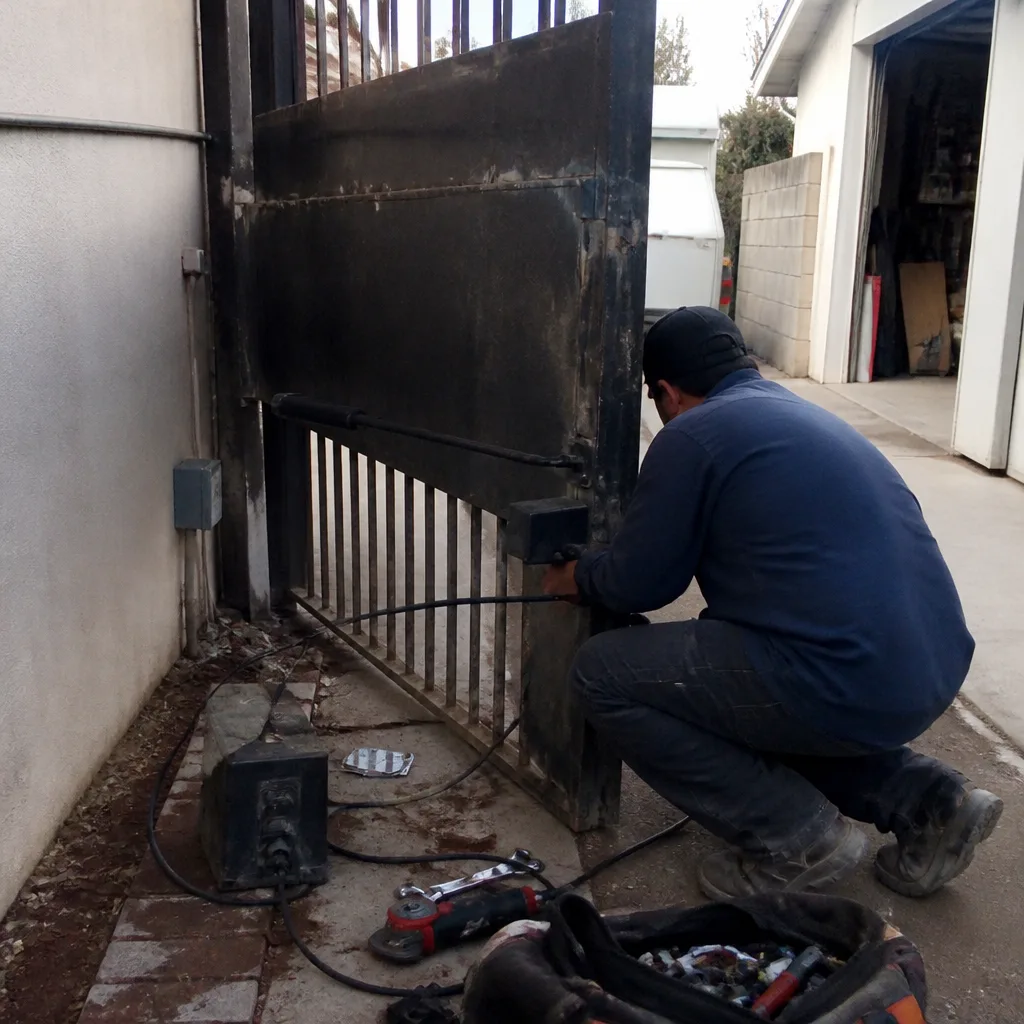 Before
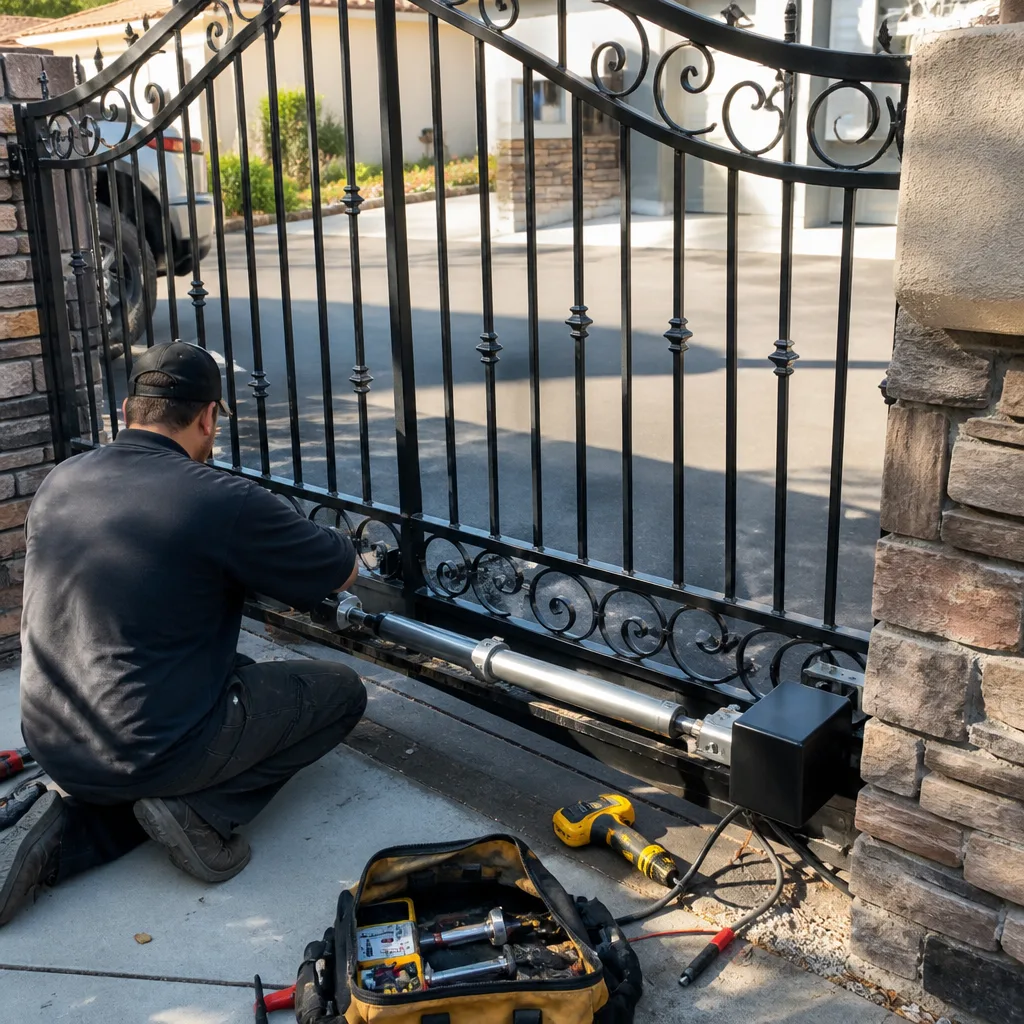 After
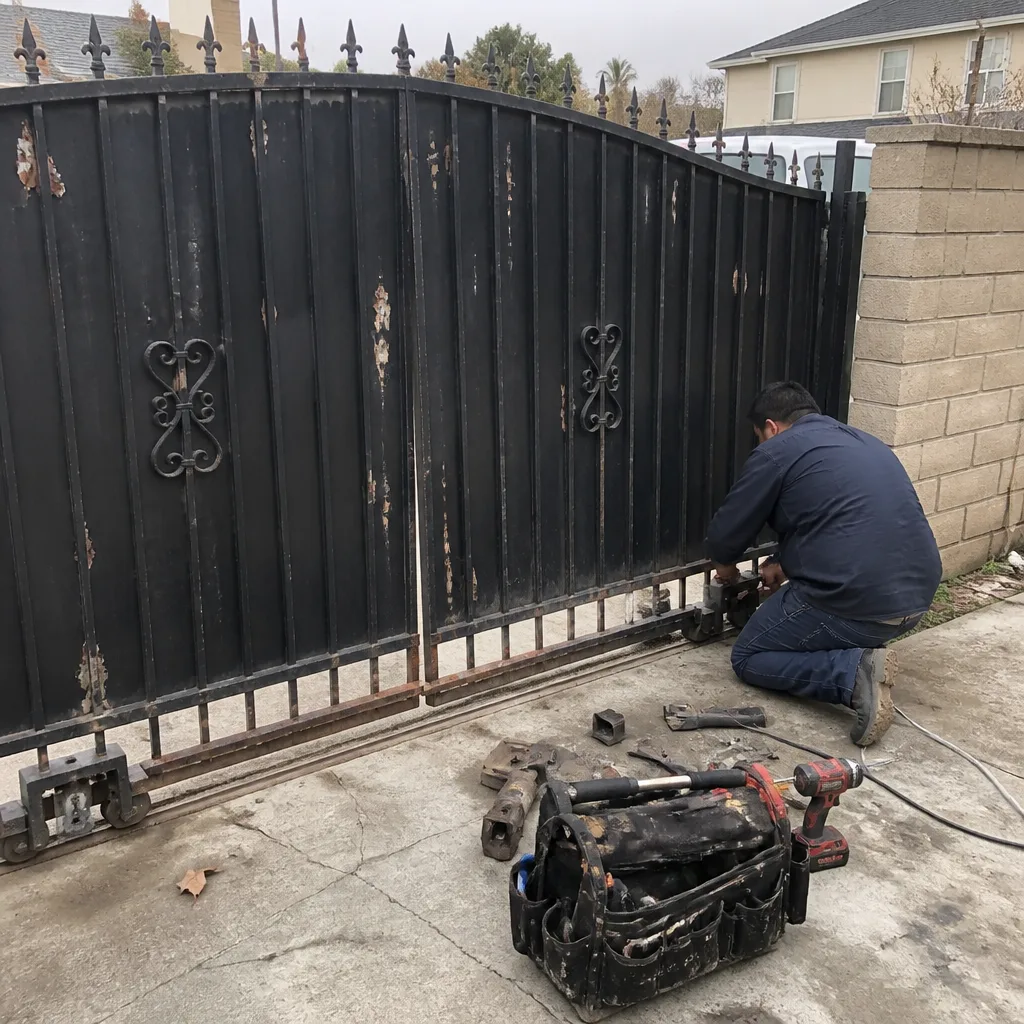 Before
 After
 Before
 After