
Last updated October 30, 2026
 Wrought iron
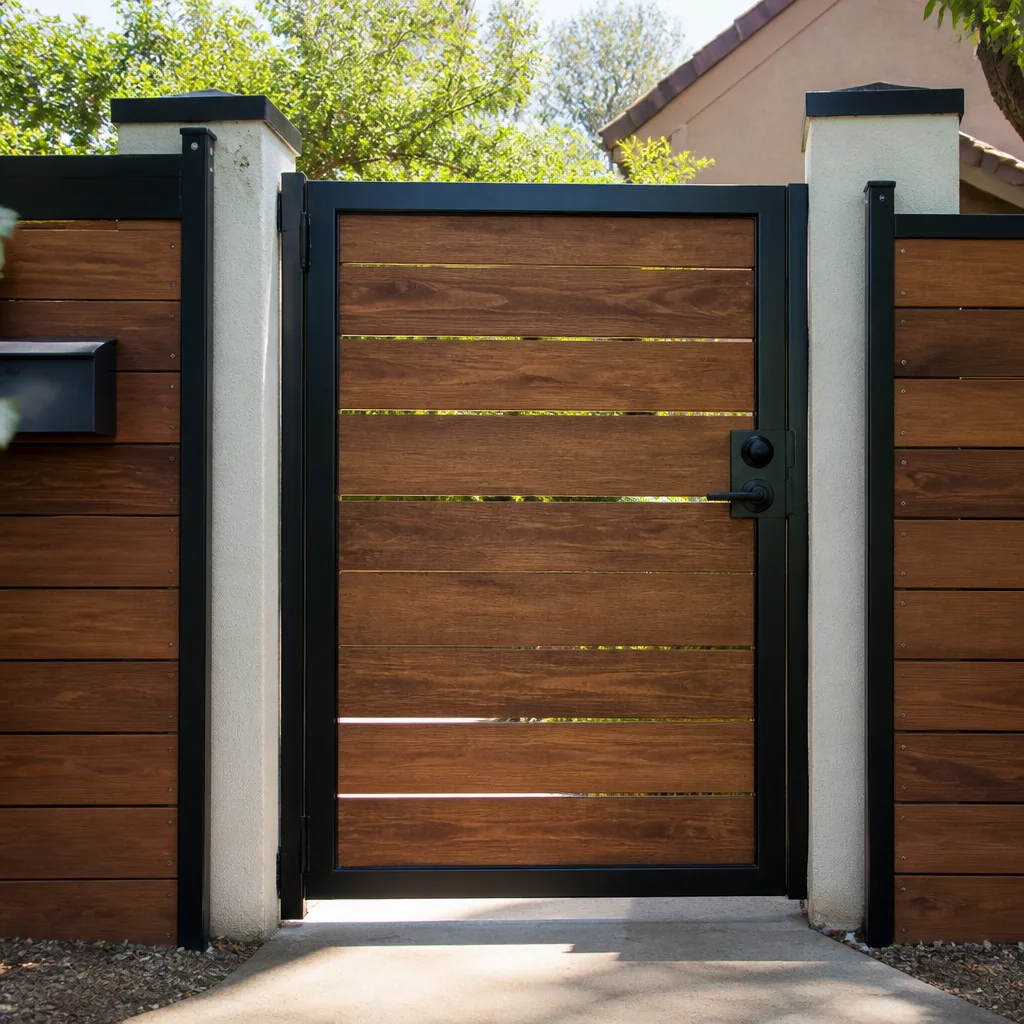 Wood & steel frame
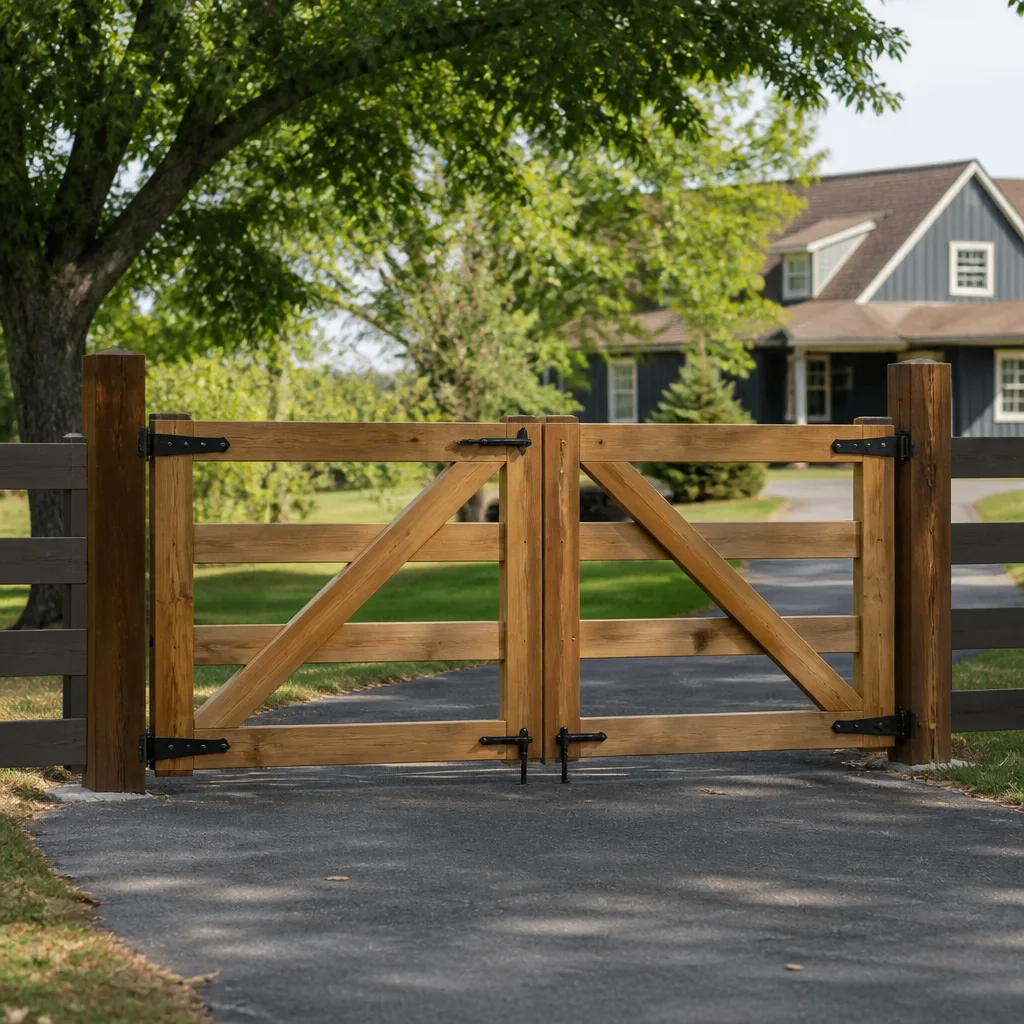 Farm & ranch
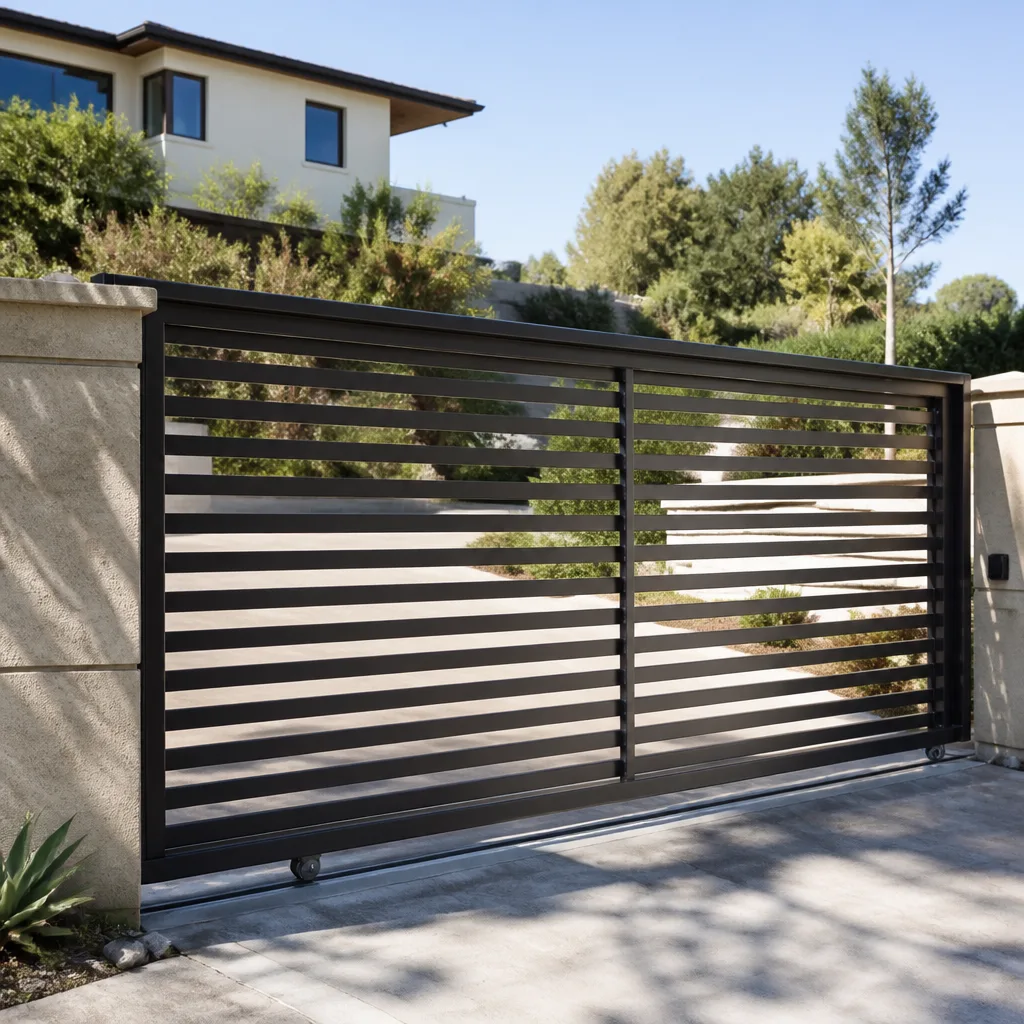 Sliding driveway gates
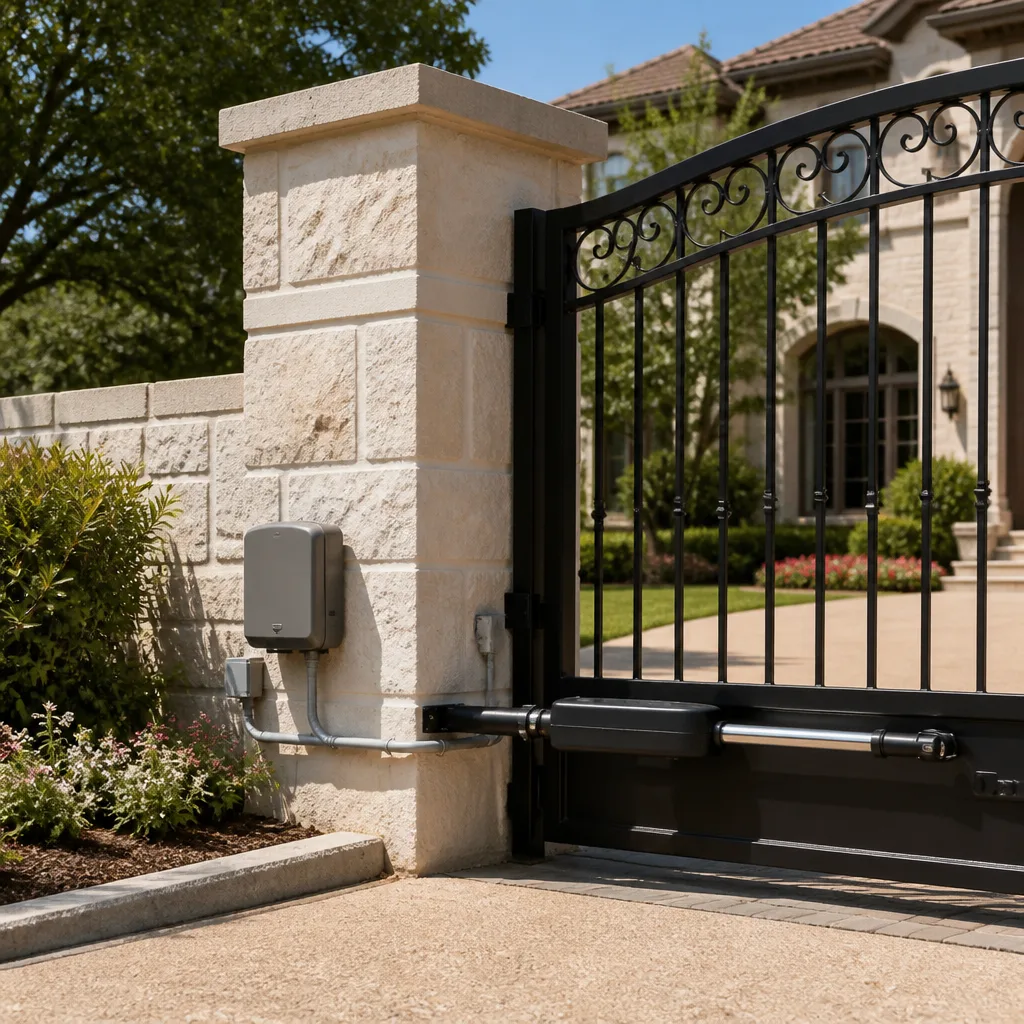 LiftMaster operators
Free on-site gate assessment - hinges, posts, and your LiftMaster or Nice gate operator checked before anything is quoted
The assessment is free and the quote is the invoice.
Get your free estimateGate Repair Permits, Codes & Inspections in CA: What You Need to Know
If your gate operator was replaced without a permit and the gate later injures someone, your homeowner’s insurance may have grounds to deny the claim. It’s a gap almost nobody talks about until it’s too late. In California, a surprising number of gate repairs sail past without anyone checking for compliance, and most homeowners in Corona don’t realize that what looks like a simple operator swap can trigger a permit requirement under Riverside County code. This guide walks through what actually requires a permit, the UL 325 and ASTM F2200 standards inspectors enforce, and how to handle unpermitted work if it’s already on your property.
Quick Answer
In California, simple like-for-like gate repairs, such as replacing a hinge, wheel, or keypad, generally do not require a permit. Replacing or installing an automated gate operator, adding a new gate to a driveway, or converting a manual gate to electric typically does require a permit in Riverside County, and the work must meet UL 325 and ASTM F2200 safety standards. If unpermitted work exists on your property, it can be retroactively permitted through the county, though the process involves inspection fees and possibly corrective upgrades. Contact our Gate Repair services in Corona at (855) 382-0601 to assess your gate’s compliance before you spend money on a repair that might create a liability issue.
Styles & brands we work with
Table of Contents
- Which Gate Work Triggers a Permit in Riverside County
- Like-for-Like Repairs: What’s Actually Exempt
- UL 325 Compliance: The Standard That Governs Automated Gates
- ASTM F2200 Entrapment Protection: What Inspectors Check
- Retroactive Permitting: How to Fix Unpermitted Gate Work
- What Inspectors Look For During a Gate Inspection
- Common Mistakes to Avoid
- When to Call a Professional
- Frequently Asked Questions
Which Gate Work Triggers a Permit in Riverside County
Riverside County follows the California Building Code (CBC) and the California Electrical Code (CEC) for gate installations. The permit trigger hinges on what’s being done, not on the size of the gate. In our experience working on gates across Corona, we’ve found that most homeowners assume permits apply only to large commercial gates. That assumption is wrong, and it can be expensive to correct later.
Here’s what actually requires a permit in Riverside County:
- New driveway gate installation – any new gate, manual or automated, mounted on new posts or a new track requires a building permit. This includes ornamental driveway gates, sliding cantilever gates, and pedestrian gates attached to the driveway system.
- Replacing an automated gate operator – swapping out a motor, control board, or complete operator (such as a FAAC, LiftMaster, or Viking unit) for a new one is electrical work under the CEC. A permit is required when new electrical circuits, conduit, or the operator itself is replaced, not when a failed control board is swapped for an identical part.
- Converting a manual gate to an automated gate – adding a motor, sensors, and control system to a gate that was previously manual is a new installation, full stop. This work requires both a building permit and an electrical permit in Corona.
- Structural modification – widening a gate opening, changing a swing gate to a slide gate, or remounting hinges on new posts is structural work under the CBC and requires a permit.
- New electrical service to a gate – running a new line from the panel to a gate operator, installing a dedicated circuit, or adding a solar charging system with new conduit requires an electrical permit.
Riverside County’s building department does not publish a specific “gate permit” category. Gate work falls under general building permits for structures and electrical permits for operator wiring. The practical upshot: if the work involves a motor, a new post, or a new electrical line, assume a permit is needed. If you’re unsure, call the Riverside County Building and Safety Department or a gate specialist who handles permitted work in Corona regularly.
Like-for-Like Repairs: What’s Actually Exempt
Not every gate repair requires a permit. California code, and Riverside County’s interpretation of it, allows for maintenance and like-for-like replacement of existing components. The distinction comes down to whether the repair changes the system’s operation, structure, or electrical load.
Exempt work includes:
- Replacing a worn hinge, roller, or wheel with an identical or equivalent part
- Replacing a gate’s keypad, remote receiver, or safety photo-eye sensor where no new wiring is run
- Lubricating, adjusting tension, or aligning a gate that has drifted
- Replacing a damaged gate leaf with one of identical dimensions on existing posts
- Repairing or replacing a broken chain or belt on an existing operator
- Replacing failed capacitors, relays, or limit switches inside an operator housing
Here’s the nuance we see in Corona every week: a homeowner replaces a LiftMaster operator with an identical model, assumes it’s like-for-like, and skips the permit. Then an inspector from a different project flags it. Or the operator is a different voltage or draws more amps than the old one, which changes the electrical load and technically voids the exemption. When in doubt, treat operator replacement as permitted work. It’s cheaper to pull a $150 to $300 permit than to pay double permit fees later after a failed inspection.
UL 325 Compliance: The Standard That Governs Automated Gates
UL 325 is the safety standard from Underwriters Laboratories that governs automatic gate operators. It was updated in 2018 and again in 2021 with tighter entrapment protection requirements. Practically speaking, UL 325 requires that any automated gate operator installed in California have two independent means of entrapment protection: a primary device (typically a current-sensing circuit in the motor) and a secondary device (photo-eyes, contact edges, or both).
What this means for a Corona homeowner: when an inspector checks your gate, they’re not just looking at the motor. They’re verifying that the operator carries a UL 325 listing mark, that the secondary entrapment protection is installed and functional, and that the gate reverses when it contacts an obstruction or when the photo-eye beam is broken.
How to verify your system meets UL 325 requirements:
- Look for the UL listing mark on the operator’s control box or motor housing. If it’s a BFT, FAAC, or Viking unit, the mark is usually on a metal nameplate.
- Test the primary entrapment protection: with the gate moving, apply moderate resistance. The motor should sense the load and reverse.
- Test the secondary protection: block the photo-eye beam with your hand. The gate should stop and reverse.
- Check contact edges on any gate that closes against a fixed object, such as a column or wall. Edges should be intact, not cracked or taped.
- Confirm the operator’s manual reset button is accessible and that the gate does not automatically restart after a reversal without operator input.
If any of these steps fails, the gate is out of compliance with UL 325, and the liability for that sits with the property owner. Windsor Gate Repair in Corona performs compliance checks on all nine brands we service, including BFT and Viking systems, so a failed inspection doesn’t become a recurring problem.
ASTM F2200 Entrapment Protection: What Inspectors Check
ASTM F2200 is the construction standard for gate assemblies that UL 325 references for entrapment protection. It governs the physical gate itself, not the operator, and it has some constraints that surprise Corona homeowners, especially those with older gates in neighborhoods like Eagle Glen or Sierra del Oro.
Key ASTM F2200 requirements inspectors check in Corona:
- Gate gap limitations – the standard sets maximum and minimum gaps between the gate and the ground, between gate panels, and between the gate and adjacent structures to prevent entrapment of hands, feet, and heads. Many older wrought-iron gates in Corona fail this because the original installation predates the standard.
- Mesh or panel size – any opening in a gate panel that a child could climb through must be designed to prevent entrapment. Ornamental gates with wide decorative scrollwork often need backing mesh or a redesign to comply.
- Positive stops – all gates must have mechanical stops that prevent the gate from traveling beyond its intended path. A gate that can overshoot its post and pinch someone against a wall is a direct violation.
- Pinch points – swing gates must not expose fingers or hands at hinge points. Sliding gates must not create shear points where the gate passes a stationary object.
- Gate speed and force – the gate must not move faster than the operator’s rating allows and must stop and reverse under the force limits set by UL 325.
The most common non-compliance we see in Corona is older sliding gates that lack a full-height mesh or screen on the back side, creating a shear and entrapment hazard where the gate passes the fence line. Another frequent issue: a gate installed too close to the driveway edge, where the rear wheel track sits in the walking path. Both trigger failed inspections and require retrofits before the county signs off.
Retroactive Permitting: How to Fix Unpermitted Gate Work
If a gate operator or new gate was installed without a permit in Corona, the county has a process to bring it into compliance. It’s not as painful as most people fear, but it does involve fees, inspections, and sometimes corrective work.
Step-by-step process for retroactive permitting in Riverside County:
- Gather documentation: serial numbers, model numbers, manufacturer cut sheets for the operator (FAAC, Linear, LiftMaster, etc.), and any dated photos of the installation.
- Call Riverside County Building and Safety and describe the work. The counter staff will confirm whether it falls under a building permit, an electrical permit, or both.
- Submit an application with the gate’s location, operator specs, and a simple site plan showing the gate, posts, and operator location.
- Pay the permit fee – in Corona and Riverside County, retroactive permit fees for gate work typically run $150 to $400 depending on the scope, plus a possible penalty multiplier if the work has been in place for more than a year.
- Schedule an inspection. The inspector will verify UL 325 compliance, ASTM F2200 dimensions, wiring, and electrical grounding.
- Complete any corrective items the inspector notes and schedule a re-inspection.
The inspection is where most retroactive permits get held up. An operator that worked fine for years may not have photo-eyes at the correct height, or the gate’s mesh may be too coarse, or the wiring may lack a proper disconnect. We regularly help Corona homeowners prepare for these inspections by checking the system against the current standards before the county inspector arrives. That pre-check catches most issues and saves a second trip fee.
What Inspectors Look For During a Gate Inspection
Riverside County gate inspections are typically quick – 20 to 40 minutes – but they’re specific. The inspector is checking a defined list of items, and knowing that list in advance is the difference between passing on the first visit and paying for a re-inspection.
The inspector’s checklist for an automated gate in Corona:
- Permit card on site – the permit must be posted or available. A missing card can end the inspection before it starts.
- UL 325 label visible – the operator’s listing mark and model number must be readable without disassembly.
- Function test of entrapment protection – the inspector will block the gate’s path, trip the photo-eyes, and confirm the gate reverses.
- Warning signage – automated gates require visible safety signage on both sides of the gate, typically a yellow or white placard warning of automatic operation.
- Electrical disconnect – a manual disconnect switch or accessible breaker within sight of the operator, labeled for the gate.
- Grounding and conduit – the operator’s electrical supply must be in proper conduit with correct grounding. Exposed NM cable or spliced extension cord wiring fails instantly.
- Gate dimensions – gap measurements, mesh size, and clearance checks against ASTM F2200.
- Positive stops and pinch point review – the inspector will walk the gate’s full travel path and check both sides.
Preparation matters. Before calling for the inspection, run the function tests yourself, confirm the signage is in place, and make sure the operator’s label plate hasn’t been painted over. These small checks prevent the most common failure points we see on Corona gate inspections.
Common Mistakes to Avoid
- Assuming all gate repairs are permit-free. A simple hinge replacement is exempt. Replacing the operator motor is not. The distinction trips up even experienced DIYers, and the county does not accept “I didn’t know” as a defense.
- Replacing an operator with a higher amperage model and calling it like-for-like. A BFT unit drawing 12 amps installed where a 6-amp Linear unit was previously may change the electrical load and void the exemption.
- Ignoring the photo-eyes because the gate works without them. UL 325 requires two means of entrapment protection, and a gate that runs fine on the motor’s current-sensing alone is still non-compliant and will fail inspection.
- Keeping the original gate mesh from a pre-2000 installation. Older gates in Corona’s established neighborhoods often have openings that fail current ASTM F2200 requirements, even if the gate was code-compliant when installed.
- Not pulling a permit because the contractor said it wasn’t needed. The property owner, not the contractor, bears the liability for unpermitted work. A verbal assurance doesn’t transfer that risk.
- Calling for inspection before testing the gate’s function yourself. A failed inspection costs a re-inspection fee in Riverside County and delays the project. Pre-testing takes 10 minutes.
- Treating warning signage as optional. Missing signage is one of the fastest ways to fail an automated gate inspection in Corona, and it’s also a visible liability marker in any future claim.
When to Call a Professional
Some gate issues are safe to handle yourself: tightening a hinge, replacing a keypad battery, clearing debris from a track. But when the work involves a motor, wiring, or structural components, the risk calculus changes. A gate that weighs 300 to 800 pounds, powered by a motor that doesn’t stop when it should, can cause serious injury. UL 325 exists because people have been crushed by gates that lacked proper entrapment protection. That’s not a hypothetical in California; it’s a documented record that drives the code.
If you’re in Corona and unsure whether your gate meets current standards, call us for a compliance check before you spend on repairs that might not solve the underlying problem. We work with all nine major brands, from entry-level Mighty Mule to commercial-grade Viking and FAAC systems, and we handle both gate installation and repair so the same crew that fixes your gate can also bring it into compliance. Windsor Gate Repair offers free estimates in Corona. The phone is (855) 382-0601.
Frequently Asked Questions
Most like-for-like gate repairs, such as hinge, wheel, or keypad replacement, do not require a permit. Replacing an automated operator, converting a manual gate to electric, or installing a new gate does require a permit in Riverside County. When in doubt, call Windsor Gate Repair at (855) 382-0601 and we’ll confirm before any work starts.
Gate permit fees in Corona and Riverside County typically run $150 to $400 for residential work, depending on whether electrical and building permits are both required. Retroactive permits add a penalty multiplier if the work has been in place for more than a year. Estimates are free if you call (855) 382-0601.
You can file for a retroactive permit with Riverside County Building and Safety. The process involves submitting documentation, paying the permit fee plus any penalty, and passing an inspection. Corrective work may be required if the gate does not meet current UL 325 or ASTM F2200 standards. We prepare Corona gates for these inspections regularly.
UL 325 governs the safety of the gate operator, including entrapment protection requirements. ASTM F2200 governs the physical gate structure, including gap dimensions, mesh size, and pinch point design. A compliant automated gate must meet both standards, and Riverside County inspectors check both during any gate inspection in Corona.
A new manual driveway gate installed on new posts requires a building permit in Riverside County. Replacing an existing manual gate leaf on existing posts is generally exempt as like-for-like repair. If you’re adding automatic operation later, that triggers a separate electrical permit.
Yes. Windsor Gate Repair performs pre-permit compliance checks throughout Corona. We test the entrapment protection, verify the operator’s UL 325 label, check gate dimensions against ASTM F2200, and identify any wiring or structural issues before the county inspector arrives. Call (855) 382-0601 to schedule a free estimate.
The Bottom Line
California gate permitting isn’t complicated, but it’s unforgiving if ignored. The line between exempt repair and permitted work comes down to whether the repair changes the system’s structure, operation, or electrical load, and Riverside County enforces that line through UL 325 and ASTM F2200 inspections. Unpermitted gate work stays with the property and surfaces at the worst possible moment: during a sale, an insurance claim, or an injury investigation. If your Corona gate is automated, have its compliance checked. It’s a one-time cost that removes a recurring liability. Call (855) 382-0601 for a free estimate from a gate specialist who knows California code and the brands on your property, and explore more guides & resources on gate compliance.
Written by the team at Windsor Gate Repair, serving Corona since 2012.
See the difference
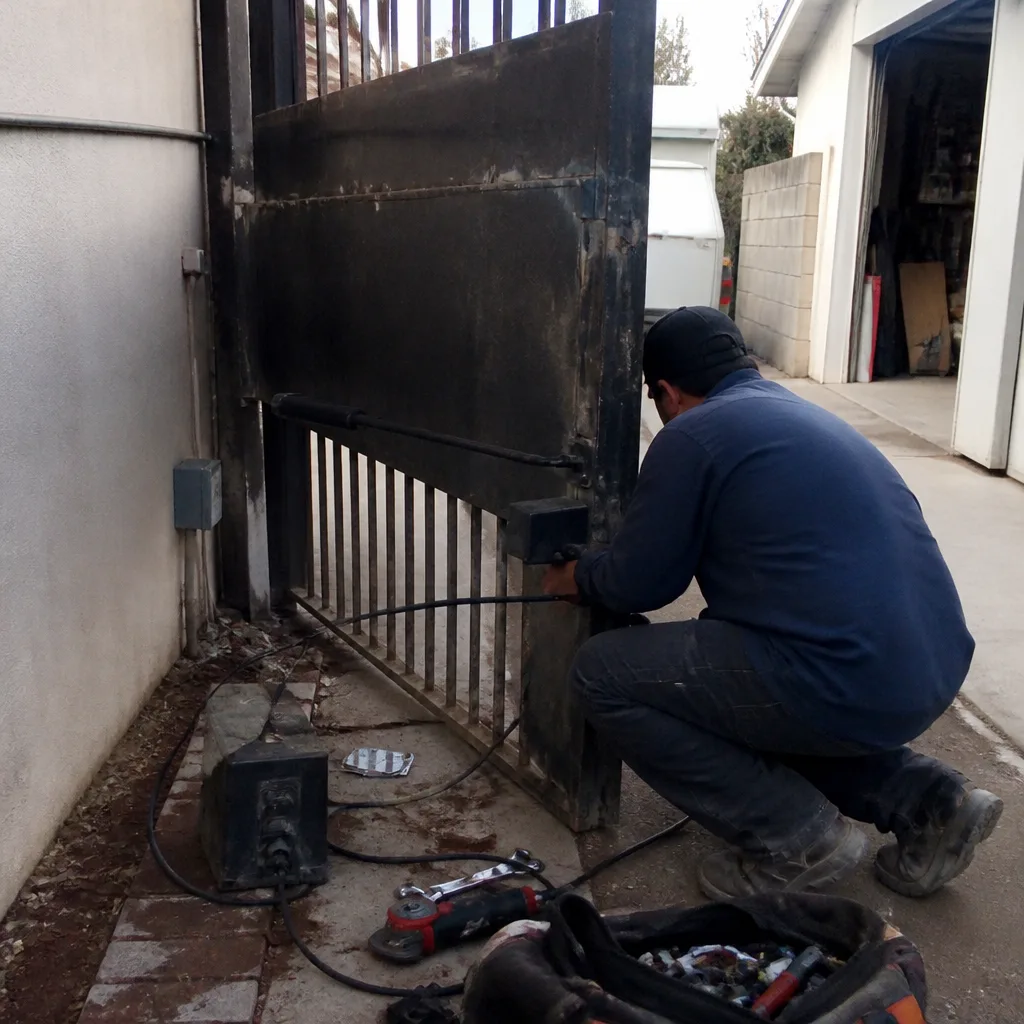 Before
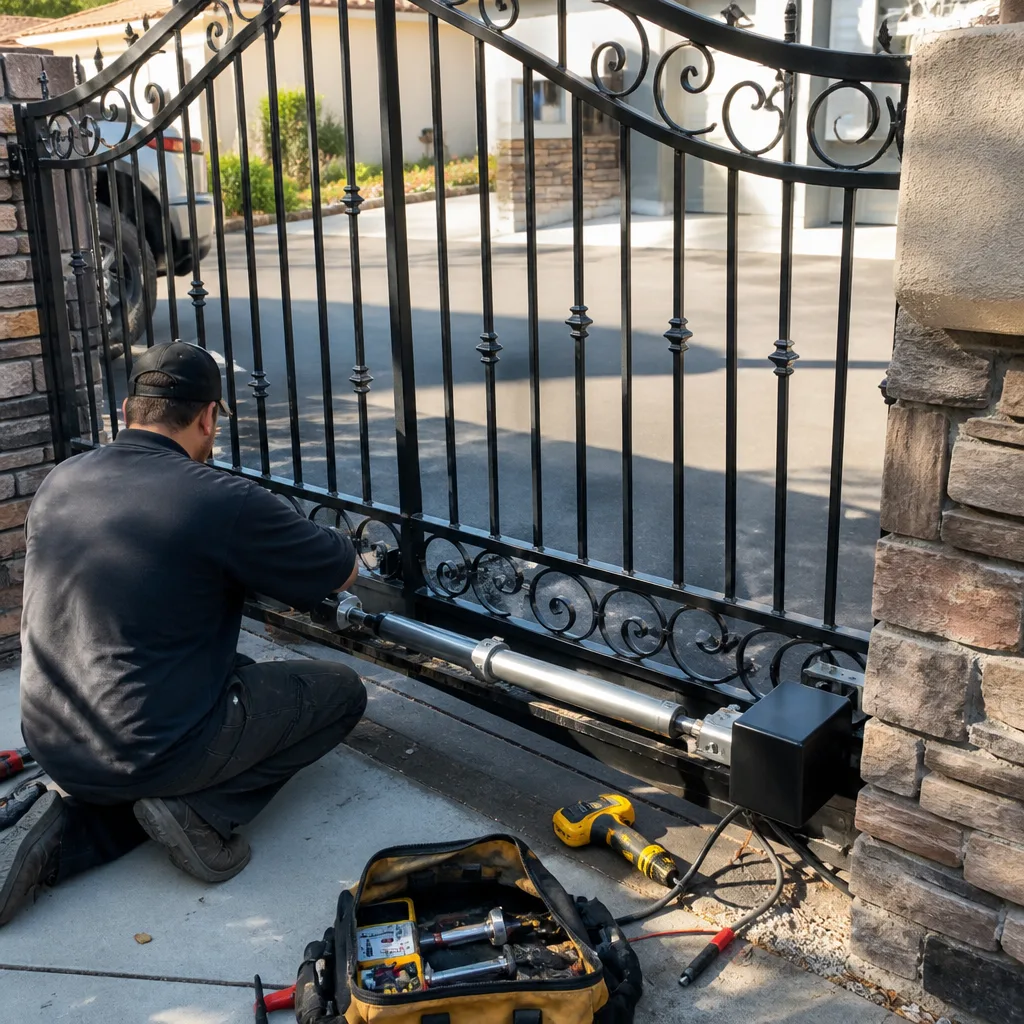 After
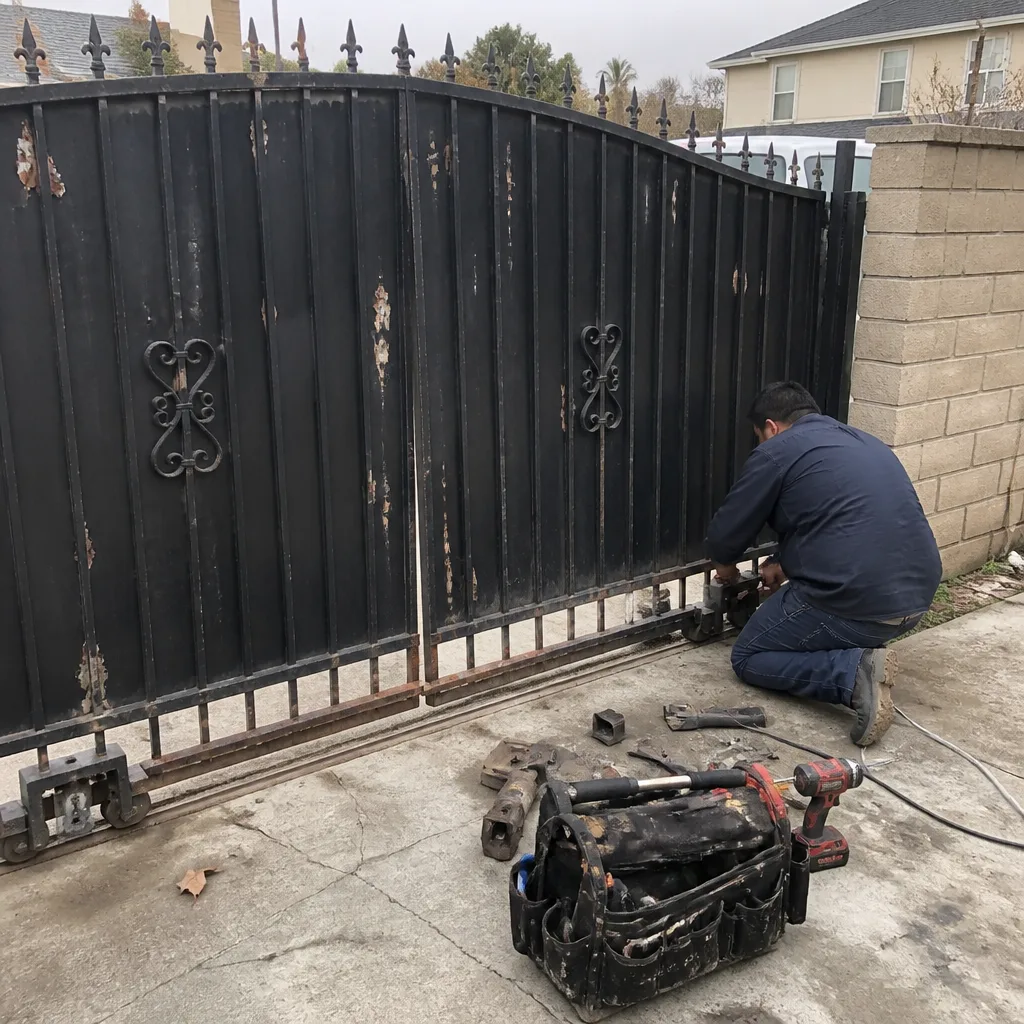 Before
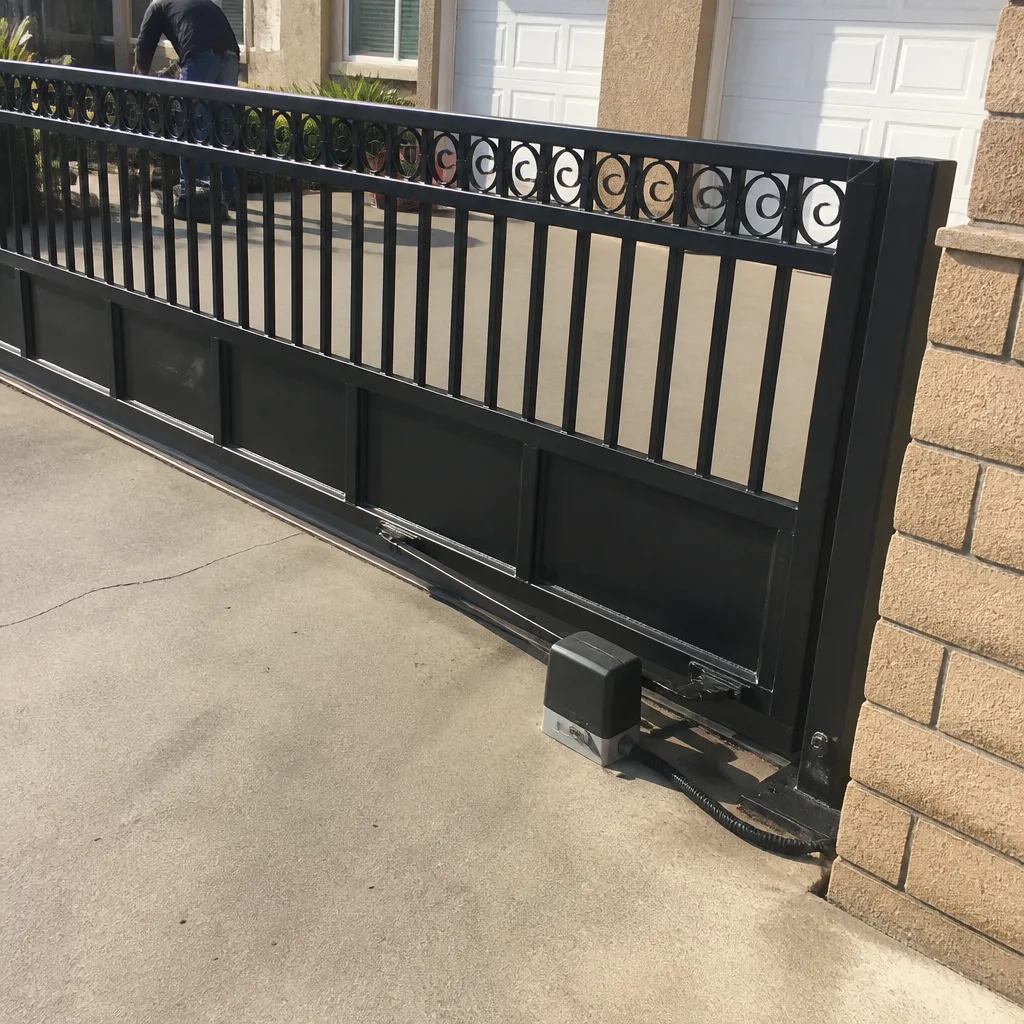 After
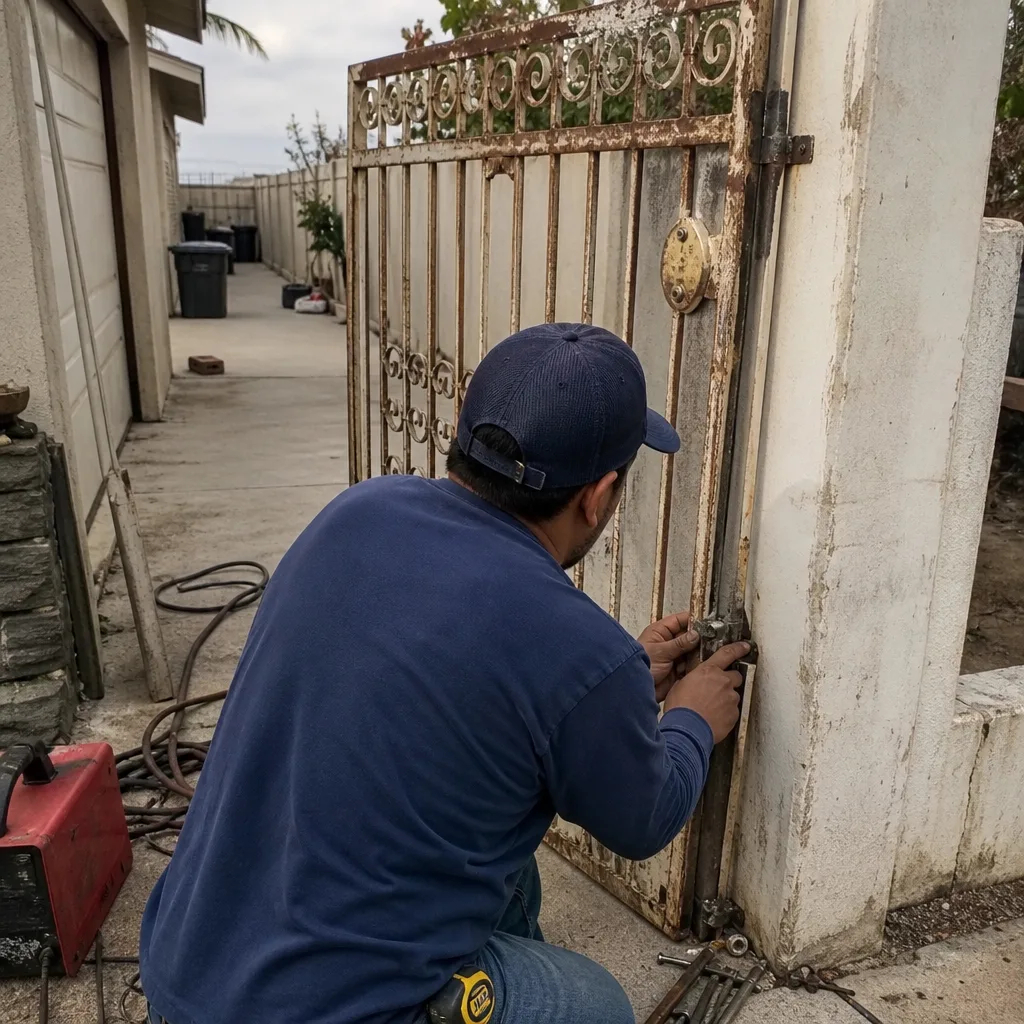 Before
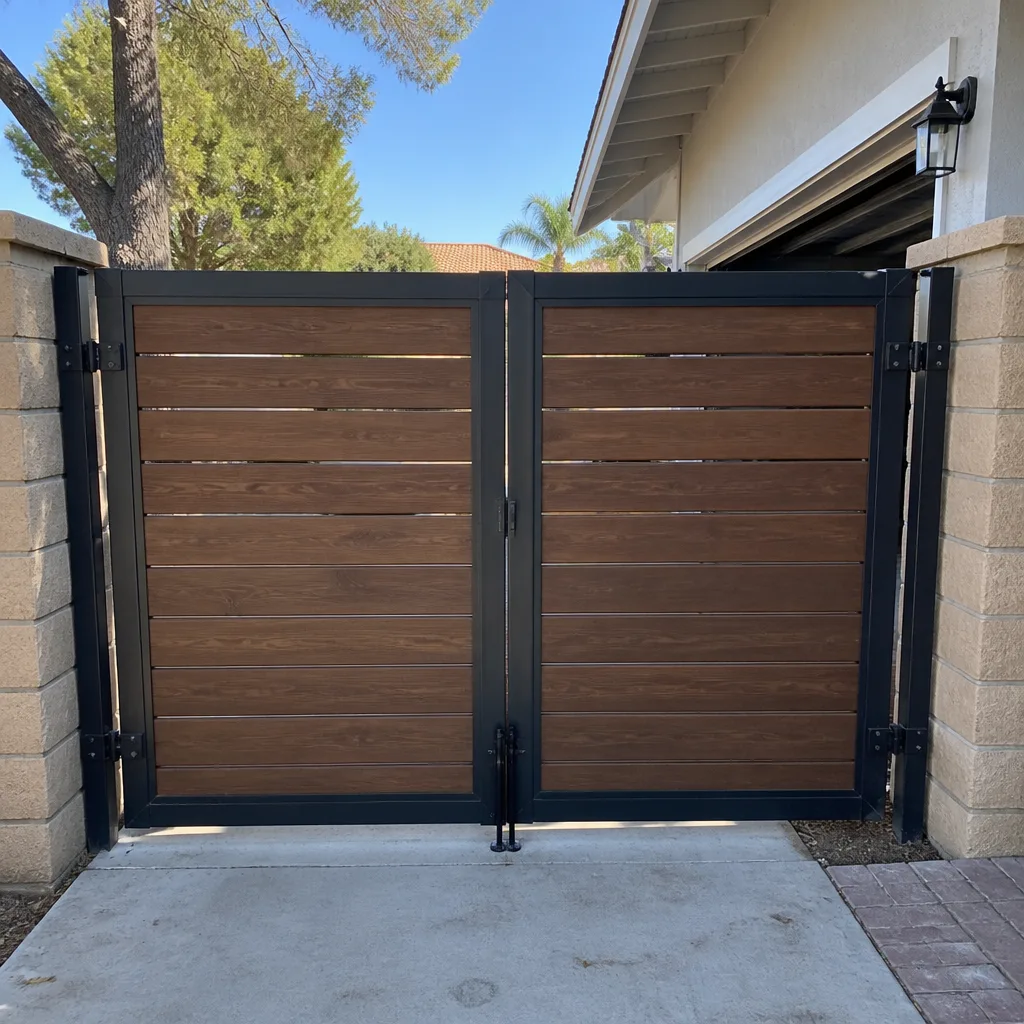 After