
Last updated October 30, 2026
 Wrought iron
 Wood & steel frame
 Farm & ranch
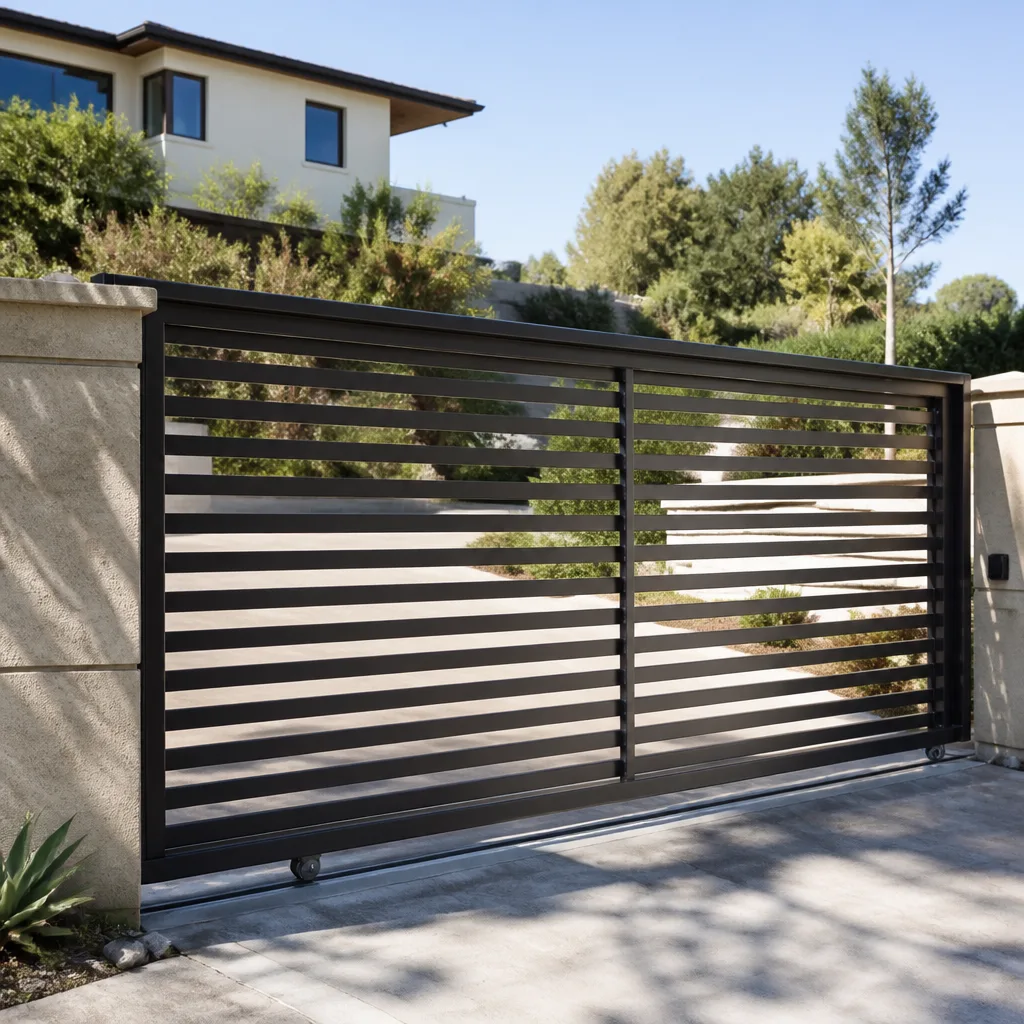 Sliding driveway gates
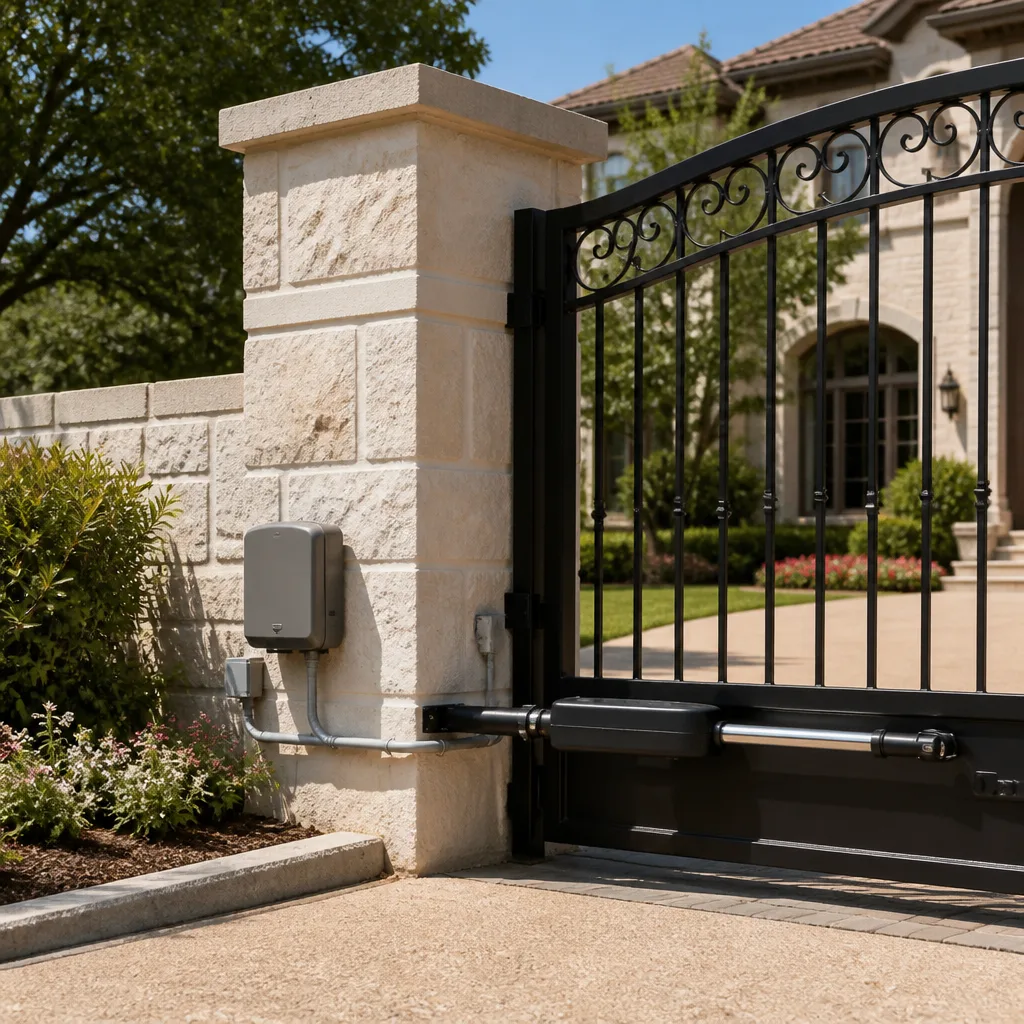 LiftMaster operators
Free on-site gate assessment - hinges, posts, and your LiftMaster or Nice gate operator checked before anything is quoted
The assessment is free and the quote is the invoice.
Get your free estimateGate Repair Maintenance Checklist for Corona Homeowners
Hard water from Corona’s municipal supply leaves calcium deposits on gate rollers and hinges that look like surface grime but act like sandpaper. Most homeowners wipe around them, assuming the crusty white buildup is cosmetic. It isn’t. In our experience working on gates across Corona, Riverside, and the Inland Empire, mineral scale is the single most overlooked cause of premature roller and bearing failure on automatic driveway gates. This guide walks you through a maintenance routine built specifically for what actually degrades gates in this zip code: blowing dust from the Santa Ana winds, heat-expanded concrete pads, and hard water that never stops depositing minerals. For Gate Repair Troubleshooting: Common Problems and How to Fix Them, see our dedicated resource. You’ll learn what to do monthly, quarterly, and annually, which lubricants actually hold up in Corona’s heat range, and what to photograph so you have a baseline when something goes wrong.
Quick Answer
A gate maintenance checklist for Corona homeowners should include monthly visual inspections of rollers, hinges, and track alignment; quarterly cleaning of mineral scale from moving parts using a calcium remover; lubrication every 3 to 6 months with a dry PTFE or lithium-based lubricant (never WD-40); annual checks of the operator arm, safety sensors, and mounting bolts; and documentation of every inspection with photos. For professional Gate Repair, contact our team. Corona-specific stressors like hard water deposits, fine dust from unpaved lots, and summer heat expansion mean seasonal adjustments matter more here than in coastal climates.
Styles & brands we work with
Table of Contents
- Monthly Gate Maintenance Checklist for Corona
- How to Remove Mineral Scale Buildup on Gate Rollers
- The Right Lubricants for Corona’s Heat Range
- Dust and Debris Management for Corona Gates
- Quarterly and Seasonal Maintenance Tasks
- Annual Gate Inspection and Service
- What to Photograph and Log After Each Inspection
- Common Mistakes to Avoid
- When to Call a Professional
- Frequently Asked Questions
Monthly Gate Maintenance Checklist for Corona
Monthly inspections catch problems before they become repair calls. In Corona, the monthly routine matters more than in milder climates because dust accumulates quickly, especially between May and October when the Santa Ana winds push fine particulate through every gap in your gate hardware. A ten-minute walk-around once a month prevents most of the failures we see on service calls.
Here’s what to check every month:
- Listen to the gate as it opens and closes. Any new grinding, squealing, or hesitation is an early warning. A gate that moves smoothly should be nearly silent except for the operator motor. Corona’s dry air means lubrication breaks down faster than in humid environments, so noise is often the first sign your lubricant is gone.
- Check the track for debris. Slide gates accumulate pebbles, leaves, and dust in the track. In Corona neighborhoods near unpaved alleys or the citrus groves on the east side, this is a weekly issue during windy months even if you only inspect monthly. Clear loose material with a stiff brush.
- Inspect the rollers for white crust. Hard water splashing onto rollers during irrigation or rain creates mineral deposits. Corona’s water averages moderately high mineral content, and those deposits grind against bearings every time the gate moves.
- Test the safety reverse. Place a 2×4 or similar object in the gate’s path and confirm the gate reverses. Photo eyes get dusty fast in Corona’s dry air, and a coated lens is the same as a non-functioning one.
- Check mounting bolts and hinge screws for tightness. Gate panels are heavy. Vibration loosens hardware over time, and a loose hinge bolt changes the gate’s geometry, which accelerates wear on everything else.
- Look at the gate’s resting position. If the gate no longer lines up perfectly with the latch or limit stops, something has shifted. That “something” is usually a worn roller, a settling concrete pad, or a loose hinge, and all three worsen if ignored.
How to Remove Mineral Scale Buildup on Gate Rollers
Mineral scale from Corona’s hard water is not a cosmetic problem. Calcium carbonate deposits form a rough, uneven surface on rollers, hinges, and pivot points. When those surfaces move against each other, the scale abrades the metal the same way sandpaper would. Over time, bearings grind down, rollers develop flat spots, and the gate starts to drag. This is one of the most frequent causes of premature roller failure we see in Corona, and it’s almost entirely preventable.
Here’s how to identify it:
- White or off-white crust forming around the roller wheel, the axle, or the hinge pin
- A gritty, grinding sensation when the gate moves by hand
- Visible pitting on metal surfaces after the crust is chipped away
- Scale buildup concentrated on the lower rollers and hinges, where irrigation splash or gutter runoff hits
Removal steps:
- Disconnect the operator. Put the gate in manual mode so it won’t move while you’re working. On LiftMaster and FAAC operators, this is usually a release handle or key on the operator housing.
- Brush off loose material. Use a stiff nylon brush to remove surface dust and loose scale. Don’t use a wire brush yet; that’s for the next step after the scale is softened.
- Apply a calcium remover. White vinegar works for light deposits. For heavier buildup, use a commercial calcium, lime, and rust remover. Apply it with a small brush directly to the scaled areas and let it sit for 10 to 15 minutes. Don’t let it dry on the metal.
- Scrub with a brass or nylon brush. Brass is softer than steel and won’t gouge the roller surface. Work the softened scale off with short strokes.
- Rinse thoroughly. Use a spray bottle of clean water to flush away the dissolved minerals and any remaining cleaner. Wipe dry with a rag.
- Relubricate immediately. Bare metal exposed by descaling will oxidize quickly in Corona’s dry air. Apply the correct lubricant right after the surface is dry. See the section below for what to use.
If the scale has already caused visible pitting or the roller has a flat spot, descaling won’t fix it. The roller needs replacement. Continuing to run a pitted roller will damage the track, and the track replacement is significantly more expensive than the roller.
The Right Lubricants for Corona’s Heat Range
WD-40 is the wrong tool for gate maintenance. It’s a water displacer and light solvent, not a lubricant. In Corona’s summer heat, where surface temperatures on a metal gate can exceed 140 degrees Fahrenheit, WD-40 evaporates within days and leaves behind a thin residue that actually attracts dust. Within two weeks, your gate is running dry again, except now it has a dust-trapping film on the moving parts.
What to use instead, depending on the component:
- Rollers and bearings: A dry PTFE spray. PTFE (polytetrafluoroethylene) leaves a slick, non-sticky film that repels dust instead of collecting it. For Corona’s dust conditions, dry lubricants outperform wet ones on exposed hardware. Reapply every 3 to 4 months.
- Hinge pins and pivot points: A white lithium grease. Lithium grease stays in place longer than sprays and handles the weight load of a swinging gate. It does collect some dust, so apply sparingly and wipe off the excess after working the gate back and forth a few times.
- Operator drivetrain (chain drive, screw drive): Use the lubricant specified in your operator manual. Mighty Mule and LiftMaster units have specific recommendations, and using the wrong product on a screw drive can cause it to bind in winter when temperatures drop into the 40s.
- Track (slide gates): Keep it dry. Never grease a slide gate track. Grease mixes with Corona dust to form an abrasive paste that wears out wheels faster than running dry. If the track needs anything, it needs cleaning, not lubrication.
- Photoelectric sensor housings: Nothing. Wipe them clean with a dry cloth. Any lubricant on a sensor lens will attract dust and block the beam.
Temperature matters. In Corona’s inland climate, summer highs routinely exceed 100 degrees, while winter nights occasionally drop near freezing. An oil-based lubricant that flows fine at 75 degrees can thicken and gum up at 40 degrees, and that’s when we get calls about gates that move sluggishly in December after working fine all summer. PTFE and lithium products handle the temperature swing better than general-purpose oils.
Dust and Debris Management for Corona Gates
Many older Corona neighborhoods, including areas north of the 91 and east of Main Street, sit near unpaved alleys, vacant lots, or working groves. During wind events, which are most common from September through November, fine dust infiltrates every part of a gate system. The dust wears out components in three ways: it loads up lubricant until it turns into grinding compound, it clogs photo eye lenses, and it packs into tracks and carriage assemblies.
What to do about it:
- Change your inspection frequency during wind season. Monthly is fine for most of the year. From September through November, check the track and rollers every two weeks if you live near an unpaved surface.
- Blow out the operator housing. Use compressed air to clear dust from the circuit board area of your gate operator. Dust on a control board holds heat, and heat is an electronics killer. BFT and LiftMaster boards are both vulnerable to dust-related overheating in Corona summers.
- Keep the bottom 6 inches clear. Weeds, grass clippings, and leaf litter against the bottom of the gate retain moisture and create a micro-environment where mineral deposits and rust both accelerate. Trim anything touching the gate.
- Check the drainage around the concrete pad. If the pad has settled or shifted, water pools near the track after rain or irrigation. Pooling water means more splashing, which means more mineral deposits on the low rollers.
- Install a brush strip on the bottom of the gate if tracking is severe. A flexible rubber or brush sweep reduces the amount of dust and debris that gets into the track area in the first place. It’s cheap insurance for slide gates near unpaved roads.
Dust management in Corona is less about cleaning more often and more about reducing what gets into the moving parts in the first place. A brush strip, proper drainage, and dry lubricant go further than weekly cleanings.
Quarterly and Seasonal Maintenance Tasks
Corona’s seasons don’t follow the same rhythm as coastal Southern California. Summer brings months of triple-digit heat. Fall brings the strongest winds of the year. Winter brings cold nights and occasional rain. Spring brings irrigation season and lush growth near gate installations. Each season puts different stress on the system.
Quarterly tasks (do these four times per year):
- Descale rollers and hinges. Follow the mineral scale removal process described earlier. In Corona’s hard water conditions, quarterly descaling keeps deposits from ever getting thick enough to cause damage.
- Lubricate moving parts. Reapply PTFE to rollers and bearings, lithium grease to hinge pins. Wipe off excess. This frequency matches how quickly lubricant breaks down in Corona’s heat and dust.
- Test the auto-reverse function. This is a safety feature, not a convenience. Test it every quarter with a solid object. If the gate doesn’t reverse, don’t wait. Get a repair scheduled.
- Inspect the operator arm and attachment brackets. Look for cracks around welds, worn bushings where the arm connects, and any bending. On FAAC and Viking hydraulic operators, also check for fluid seepage around the cylinder.
Seasonal notes:
- Summer (June-September): Heat causes metal to expand. A gate that cleared fine in spring may drag in August. If you adjust limit stops or hinge alignment for summer clearance, expect to re-check in fall when things contract. Don’t grind metal off the latch; adjust the hardware instead.
- Fall (September-November): Santa Ana winds. Increase track and roller inspections to twice monthly. Dust accumulation peaks during these months in Corona.
- Winter (December-February): Cold nights thicken lubricants and can cause operators to work harder. Battery backup systems also lose efficiency in cold weather. If you have a battery backup, test it in December.
- Spring (March-May): Irrigation starts back up. Check that sprinklers aren’t spraying directly onto the gate or track. Reposition or adjust sprinkler heads if they are. This one change prevents more mineral scale than any amount of cleaning.
Annual Gate Inspection and Service
The annual inspection is a deeper pass. Most of the failures that become expensive repairs in Corona are visible 6 to 12 months before they actually break, but only if someone looks at the right components. The annual routine covers what monthly and quarterly checks miss.
- Check every bolt, nut, and fastener on the gate and mounting hardware. Use a torque wrench where specified by the gate manufacturer. Vibration from thousands of open-close cycles loosens hardware that looks fine from the outside.
- Inspect roller wheels for wear patterns. Remove the gate from the track if possible and feel each roller. A good roller spins freely with no play in the bearing and has a smooth wheel surface. Any roughness, flat spots, or wobble means replacement time.
- Test the operator’s force settings. If the operator is using more force than it should, that’s the system compensating for drag somewhere in the gate. Find the drag before it burns out the operator motor. This is a common pattern on older LiftMaster and Mighty Mule units in Corona.
- Examine the concrete pad and post foundations. Southern California’s clay-heavy soils expand and contract with moisture changes. Look for cracks, settling, or gaps between the concrete and the gate posts. A shifted post changes the entire gate’s geometry and wears out every connected component.
- Clean and inspect the electrical connections. Turn off power at the breaker, open the operator housing, and check for corrosion on terminals, signs of overheating on wire insulation, and any insect activity. Ants love control boards. Wipe dust off the board with compressed air.
- Test the manual release. Confirm the gate can be disengaged from the operator and moved by hand. This is your backup plan during a power outage. A release mechanism that hasn’t been used in years may be seized.
- Verify all safety devices. Photo eyes, edge sensors, and loop detectors if installed. These are life-safety devices. Test each one, not just the main reverse function.
If this scope feels beyond a DIY afternoon, it is. Most homeowners who call us for a gate repair in Corona after a breakdown could have prevented it with a proper annual service. The tradeoff of an hour with a professional once a year versus a broken gate and an emergency repair call is rarely close.
What to Photograph and Log After Each Inspection
A maintenance log is the most underrated tool in gate ownership. When a gate fails, knowing exactly how it looked and sounded three months ago tells you what changed and what caused the failure. Without that baseline, every diagnosis starts from zero. For Corona homeowners in HOAs, a documented maintenance log also helps when questions come up about gate care responsibility or repair authorization.
What to photograph:
- Full gate from both sides, closed and open. These are your “before” photos. When something shifts, you want a visual reference of what it looked like when it was working.
- Close-up of each roller and hinge. Photograph from the same angle each time. The comparison over months shows wear progression that your eyes won’t catch in real time.
- The track, the full length. Dents, bends, and debris buildup are easy to document and hard to remember.
- The operator housing exterior and the area around it. Look for new cracks, rust, or pest activity.
- Any wear points you noted during the inspection. If a roller feels rough, photograph it. If a bolt looks loose, photograph it before tightening.
What to log, in writing, each time:
- Date and approximate outside temperature at inspection time
- Gate cycle count if your operator displays one (many LiftMaster and DoorKing units do)
- Any unusual sounds during operation
- Lubricant reapplied and on which components
- Any adjustments made (limit stops, hinge bolts, sensor positioning)
- Any parts that looked marginal and should be watched before the next inspection
- Any descaling performed
Three or four cycles of consistent photographs and notes create a clear wear pattern. That pattern tells you, with confidence, when a roller is about to fail, or when the gate’s alignment starts to drift. For electric gate repair in Corona, this kind of documentation moves diagnosis from an hour of exploration to a few minutes of confirmation.
Common Mistakes to Avoid
- Using WD-40 on the rollers and hinges. WD-40 is a solvent that briefly loosens things up and then evaporates, leaving the metal unprotected. In Corona’s dust conditions, the sticky residue it leaves behind attracts more dust than a dry surface would. Use PTFE or lithium products designed for the specific component.
- Ignoring white crust on the rollers. If you see mineral deposits, the bearing is already being ground down. The longer scale stays, the more damage it causes. Descale quarterly, no matter how minor the buildup looks.
- Greasing the slide gate track. Grease plus Corona dust equals abrasive paste. Tracks need cleaning, not lubrication.
- Waiting until a failure to address a noise. Gates don’t make noise for no reason. A squeal means the lubricant is gone. A grind means metal is touching metal. A clunk means something is loose. Each sound is a warning, and in Corona’s heat and dust, the window between first warning and failure is shorter than homeowners expect.
- Thinking safety sensors are set-and-forget. Photo eyes get coated with dust, bumped out of alignment, or obstructed by plant growth. Test them quarterly and clean the lenses monthly during wind season.
- Comparing maintenance schedules with friends in other climates. What works in San Diego doesn’t work in Corona. Coastal humidity keeps lubricants effective longer and reduces dust loading. Inland heat, hard water, and wind mean your maintenance intervals need to be shorter.
When to Call a Professional
Some maintenance tasks are genuinely beyond what a homeowner should attempt. If the gate has a visible crack in a weld, call a professional. If a roller has already developed a flat spot or the bearing has play, descaling won’t bring it back. If the operator is making a humming sound but the gate doesn’t move, that’s usually a capacitor or motor issue, not a maintenance problem. If the concrete pad has shifted and the gate no longer lines up, that’s a structural adjustment requiring tools most homeowners don’t have. And for anything involving the gate operator’s internal controls or force settings, it’s safer to have a technician who works on your brand of equipment handle it. Before starting any work, review Gate Repair Permits, Codes & Inspections in CA: What You Need to Know.
Windsor Gate Repair offers free estimates in Corona. We work on LiftMaster, FAAC, BFT, Mighty Mule, and the other major brands you’re likely to find on a driveway gate. Call (855) 382-0601 to schedule a maintenance inspection or to get a repair quote.
Frequently Asked Questions
Monthly visual inspections, quarterly lubrication and descaling, and an annual deep inspection are the right rhythm for Corona’s climate. Explore our more guides & resources for additional maintenance tips. The dust, heat, and hard water here shorten the useful life of lubricants and accelerate wear on moving parts, so the intervals that work near the coast don’t hold up inland.
Grinding usually means the lubricant has broken down and metal is moving against metal. Corona’s dry, dusty air degrades oil-based lubricants faster than humid coastal air, and dust mixed with any remaining lubricant creates an abrasive slurry. Switching to a dry PTFE lubricant and reapplying every 3 months typically resolves this.
White crust is calcium carbonate scale deposited by hard water. In Corona, irrigation overspray and gutter runoff splash hard water onto gate hardware, where the water evaporates and leaves minerals behind. The scale is abrasive and causes premature bearing failure. Regular descaling with a calcium remover keeps it under control.
No. WD-40 is a water displacer, not a lubricant. It evaporates quickly in Corona’s heat, leaving hinges dry and unprotected. It also leaves a residue that attracts dust. Use white lithium grease on hinge pins and PTFE spray on rollers and bearings instead.
High temperatures cause metal to expand, which can make a gate drag or bind if its alignment was already marginal. Heat also degrades lubricants faster and can overheat control boards, especially if dust has accumulated inside the operator housing. Annual electrical inspection and regular board cleaning help prevent heat-related failures.
Every automatic gate has a manual release that disconnects the operator so the gate can be moved by hand. Test this release quarterly so you know it works before you need it. In outages affecting the whole Corona area, a seized release mechanism means the gate stays where it is until power returns or a technician gets there.
The Bottom Line
Corona’s gates fail differently than gates in other climates. Hard water scales the rollers. Dust loads the lubricant and clogs the sensors. Summer heat expands metal and shortens the life of every moving part. A maintenance routine built around these conditions, monthly visual checks, quarterly descaling and lubrication, and an annual deep inspection, catches most failures before they happen. Use the right products. Keep a photo log. Test the safety features. And when the job goes beyond what you can handle yourself, gate installation and repair pros in Corona are one call away at (855) 382-0601.
Written by the team at Windsor Gate Repair, serving Corona since 2012.
See the difference
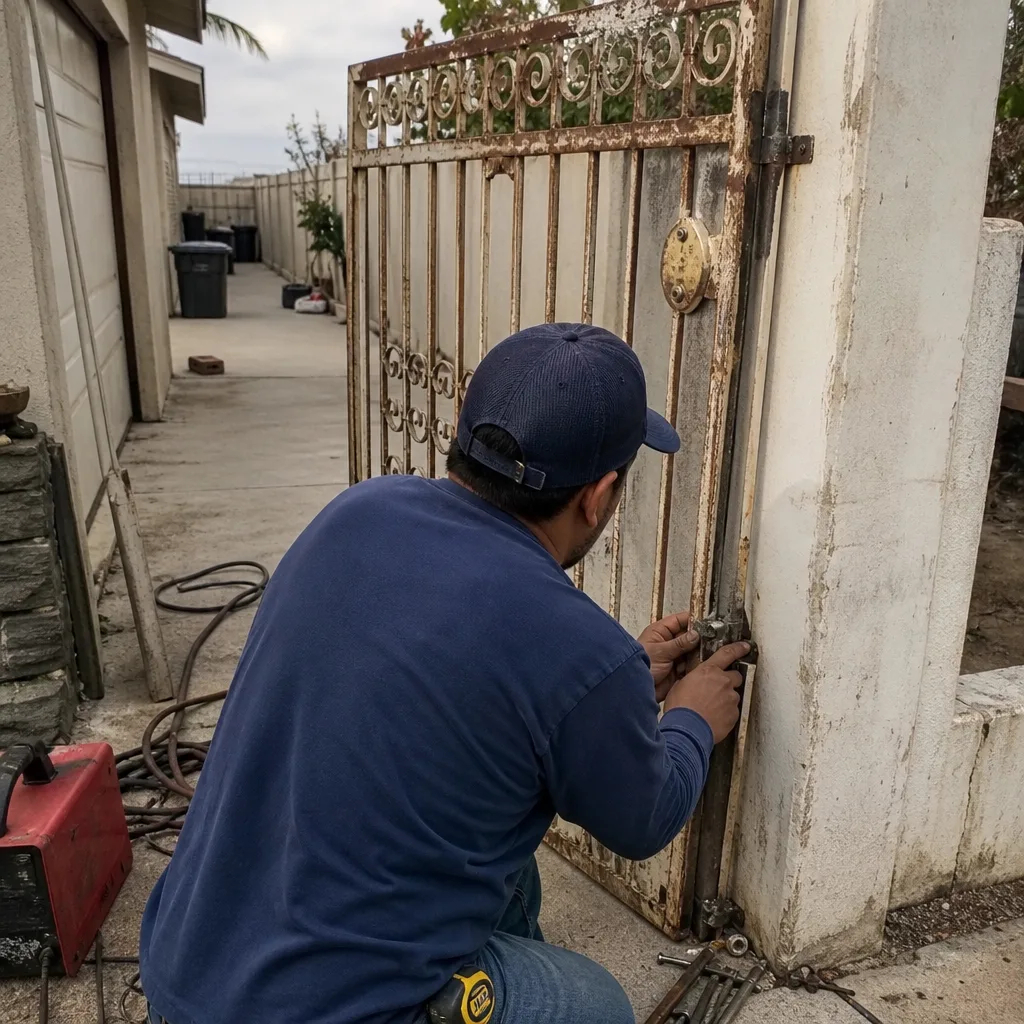
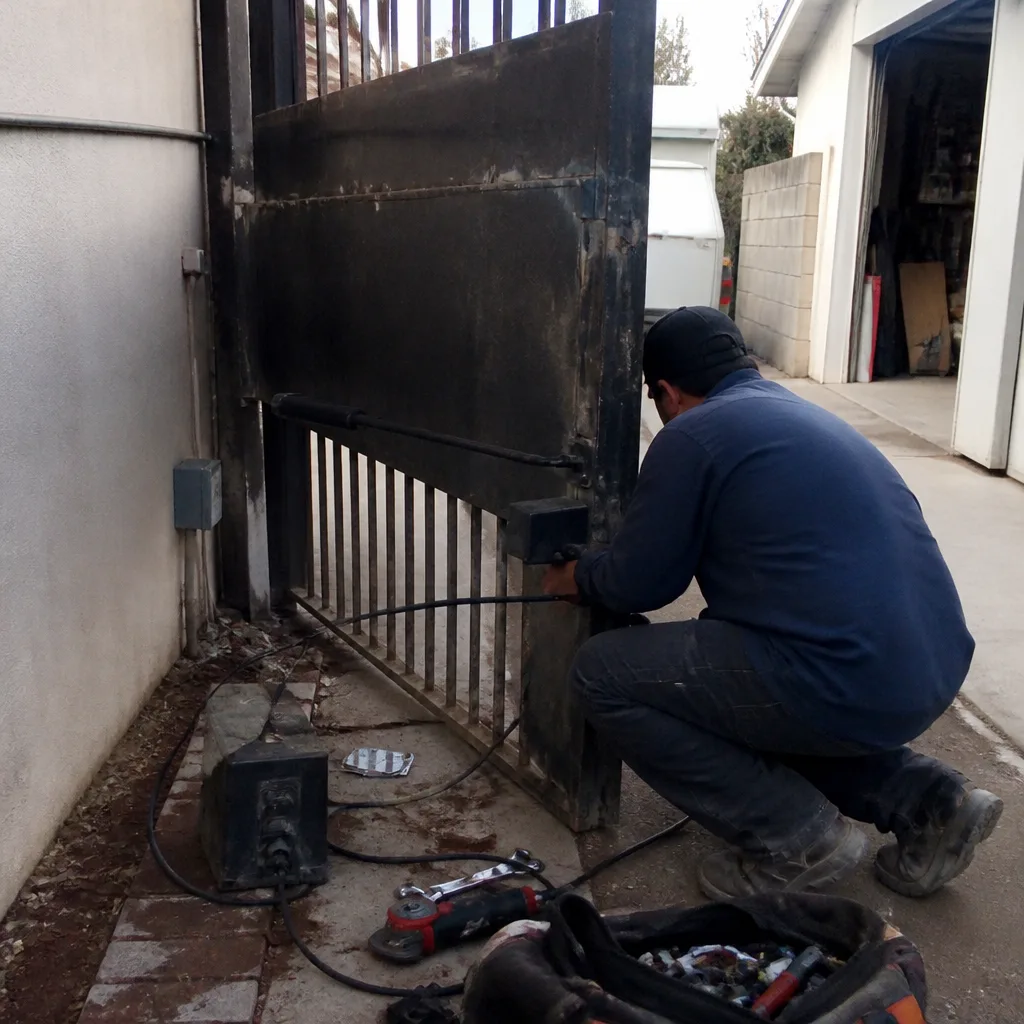 Before
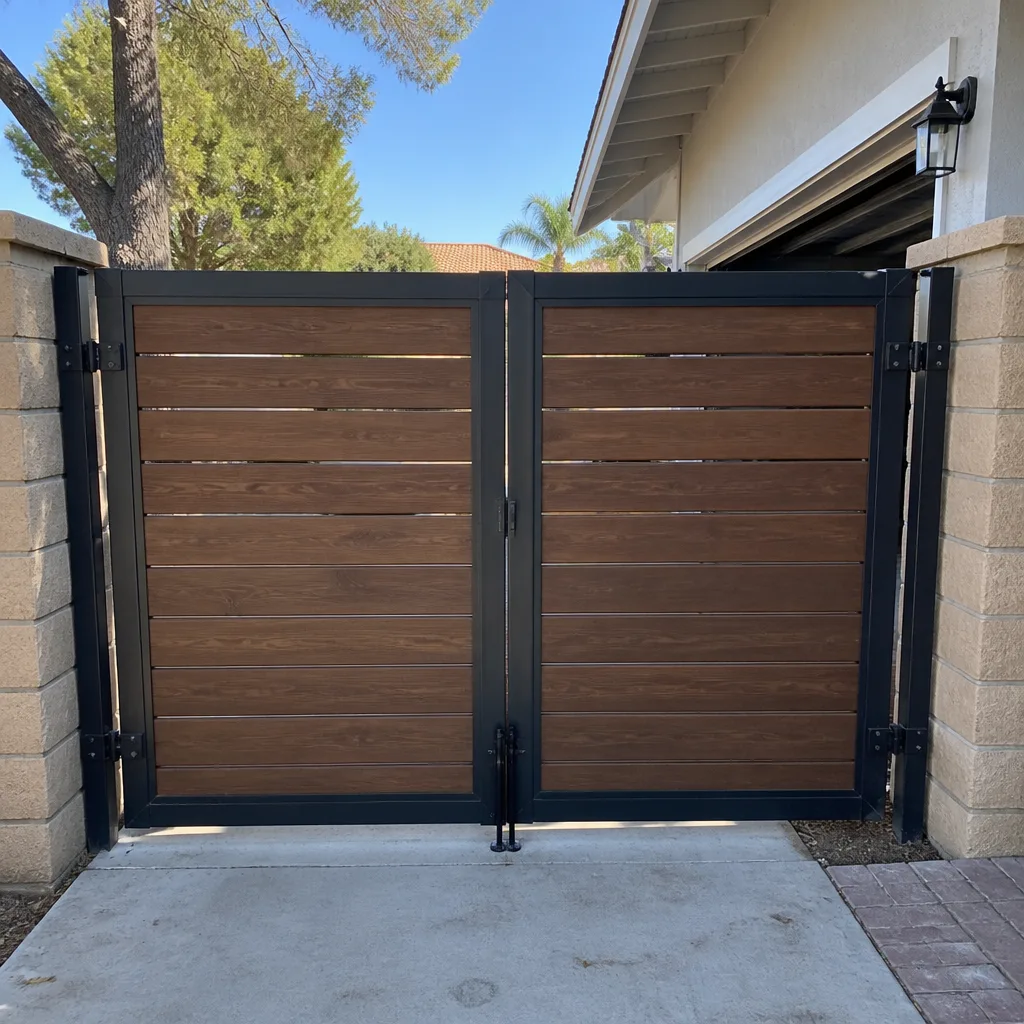
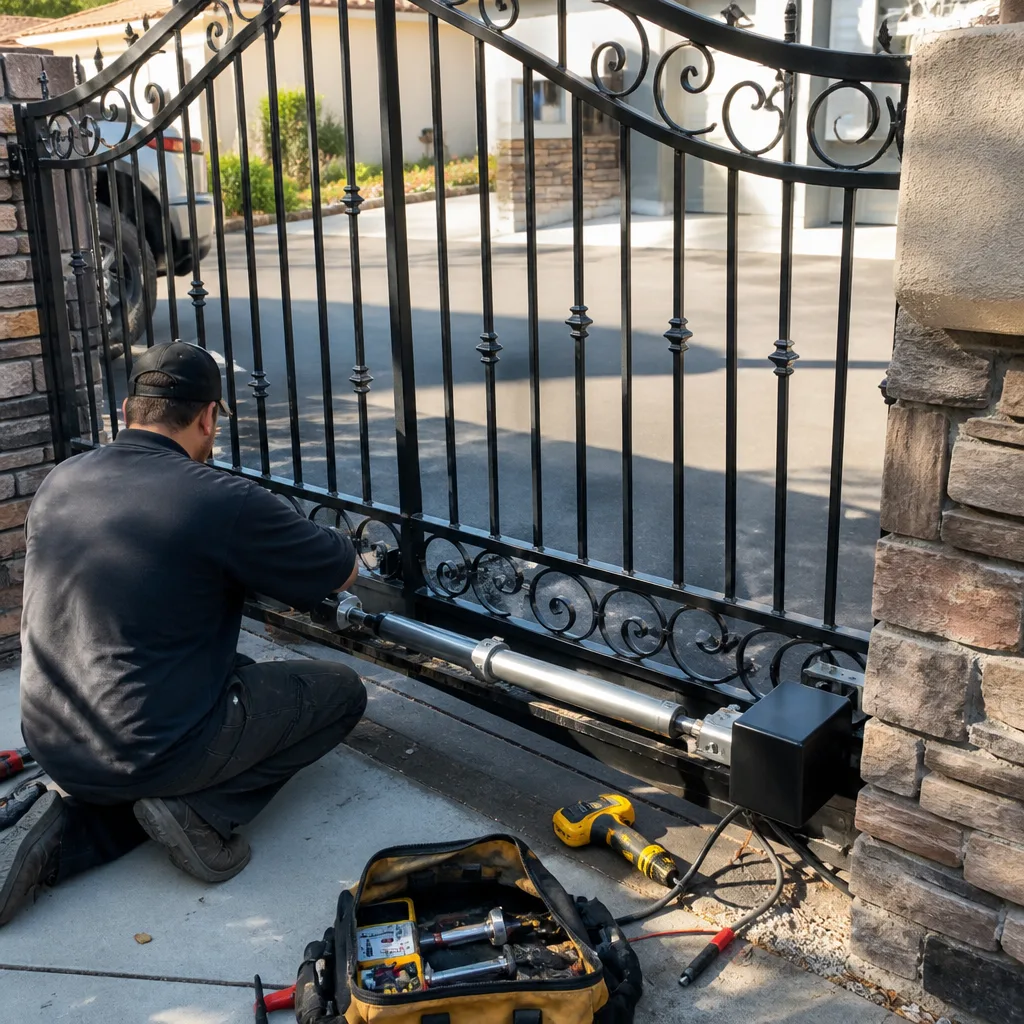 After
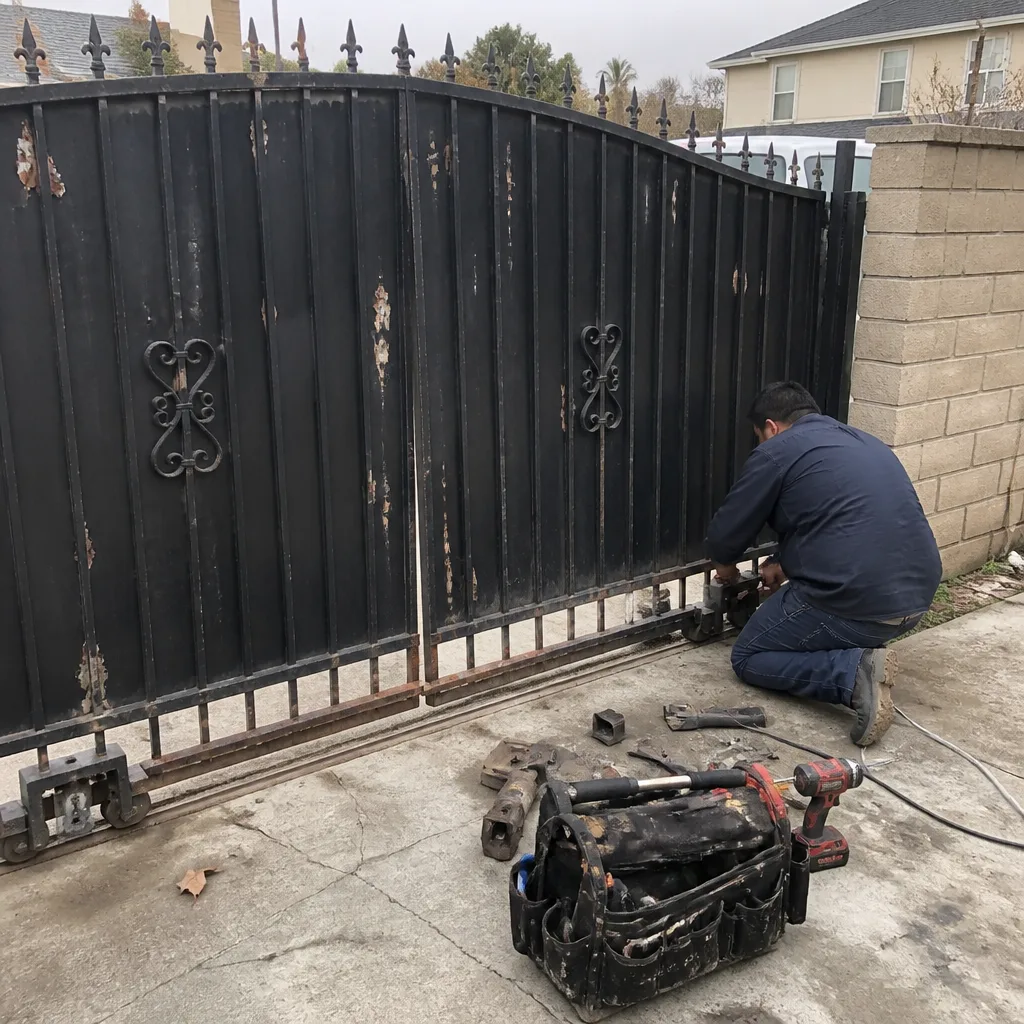 Before
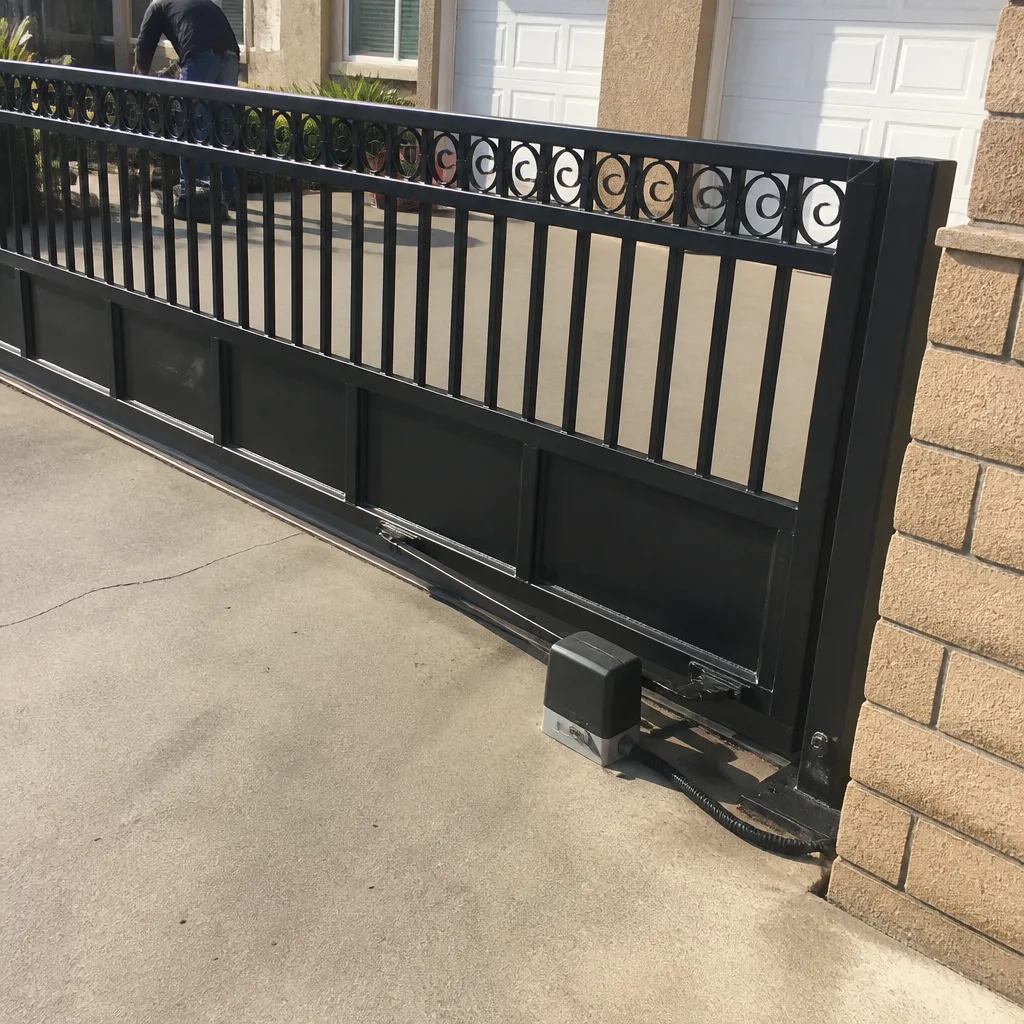 After
 Before
 After